Results by title
160 books match the query 'Cross-cultural studies' and 9 start with w
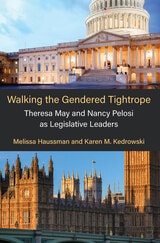
Walking the Gendered Tightrope
Theresa May and Nancy Pelosi as Legislative LeadersMelissa Haussman and Karen M. Kedrowski
University of Michigan Press, 2023

We Decide!
Theories and Cases in Participatory DemocracyMichael Menser
Temple University Press, 2017
Participatory democracy calls for the creation and proliferation of practices and institutions that enable individuals and groups to better determine the conditions in which they act and relate to others. Michael Menser’s timely book We Decide! is arguably the most comprehensive treatment of participatory democracy. He explains the three waves of participatory democracy theory to show that this movement is attentive to the mechanics of contemporary political practices. Menser also outlines “maximal democracy,” his own view of participatory democracy that expands people’s abilities to shape their own lives, reduce inequality, and promote solidarity.
We Decide! draws on liberal, feminist, anarchist, and environmental justice philosophies as well as in-depth case studies of Spanish factory workers, Japanese housewives, and Brazilian socialists to show that participatory democracy actually works. Menser concludes his study by presenting a reconstructed version of the state that is shaped not by corporations but by inclusive communities driven by municipal workers, elected officials, and ordinary citizens working together. In this era of Bernie Sanders and Donald Trump, the participatory democracy proposed in We Decide! is more significant than ever.
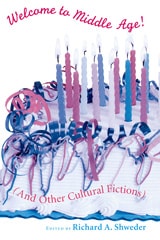
Welcome to Middle Age!
(And Other Cultural Fictions)Edited by Richard A. Shweder
University of Chicago Press, 1998
In this volume, anthropologists, behavioral scientists, and historians explore topics ranging from the Western ideology of "midlife decline" to cultural representations of mature adulthood that operate without the category of middle age. The result is a fascinating, panoramic collection that explores the myths surrounding and the representations of mature adulthood and of those years in the life span from thirty to seventy.

Women among Women
Anthropological Perspectives on Female Age HierarchiesEdited by Jeanette Dickerson-Putman and Judith K. Brown: Foreword by Nancy Foner
University of Illinois Press, 1994

Women and Welfare
Theory and Practice in the United States and EuropeHirschmann, Nancy J
Rutgers University Press, 2001
The social welfare state is believed by many to be one of the great achievements of Western democracy in the twentieth century. It institutionalized for the first time a collective commitment to improving individual life chances and social well-being. However, as we move into a new century, the social welfare state everywhere has come under increasing pressure, raising serious doubts about its survival.
Featuring essays by experts from a variety of fields, including law, comparative politics, sociology, economics, cultural studies, philosophy, and political theory, Women and Welfare represents an interdisciplinary, multimethodological and multicultural feminist approach to recent changes in the welfare system of Western industrialized nations. The broad perspective, from the philosophical to the quantitative, provides an excellent overview of the subject and the most recent scholarly literature. The volume offers a crosscultural analysis of welfare “reform” in the 1990s, visions of what a “woman-friendly” welfare state requires, and an examination of theoretical and policy questions feminists and concerned others should be asking.
Women as Healers
Cross-Cultural PerspectivesMcClain, Carol Shepherd
Rutgers University Press, 1989
In Women as Healers, thirteen contributors explore the intersection of feminist anthropology and medical anthropology in eleven case studies of women in traditional and emergent healing roles in diverse parts of the world. In a spectrum of healing roles ranging from family healers to shamans, diviner-mediums, and midwives, women throughout the world pursue strategic ends through healing, manipulate cultural images to effect cures and explain misfortune, and shape and are shaped by the social and political contexts in which they work. In an introductory chapter, Carol Shepherd McClain traces the evolution of ideas in medical anthropology and in the anthropology of women that have both constrained and expanded our understanding of the significance of gender to healing-one of the most fundamental and universal of human activities.
The contributors include Carol Shepherd McClain, Ruthbeth Finerman, Carolyn Nordstrom, Carole H. Browner, William Wedenoja, Marjery Foz, Barbara Kerewsky-Halpern, Laurel Kendall, Merrill Signer, Roberto Garcia, Edward C. Green, Carolyn Sargent, and Margaret Reid.

Women on the Defensive
Living through Conservative TimesSylvia Bashevkin
University of Chicago Press, 1998
Prevailing accounts of the fate of women's movements in that decade ascribe their hardships to a postfeminist ideology or the result of a "backlash" against women, particularly in America. Sylvia Bashevkin's study excavates, however, a much more complex situation. By identifying the policies and goals held in common by feminists in all three countries and tracing their collision course with the conservative policies of the three administrations, she is able to document setbacks but also some progress, despite the right-of-center leaders. She also challenges the assumption that organized interests in the United States are less vulnerable in hard times than those in parliamentary systems, finding that the elections of Ronald Reagan, Brian Mulroney, and Margaret Thatcher had similar effects on both sides of the Atlantic. Her comparative analysis reveals that the policies of current leaders, while marginally better than their predecessors, will not allow women and women's movements to regain lost ground.
Organized thematically, rather than by country, Women on the Defensive describes the difficult relationship between feminists and conservatives during a time of bitter ideological and policy battles when the vibrant social movements of the 1960s and 1970s were seriously threatened.
Writing with Authority
Students' Roles as Writers In Cross-National PerspectiveDavid Foster
Southern Illinois University Press, 2006
Writing with Authority: Students’ Roles as Writers in Cross-National Perspective offers a comparison of student writers in two university cultures—one German and one American—as the students learn to connect their writing to academic content. David Foster demonstrates the effectiveness of using cross-cultural comparisons to assess differences in literacy activities and suggests teaching approaches that will help American students better develop their roles as writers in knowledge-based communities. He proposes that American universities make stronger efforts to nurture the autonomy of American undergraduates as learner-writers and to create apprenticeship experiences that more closely reflect the realities of working in the academic community.
This comparative analysis identifies crucial differences in the ways German and American students learn to become academic writers, emphasizing two significant issues: the importance of self-directed, long-term planning and goal setting in developing knowledge-based projects and the impact of time structures on students’ writing practices. Foster suggests that students learn to write as knowledge makers, using cumulative, recursive task development as reflexive writing practices. He argues for the full integration of extended, self-managed, knowledge-based writing tasks into the American undergraduate curriculum from the onset of college study.
A cross-national perspective offers important insights into the conditions that influence novice writers, Foster says, including secondary preparations and transitions to postsecondary study. Foster proposes that students be challenged to write transformatively—to master new forms of authorship and authority based on self-directed planning, researching, and writing in specific academic communities. The text also addresses contested issues of power relations in students’ roles as academic writers and their perception of personal authority and freedom as writers.
A course model incorporates significant, self-directed writing projects to help students build sustainable roles as transformative writers, outlines “change goals” to help teachers develop curricular structures that support cumulative writing projects across the undergraduate curriculum, and shows how teachers can develop self-directed writing projects in a variety of program environments.
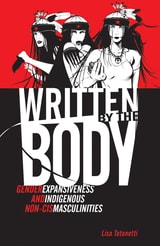
Written by the Body
Gender Expansiveness and Indigenous Non-Cis MasculinitiesLisa Tatonetti
University of Minnesota Press, 2021
Examining the expansive nature of Indigenous gender representations in history, literature, and film
Within Native American and Indigenous studies, the rise of Indigenous masculinities has engendered both productive conversations and critiques. Lisa Tatonetti intervenes in this conversation with Written by the Body by centering how female, queer, and/or Two-Spirit Indigenous people take up or refute masculinity, and, in the process, offer more expansive understandings of gender.
Written by the Body moves from the eighteenth- and nineteenth-century archive to turn-of-the-century and late-twentieth-century fiction to documentaries, HIV/AIDS activism, and, finally, recent experimental film and literature. Across it all, Tatonetti shows how Indigenous gender expansiveness, and particularly queer and non-cis gender articulations, moves between and among Native peoples to forge kinship, offer protection, and make change. She charts how the body functions as a somatic archive of Indigenous knowledge in Native histories, literatures, and activisms—exploring representations of Idle No More in the documentary Trick or Treaty, the all-female wildland firefighting crew depicted in Apache 8, Chief Theresa Spence, activist Carole laFavor, S. Alice Callahan, Thirza Cuthand, Joshua Whitehead, Carrie House, and more.
In response to criticisms of Indigenous masculinity studies, Written by the Body de-sutures masculinity from the cis-gendered body and investigates the ways in which female, trans, and otherwise nonconforming masculinities carry the traces of Two-Spirit histories and exceed the limitations of settler colonial imaginings of gender.