Results by title
92 books match the query 'Cultural & Social Aspects' and 3 start with w
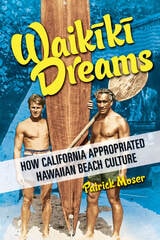
Waikiki Dreams
How California Appropriated Hawaiian Beach CulturePatrick Moser
University of Illinois Press, 2024
Despite a genuine admiration for Native Hawaiian culture, white Californians of the 1930s ignored authentic relationships with Native Hawaiians. Surfing became a central part of what emerged instead: a beach culture of dressing, dancing, and acting like an Indigenous people whites idealized.
Patrick Moser uses surfing to open a door on the cultural appropriation practiced by Depression-era Californians against a backdrop of settler colonialism and white nationalism. Recreating the imagined leisure and romance of life in Waikīkī attracted people buffeted by economic crisis and dislocation. California-manufactured objects like surfboards became a physical manifestation of a dream that, for all its charms, emerged from a white impulse to both remove and replace Indigenous peoples. Moser traces the rise of beach culture through the lives of trendsetters Tom Blake, John “Doc” Ball, Preston “Pete” Peterson, Mary Ann Hawkins, and Lorrin “Whitey” Harrison while also delving into California’s control over images of Native Hawaiians via movies, tourism, and the surfboard industry.
Compelling and innovative, Waikīkī Dreams opens up the origins of a defining California subculture.
Whose Game?
Gender and Power in Fantasy SportsRebecca Joyce Kissane and Sarah Winslow
Temple University Press, 2020
Fantasy sports have the opportunity to provide a sporting community in which gendered physical presence plays no role—a space where men and women can compete and interact on a level playing field. Whose Game? shows, however, that while many turn to this space to socialize with friends or participate in a uniquely active and competitive fandom, men who play also depend on fantasy sports to perform a boyhood vision of masculinity otherwise inaccessible to them. Authors Rebecca Kissane and Sarah Winslow draw on a rich array of survey, interview, and observational data to examine how gender, race, and class frame the experiences of everyday fantasy sports players.
This pioneering book examines gendered structures and processes, such as jock statsculinity—a nerdish form of masculine one-upmanship—and how women are often rendered as outsiders. Ultimately, Whose Game? demonstrates that fantasy sports are more than just an inconsequential leisure activity. This online world bleeds into participants’ social lives in gendered ways—forging and strengthening relationships but also taking participants’ time and attention to generate negative emotions, stress, discord, and unproductivity.

Women and Sports in the United States
A Documentary ReaderEdited by Jaime Schultz, Jean O’Reilly, and Susan K. Cahn
Dartmouth College Press, 2018