Results by title
304 books match the query 'Death' and 7 start with w
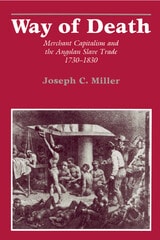
Way of Death
Merchant Capitalism and the Angolan Slave Trade, 1730–1830Joseph Calder Miller
University of Wisconsin Press, 1996
This acclaimed history of Portuguese and Brazilian slaving in the southern Atlantic is now available in paperback.
With extraordinary skill, Joseph C. Miller explores the complex relationships among the separate economies of Africa, Europe, and the South Atlantic that collectively supported the slave trade. He places the grim history of the trade itself within the context of the rise of merchant capitalism in the eighteenth century. Throughout, Miller illuminates the experiences of the slaves themselves, reconstructing what can be known of their sufferings at the hands of their buyers and sellers.
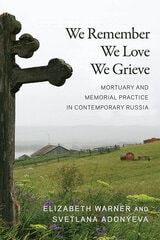
We Remember, We Love, We Grieve
Mortuary and Memorial Practice in Contemporary RussiaElizabeth Warner and Svetlana Adonyeva
University of Wisconsin Press, 2021
“We remember, we love, we grieve” is a common epitaph in this part of the world. As contemporary Russia contends with the Soviet Union’s legacy of dismantling older ways of life, the phrase ripples beyond individual loss—it encapsulates communities’ determination to preserve their customs when faced with oppression. This volume offers insight into a core cultural practice, exploring the dynamism of tradition.
What Happens Next?
Matters of Life and DeathDouglas Bauer
University of Iowa Press, 2013
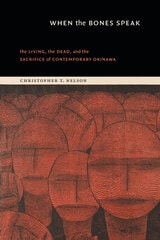
When the Bones Speak
The Living, the Dead, and the Sacrifice of Contemporary OkinawaChristopher T. Nelson
Duke University Press, 2025
Who Counts?
The Mathematics of Death and Life after GenocideDiane M. Nelson
Duke University Press, 2015
Who Killed George Polk?
The Press Covers Up a Death in the FamilyElias Vlanton
Temple University Press, 1996
Just weeks after CBS correspondent George Polk was murdered in Greece in 1948, his peers created the "George Polk Award" to honor the best in American journalism. Polk would have been bitterly disappointed, however, had he known that the "best in American journalism" accepted, largely without protest, an investigation into his death in which evidence was not only ignored but manufactured to convict innocent men—an investigation in which politics played a bigger role than the truth.
Reconstructing the murder, investigation, trial, and aftermath, Who Killed George Polk? offers a penetrating analysis of the willingness of the American media—including CBS and a committee of prominent journalists headed by Walter Lippmann—to accept the government's version of events despite numerous inconsistencies. The book also explores the fate of the handful of journalists who had questioned the original coverup and shows that even when additional developments turned the official version on its head, they were no longer in a position to press for a new investigation. All had become victims of anticommunist witchhunts.
Arguing that this mainstream media and the U.S. government were so blinded by cold war political considerations that they overlooked the most obvious culprits for the Polk murder, Elias Vlanton proves that Polk was likely killed neither by the communists, as originally charged, nor by corrupt Greek government officials, as claimed by a recent book and in a CBS "Sixty Minutes" broadcast. Instead, based on evidence uncovered during Vlanton's 19-year investigation, the author presents the only plausible scenario of how and why Polk was murdered.
At its core, this perceptive interrogation explores how the press served U.S. national interests at the expense of the truth and journalistic integrity.
Writing with Fire
The Cowboy Suit Tragedy and the Course of a LifeBarbara Young Welke
University of Chicago Press, 2026
A cultural and legal history intertwined with a deeply emotional meditation on the course of life, memory, and the documents that define us.
During the 1940s and 1950s, an untold number of American children suffered devastating injuries when the fur-like fabric on the chaps of their Gene Autry–branded cowboy playsuits exploded into flame. Barbara Young Welke was researching this history when her teenage daughter unexpectedly died.
The shock of Welke’s loss transformed her understanding of the children and their families. Her experience also led her to question the norms of scholarship and of writing. Historians are trained to separate the personal from the intellectual, to be suspicious of emotion. These and other norms are embedded in and reinforced by the calling card of academics, the curriculum vitae. Welke wondered how that cold document—with its literal meaning, “the course of life”—had become a form that excludes so much of what gives life meaning. What impact did that have on what we know, how we know it, and how we understand ourselves? Similarly, Welke wondered, what might we see if we looked at the history of the cowboy suit tragedy as more than a matter of lawsuits brought by grieving families? Here, Welke traces the making, marketing, and selling of the cowboy suits; the lengths the defendants went to avoid and limit liability; and the meaning of the injuries, deaths, and legal settlements in the course of these children’s and families’ lives.
Writing with Fire interweaves the histories of the cowboy suit tragedy and the curriculum vitae. Grounded in archival and legal research, oral histories, and letters Welke wrote her daughter following her death, Welke offers an inimitable examination of trauma, law, autobiography, and identity. The result is revelatory and unforgettable: a provocative historical reflection on life and death, depression and war, markets and families, law, power, and precarity in modern America.