Results by title
345 books match the query 'Design' and 28 start with w

Watch this Space
Exploring Cinematic Intersections Between the Body, Architecture and the CityEdited by Howard Griffin and Maciej Stasiowski
Intellect Books, 2024
Watch this Space examines key emerging and evolving practices, theories, and methodologies that operate in the blurred boundary between spatial design disciplines and moving image studies more broadly. The collection is premised on the argument that the understanding of “space” in these areas continues to expand, reaching the point in which it blurs with multiple other disciplines including media art, cultural studies, art practice, and more. The result of this evolving interdisciplinary understating of space in design disciplines and moving image studies is an expanded field of haptic-visual practice and theory that can be investigated as both a material and an image-based construct.
The work engages with an evolving set of ideas, underlining how each of its primary discipline areas now increasingly incorporates tools and methodologies from each other’s fields. For example, architects routinely engage with cinematic practice as a means of exploring space; cultural theorists inspect filmic space as a two-dimensional surrogate of the real; media artists incorporate knowledge of spatial design in video installations; and filmmakers create spaces on screen that are informed by architectural theory. This all follows what can be defined as a discursive turn in our view of spatial relationships across disciplines which, by definition, is complex, eclectic, occasionally contradictory, and at times characterized by surprising confluences.
The varied essays collected here explore the diversity of how we today define, understand, and engage with notions of the body in architectural–urban space. It does so through a triadic structure that progresses from haptic relationships of the body in architectural space, through film readings of represented space in mainstream cinema, to experimental spatial projects inspired by film and the moving image. This tripartite structure specifically encourages a look across disciplines, broadening architectural, urbanist, media, and cinematic concerns through insightful case studies.
Wearable Exoskeleton Systems
Design, control and applicationsShaoping Bai
The Institution of Engineering and Technology, 2018
Wearable Exoskeleton Systems
Design, control and applicationsShaoping Bai
The Institution of Engineering and Technology, 2026

Web 2.0 Tools and Strategies for Archives and Local History Collections
American Library Association, 2010
Web-Based Instruction
Susan Sharpless Smith
American Library Association, 2010
Web-Based Instruction
American Library Association, 2006
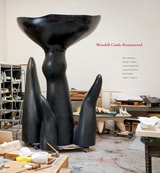
Wendell Castle Remastered
Wendell Castle
The Artist Book Foundation, 2015
Wendell Castle (1932–2018), master furniture maker, designer, sculptor, and educator, was in the sixth decade of his extraordinary creativity when an emblematic exhibition of his signature works was mounted by the Museum of Art and Design in 2016. It blended the artist's seminal works with his latest collection, produced with digital technology. In part a self-reflection, this eponymous, full-color companion book examines some of Castle's historically representative works as well as significant contemporary furniture pieces, continuing his highly respected and acclaimed sculptural/functional dialogue. Castle, ever the innovator, was remarkable for his openness to new technologies; he not only embraced an initially complex practice but has "remastered" it. His vast oeuvre represents a prodigious lifework that began in 1958 and aligns with the development of the American art furniture movement.
The solo exhibition was a somewhat self-reflective examination of his early ground-breaking works that tested the boundaries of traditional furniture making by presenting his later innovations using new digital technologies such as 3D scanning and modeling, and computer-controlled milling—a digital "remastering" of his immense oeuvre. Unique perspectives on the master's work are presented by informative essays by authors well-versed on Castle's celebrated career.

Wendell Castle
A Catalogue Raisonné, 1958–2012Wendell Castle
The Artist Book Foundation, 2014
Sculptor and furniture designer Wendell Castle (1932–2018) carved a distinct path in furniture making over nearly six decades of a distinguished career, and this long-awaited recording of his oeuvre, Wendell Castle: A Catalogue Raisonné, 1958–2012, beautifully presents the extraordinary scope of his artistry and craftsmanship. The voluminous accounting of his works, beginning with Castle's earliest, mid-century works through to his unabashed experiments with unconventional materials (gel-coated fiberglass and metallic automobile paint) and his latest signature wood laminations, is comprehensive and detailed. Three essays of varying perpectives introduce the catalogue raisonné followed by an extensive accounting of his enormous oeuvre, his exhibitions, numerous awards, and the collections of his works, as well as a substantive bibliography.
With his organic and whimsical approach to his various mediums, Castle seamlessly merged sculpture and design into one discipline, obscuring the distinction between the two. He invented the technique of carving stacked laminations of wood, and his later explorations into the qualities of fiberglass as a sculptural medium are unparalleled.
West 86th
A Journal of Decorative Arts, Design History, and Material Culture, volume 28 number 1 (Spring-Summer 2021)The University of Chicago Press
University of Chicago Press Journals, 2021
West 86th
A Journal of Decorative Arts, Design History, and Material Culture, volume 28 number 2 (Fall-Winter 2021)The University of Chicago Press
University of Chicago Press Journals, 2021
West 86th
A Journal of Decorative Arts, Design History, and Material Culture, volume 29 number 1 (Spring-Summer 2022)The University of Chicago Press
University of Chicago Press Journals, 2022
West 86th
A Journal of Decorative Arts, Design History, and Material Culture, volume 29 number 2 (Fall-Winter 2022)The University of Chicago Press
University of Chicago Press Journals, 2022
West 86th
A Journal of Decorative Arts, Design History, and Material Culture, volume 30 number 1 (Spring-Summer 2023)The University of Chicago Press
University of Chicago Press Journals, 2023
West 86th
A Journal of Decorative Arts, Design History, and Material Culture, volume 30 number 2 (Fall-Winter 2023)The University of Chicago Press
University of Chicago Press Journals, 2023
West 86th
A Journal of Decorative Arts, Design History, and Material Culture, volume 31 number 1 (Spring-Summer 2024)The University of Chicago Press
University of Chicago Press Journals, 2024
West 86th
A Journal of Decorative Arts, Design History, and Material Culture, volume 31 number 2 (Fall-Winter 2024)The University of Chicago Press
University of Chicago Press Journals, 2024
West 86th
A Journal of Decorative Arts, Design History, and Material Culture, volume 32 number 1 (Spring-Summer 2025)The University of Chicago Press
University of Chicago Press Journals, 2025
West 86th
A Journal of Decorative Arts, Design History, and Material Culture, volume 32 number 2 (Fall-Winter 2025)The University of Chicago Press
University of Chicago Press Journals, 2025
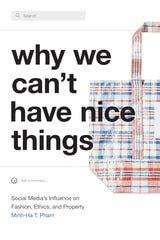
Why We Can't Have Nice Things
Social Media’s Influence on Fashion, Ethics, and PropertyMinh-Ha T. Pham
Duke University Press, 2022
Why Would Anyone Wear That?
Fascinating Fashion FactsCelia E. Stall-Meadows
Intellect Books, 2013
With a blend of wisdom and wit, Why Would Anyone Wear That? explores extreme fashions from around the world. The Victorian era was by no means alone in strange sartorial choices. Throughout history, men and women have turned to clothing and accessories to adorn and accentuate parts of the body. Some of the fashions, like bloomers, were surprisingly functional. Others, like powdered wigs and hobble skirts, were inconvenient and uncomfortable. And a few particularly painful practices could even permanently disfigure the wearer, like brass coils worn in Burma to lengthen the neck and the custom of binding of women’s feet to fit tiny lotus slippers in Song dynasty China. Presenting dozens of the most peculiar fashions, including shoes, hats, jewelry, undergarments, and outerwear, the book provides insightful commentary, placing the garments and accessories in the proper historical, social, and cultural context.
If you’ve ever wondered why the codpiece was created or the leisure suit went out of style, this book will answer that question and many more. Fully illustrated and packed with fun facts, Why Would Anyone Wear That? introduces readers to the fascinating stories behind some of the world’s weirdest fashions.
Wiener Chic
A Locational History of Vienna FashionSusan Ingram and Markus Reisenleitner
Intellect Books, 2013
The first book that connects Vienna and fashion with urban theory, Wiener Chic draws on material that is virtually unknown in an English-language context to give readers an insider’s vantage point on an underappreciated European fashion capital.
Wikis for Libraries
American Library Association, 2010
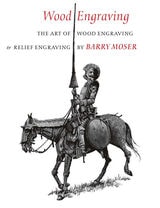
Wood Engraving
The Art of Wood Engraving and Relief EngravingBarry Moser
Brandeis University Press, 2021
Written and illustrated by master wood engraver Barry Moser, this primer on the art of wood engraving is filled with valuable knowledge including how to prepare a printing block; how to think in the medium’s properties of line, shape, and ink; and how to transfer a drawing onto a block. It also offers practical advice on which tools to use for a project and which ink works best. A highly illustrated guide to this art form, Wood Engraving will be useful to experienced and beginner engravers alike. This book features stunning examples of Moser’s art and skill to admire and inspire.
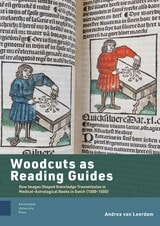
Woodcuts as Reading Guides
How Images Shaped Knowledge Transmission in Medical-Astrological Books in Dutch (1500-1550)Andrea van Leerdam
Amsterdam University Press, 2024
For this book Andrea van Leerdam received the Victorine van Schaick publicatieprijs 2024 and the Menno Hertzberger aanmoedigingsprijs 2026.
World Rule
Accountability, Legitimacy, and the Design of Global GovernanceJonathan GS Koppell
University of Chicago Press, 2010
Dilemmas from climate change to financial meltdowns make it clear that global interconnectedness is the norm in the twenty-first century. As a result, global governance organizations (GGOs)—from the World Trade Organization to the Forest Stewardship Council—have taken on prominent roles in the management of international affairs. These GGOs create and promulgate rules to address a host of pressing problems. But as World Rule reveals, they struggle to meet two challenges: building authority despite limited ability to impose sanctions and maintaining legitimacy while satisfying the demands of key constituencies whose support is essential to a global rulemaking regime.
Through a novel empirical study of twenty-five GGOs, Jonathan GS Koppell provides a clearer picture of the compromises within and the competition among these influential institutions by focusing attention on their organizational design. Analyzing four aspects of GGO organization in depth—representation and administration, the rulemaking process, adherence and enforcement, and interest group participation—Koppell describes variation systemically, identifies patterns, and offers explanations that link GGO design to the fundamental challenge of accountability in global governance.
World War and World Peace in the Age of Digital Capitalism
By Christian Fuchs
University of Westminster Press, 2025
In World War and World Peace in the Age of Digital Capitalism, Christian Fuchs asks: how do violence and war manifest themselves in global digital capitalism? How do digital capitalism and digital technologies manifest themselves in violence and warfare? What are the prospects for world peace today?
To prevent world war and advance world peace we need a better understanding of war and violence and their contexts and causes. We need to ask what war is, what violence is, what war and peace look like today and how they have changed in the 21st century. This book addresses these urgent questions and provides possible answers.
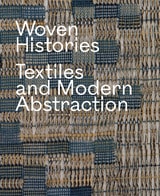
Woven Histories
Textiles and Modern AbstractionEdited by Lynne Cooke
University of Chicago Press, 2023
Published on the occasion of an exhibition curated by Lynne Cooke, Woven Histories offers a fresh and authoritative look at textiles—particularly weaving—as a major force in the evolution of abstraction. This richly illustrated volume features more than fifty creators whose work crosses divisions and hierarchies formerly segregating the fine arts from the applied arts and handicrafts.
Woven Histories begins in the early twentieth century, rooting the abstract art of Sophie Taeuber-Arp in the applied arts and handicrafts, then features the interdisciplinary practices of Anni Albers, Sonia Delaunay, Liubov Popova, Varvara Stepanova, and others who sought to effect social change through fabrics for furnishings and apparel. Over the century, the intersection of textiles and abstraction engaged artists from Ed Rossbach, Kay Sekimachi, Ruth Asawa, Lenore Tawney, and Sheila Hicks to Rosemarie Trockel, Ellen Lesperance, Jeffrey Gibson, Igshaan Adams, and Liz Collins, whose textile-based works continue to shape this discourse. Including essays by distinguished art historians as well as reflections from contemporary artists, this ambitious project traces the intertwined histories of textiles and abstraction as vehicles through which artists probe urgent issues of our time.
Writing Centers and Learning Commons
Staying Centered While Sharing Common GroundSteven J. Corbett
Utah State University Press, 2022
The chapters comprehensively examine the ways writing centers make the most of sharing common ground. Directors, coordinators, administrators, and stakeholders draw on past and present attention to writing center studies to help shape the future of the learning commons and narrate their substantial collective experience with collaborative efforts to stay centered while empowering colleagues and student writers at their institutions. The contributors explore what is gained and lost by affiliating writing centers with learning commons, how to create sound pedagogical foundations that include writing center philosophies, how writing center practices evolved or have been altered by learning center affiliations, and more.
Writing Centers and Learning Commons is for all stakeholders of writing in and across campuses collaborating on (by choice or edict), or wishing to explore the possibilities of, a learning commons enterprise.
Contributors: Alice Batt, Cassandra Book, Charles A. Braman, Elizabeth Busekrus Blackmon, Virginia Crank, Celeste Del Russo, Patricia Egbert, Christopher Giroux, Alexis Hart, Suzanne Julian, Kristen Miller, Robby Nadler, Michele Ostrow, Helen Raica-Klotz, Kathleen Richards, Robyn Rohde, Nathalie Singh-Corcoran, David Stock