Results by title
78 books match the query 'Developmental' and 5 start with w
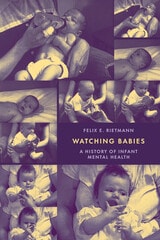
Watching Babies
A History of Infant Mental HealthFelix E. Rietmann
University of Chicago Press, 0
Shows how therapeutic culture led experts and parents to see babies as highly interactive and communicative beings.
Watching Babies tells the history of how babies became psychiatric and psychotherapeutic patients in modern medicine and healthcare. In the early twentieth century, it was virtually inconceivable that young children could suffer from psychiatric conditions such as depression, anorexia, or psychosis. Yet by the twenty-first century, infant mental health had become a thriving professional field.
Covering the 1920s to the 2020s, the book uses cases from the United States and Western Europe to follow in the footsteps of the psychologists, physicians, philologists, teachers, and parents who pioneered and contributed to the scientific observation of children. Grappling with early questions and gendered debates over who could best “observe the child,” the narrative reconstructs the halting steps that lead toward professionalization. Throughout, historian-physician Felix E. Rietmann discusses the introduction of novel technological tools (such as cameras and video recordings) for the study of children, changing perceptions over maternal care and caregiving relationships, the field’s irruption into popular culture, and the newfound role of the “baby specialist” in family life. He ends with ethnographic observations of an outpatient clinic, making use of his medical training to discuss the implications of our knowledge—and its limits—for both clinical practice and the legal and juridical frameworks of child protection.
Welcome to Middle Age!
(And Other Cultural Fictions)Edited by Richard A. Shweder
University of Chicago Press, 1998
In this volume, anthropologists, behavioral scientists, and historians explore topics ranging from the Western ideology of "midlife decline" to cultural representations of mature adulthood that operate without the category of middle age. The result is a fascinating, panoramic collection that explores the myths surrounding and the representations of mature adulthood and of those years in the life span from thirty to seventy.
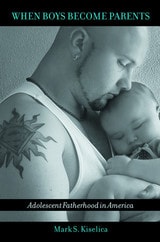
When Boys Become Parents
Adolescent Fatherhood in AmericaMark S. Kiselica
Rutgers University Press, 2011
In this informative book, Mark S. Kiselica draws on his many years of counseling teenage fathers to offer a compassionate look at the difficult life circumstances and the complicated hardships these young men experience. He dispels many of the myths surrounding teenage fatherhood and shows that, contrary to popular belief, these young men are often emotionally and physically involved in relationships with their partner and their child. But without support and guidance from adults, these relationships often deteriorate in the first year of the child-'s life. Kiselica offers advice for how professionals and policy makers can assist these young men and improve services for them.
When Boys Become Parents provides a moving portrait of teenage fathers to any reader who wants to understand and help these young men to become more competent and loving parents during their journey to adulthood.
Who Goes to College
Comparison of Minnesota College Freshmen, 1930-1960Ralph Berdie
University of Minnesota Press, 1962
Worldview and Mind
Religious Thought and Psychological DevelopmentEugene Webb
University of Missouri Press, 2009