Results by title
204 books match the query 'Direction & Production' and 11 start with w
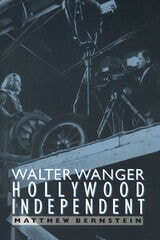
Walter Wanger, Hollywood Independent
Matthew Bernstein
University of Minnesota Press, 2000
A portrait of the trailblazing film producer whose career spanned five decades.
The long, colorful career of Walter Wanger (1894-1968) is one of Hollywood’s greatest untold stories. An intellectual and a socially conscious movie executive who produced provocative message movies and glittering romantic melodramas, Wanger’s career started at Paramount studios in the 1920s and led him to work at virtually every major studio as either a contract producer or an independent. He produced a series of American film classics, including Queen Christina, Stagecoach, Foreign Correspondent, and Invasion of the Body Snatchers, as well as a few notable flops, such as Cleopatra. This comprehensive biography brings to life a distinctive film personality and offers a new appreciation of the role of the producer in the history of American cinema.
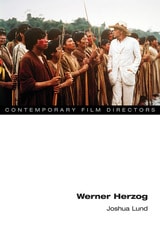
Werner Herzog
Joshua Lund
University of Illinois Press, 2020
Joshua Lund offers the first systematic interpretation of Werner Herzog's Americas-themed works, illuminating the director's career as a political filmmaker—a label Herzog himself rejects. Lund draws on materialist and post-colonial approaches to argue that Herzog's American work confronts us with the circulation, distribution, accumulation, application, and negotiation of power that resides, quietly, at the center of his films. By operating beyond conventional ideological categories, Herzog renders political ideas in radically unfamiliar ways while fearlessly confronting his viewers with questions of world-historical significance. His maddeningly opaque viewpoint challenges us to rethink discovery and conquest, migration and exploitation, resource extraction, slavery, and other foundational traumas of the contemporary human condition.
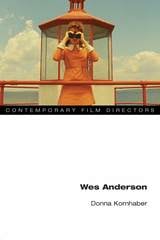
Wes Anderson
Donna Kornhaber
University of Illinois Press, 2017
Donna Kornhaber approaches Anderson's style as the necessary product of the narrative and thematic concerns that define his body of work. Using Anderson's focus on collecting, Kornhaber situates the director as the curator of his filmic worlds, a prime mover who artfully and conscientiously arranges diverse components into cohesive collections and taxonomies. Anderson peoples each mise-en-scéne in his ongoing ""Wesworld"" with characters orphaned, lost, and out of place amidst a riot of handmade clutter and relics. Within, they seek a wholeness and collective identity they manifestly lack, with their pain expressed via an ordered emotional palette that, despite being muted, cries out for attention. As Kornhaber shows, Anderson's films offer nothing less than a fascinating study in the sensation of belonging--told by characters who possess it the least.
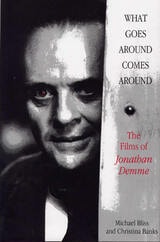
What Goes Around Comes Around
The Films of Jonathan DemmeMichael Bliss and Christina Banks
Southern Illinois University Press, 1996
This first book on the director of The Silence of the Lambs and Philadelphia is comprehensive, analyzing each of Jonathan Demme’s thirteen films.
Demme received the 1980 New York Film Critics Award as Best Director for Melvin and Howard. Subsequent Demme films such as Something Wild and the Talking Heads concert film Stop Making Sense, which won the National Society of Film Critics Award for Best Documentary, made Demme a cult favorite in the league of Roger Corman.
With 199l’s The Silence of the Lambs, Demme moved into a different league. The top-grossing film of the year, Silence won five Academy Awards, becoming the first film to sweep the Best Director, Actor, Actress, and Picture categories since 1975’s One Flew Over the Cuckoo’s Nest. Philadelphia also has been a top-grossing film, with Tom Hanks winning 1994’s Best Actor Oscar.
Michael Bliss and Christina Banks include a wealth of biographical and critical data; an exclusive interview with Demme; the only on-set report on the filming of The Silence of the Lambs; an interview with Craig McKay, Demme’s Emmy-winning film editor; a bibliography; and a Demme filmography. Many of the book’s movie still illustrations have never been published.
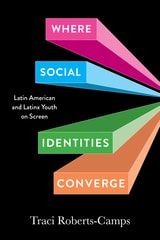
Where Social Identities Converge
Latin American and Latinx Youth on ScreenTraci Roberts-Camps
Vanderbilt University Press, 2024
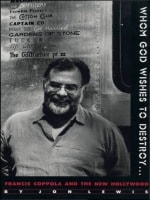
Whom God Wishes to Destroy . . .
Francis Coppola and the New HollywoodJon Lewis
Duke University Press, 1995
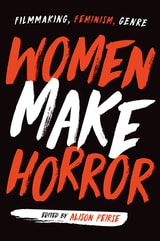
Women Make Horror
Filmmaking, Feminism, GenreAlison Peirse
Rutgers University Press, 2020
Winner of the the 2021 Best Edited Collection Award from BAFTSS
Winner of the 2021 British Fantasy Award in Best Non-Fiction
Finalist for the 2020 Bram Stoker Award® for Superior Achievement in Non-Fiction
Runner-Up for Book of the Year in the 19th Annual Rondo Halton Classic Horror Awards
“But women were never out there making horror films, that’s why they are not written about – you can’t include what doesn’t exist.”
“Women are just not that interested in making horror films.”
This is what you get when you are a woman working in horror, whether as a writer, academic, festival programmer, or filmmaker. These assumptions are based on decades of flawed scholarly, critical, and industrial thinking about the genre. Women Make Horror sets right these misconceptions. Women have always made horror. They have always been an audience for the genre, and today, as this book reveals, women academics, critics, and filmmakers alike remain committed to a film genre that offers almost unlimited opportunities for exploring and deconstructing social and cultural constructions of gender, femininity, sexuality, and the body.
Women Make Horror explores narrative and experimental cinema; short, anthology, and feature filmmaking; and offers case studies of North American, Latin American, European, East Asian, and Australian filmmakers, films, and festivals. With this book we can transform how we think about women filmmakers and genre.
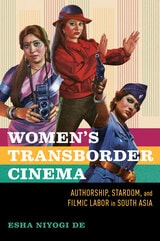
Women's Transborder Cinema
Authorship, Stardom, and Filmic Labor in South AsiaEsha Niyogi De
University of Illinois Press, 2024
Can we write women’s authorial roles into the history of industrial cinema in South Asia? How can we understand women’s creative authority and access to the film business infrastructure in this postcolonial region? Esha Niyogi De draws on rare archival and oral sources to explore these questions from a uniquely comparative perspective, delving into examples of women holding influential positions as stars, directors, and producers across the film industries in India, Pakistan, and Bangladesh.
De uses film tropes to examine the ways women directors and film entrepreneurs claim creative control within the contexts of anti-colonial nationalism and global capitalism. The region’s fictional cinemas have become staging grounds for postcolonialism, with colonial and local hierarchies merged into new imperial formations. De’s analysis shows how the gendered intersections of inequity and opportunity shape women’s fiction filmmaking while illuminating the impact of state and market formations on the process.
Innovative and essential, Women’s Transborder Cinema examines the works of South Asia’s women filmmakers from a regional perspective.
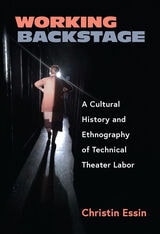
Working Backstage
A Cultural History and Ethnography of Technical Theater LaborChristin Essin
University of Michigan Press, 2021
Working Backstage illuminates the work of New York City’s theater technicians, shining a light on the essential contributions of unionized stagehands, carpenters, electricians, sound engineers, properties artisans, wardrobe crews, makeup artists, and child guardians. Too-often dismissed or misunderstood as mere functionaries, these technicians are deeply engaged in creative problem-solving and perform collaborative, intricate choreographed work that parallels the performances of actors, singers, and dancers onstage. Although their contributions have fueled the Broadway machine, their contributions have been left out of most theater histories.
Theater historian Christin Essin offers clear and evocative descriptions of this invaluable labor, based on her archival research and interviews with more than 100 backstage technicians, members of the New York local of the International Alliance of Theatrical Stage Employees. A former theater technician herself, Essin provides readers with an insider’s view of the Broadway stage, from the suspended lighting bridge of electricians operating followspots for A Chorus Line; the automation deck where carpenters move the massive scenic towers for Newsies; the makeup process in the dressing room for The Lion King; the offstage wings of Matilda the Musical, where guardians guide child actors to entrances and exits. Working Backstage makes an significant contribution to theater studies and also to labor studies, exploring the politics of the unions that serve backstage professionals, protecting their rights and insuring safe working conditions. Illuminating the history of this typically hidden workforce, the book provides uncommon insights into the business of Broadway and its backstage working relationships among cast and crew members.
Writing, Directing, and Producing Documentary Films and Digital Videos
Alan Rosenthal and Ned Eckhardt
Southern Illinois University Press, 2016
All twenty-four chapters of the volume have been revised to reflect the latest advances in documentary filmmaking. Rosenthal and Eckhardt discuss the myriad ways in which technological changes have impacted the creation process of documentary films, including how these evolving technologies both complicate and enrich filmmaking today. The book provides crucial insights for the filmmaker from the film’s conception to distribution of the finished film. Topics include creating dynamic proposals, writing narration, and navigating the murky world of contracts. Also included are many practical tips for first-time filmmakers. To provide context and to illustrate techniques, Rosenthal and Eckhardt reference more than one hundred documentaries in detail.
A new appendix, “Using the Web and Social Media to Prepare for Your Career,” guides filmmakers through the process of leveraging social media and crowdsourcing for success in filmmaking, fund-raising, and promotion. A day-to-day field manual packed with invaluable lessons, this volume is essential reading for both novice and experienced documentary filmmakers.
Writing, Directing, and Producing Documentary Films and Videos, Fourth Edition
Alan Rosenthal
Southern Illinois University Press, 2007
In response to technological advances and the growth of the documentary hybrid in the past five years, Rosenthal reconsiders how one approaches documentary filmmaking in the twenty-first century. Simply and clearly, he explains how to tackle day-to-day problems, from initial concept through distribution. He demonstrates his ideas throughout the book with examples from key filmmakers’ work.
New aspects of this fourth edition include a vital new chapter titled "Making Your First Film," and a considerable enlargement of the section for producers, "Staying Alive," which includes an extensive discussion of financing, marketing, festivals, and distribution. This new edition offers a revised chapter on nonlinear editing, more examples of precise and exacting proposals, and the addition of a complex budget example with explanation of the budgeting process. Discussion of documentary hybrids, with suggestions for mastering changes and challenges, has also been expanded, while the “Family Films” chapter includes updated information that addresses rapid expansion in this genre.