Results by title
57 books match the query 'Discourse' and 3 start with w
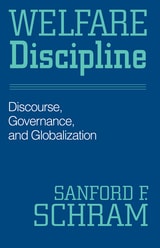
Welfare Discipline
Discourse, Governance and GlobalizationSanford F. Schram
Temple University Press, 2005
In Welfare Discipline, Schram argues that it is time to take stock of the new forms of welfare and to develop even better methods to understand them. He argues for a more contextualized approach to examining welfare policy, from the use of the idea of globalization to justify cutbacks, to the increasing employment of U.S. policy discourse overseas, to the development of asset-based approaches to helping the poor.
Stressing the importance of understanding the ways we talk about welfare, how we study it, and, critically, what we do not discuss and why, Schram offers recommendations for making welfare policy both just and effective.
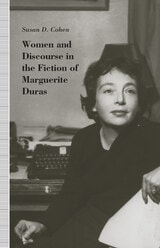
Women and Discourse in the Fiction of Marguerite Duras
Love, Legends, LanguageSusan D. Cohen
University of Massachusetts Press, 1993
One of the most famous living French writers, Marguerite Duras is renowned for her provocative and hauntingly beautiful works of fiction, drama, and cinema. This book offers the first comprehensive study of the narrative and stylistic characteristics of Duras's fiction. Susan D. Cohen examines the entire range of Duras's works, combining close textual analyses with a more general discussion of narrativity and its connections with gender, class, and race. The focus throughout is on language, representation, and difference, which Duras explores on every structural level.
Cohen shows how Duras's writings, even the controversial “erotic” works, expose and subvert the repression of women in traditional, dominant discourse and at the same time present an alternative, nonrepressive discursive model. She formulates a concept of creative “ignorance,” which she identifies as the generative principle of Duras's textual production and the approach to language it proposes. Cohen also explores the distinctive features of Duras's prose, describing how the writer achieves the ritual, legendary aura that characterizes her work.
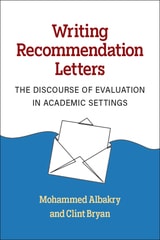
Writing Recommendation Letters
The Discourse of Evaluation in Academic SettingsMohammed Albakry and Clint Bryan
University of Michigan Press, 2024
Key Features
- Readers will learn the theoretical context that defines the genre of letters of recommendation.
- The book highlights the similarities and differences between the three different types of letters of recommendation: letters written for graduate admission, letters written in support of fellowship applications, and letters written to support obtaining a faculty position.
- Chapters on different aspects of linguistic and rhetorical features discuss presenting the applicants' credentials, highlighting the strengths of their character, accentuating and downplaying certain traits, as well as the pros and cons of boilerplate language and the use of customary frames for opening and closing.
- Readers will see real-world examples of actual letters of recommendation to see how seasoned faculty build the case for the applicant.