Results by title
808 books match the query 'Drama' and 14 start with w
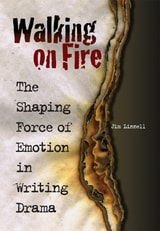
Walking on Fire
The Shaping Force of Emotion in Writing DramaJim Linnell
Southern Illinois University Press, 2011
Walking on Fire opens up new conversations about content and emotion for writers and offers exciting answers to the questions of why we make drama and why we connect to it. Linnell’s userfriendly theory and passionate approach create a framework for understanding the links between the writer’s work in creating the text, the text itself, and the audience’s engagement.
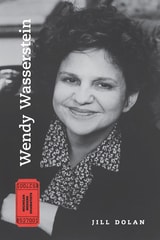
Wendy Wasserstein
Jill Dolan
University of Michigan Press, 2017
Wendy Wasserstein provides a critical introduction and a feminist reappraisal of the significant plays of one of the most famous contemporary American women playwrights. Following a biographical introduction, chapters address each of her important plays, situating Wasserstein’s work in the history of the US feminist movement and in a historical moment in which women artists continue to struggle for recognition.
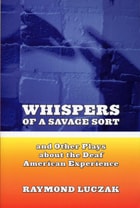
Whispers of a Savage Sort
And Other Plays about the Deaf American ExperienceRaymond Luczak
Gallaudet University Press, 2009
“Oh, why can’t the deaf community be more like a family?” is the plaint of a character in Raymond Luczak’s title play Whispers of a Savage Sort. It also goes far in characterizing the main thread that runs through his remarkable collection of work offered in this new volume. Whispers of a Savage Sort and Other Plays about the Deaf American Experience presents a progression of plays that depict Deaf people in situations well-known by the community’s members. Written to be signing-driven, these plays feature Deaf characters from the various strata of Deaf society. Each play centers on different yet equally familiar issues.
Snooty brings to life the difficulties of surviving the social pecking order in a deaf residential school. The main character’s only escape is a rich fantasy life in which he is in control. Doogle confronts its characters with the intrusion of technological communication devices parallel to the virtually forced intimacy of such a small, close community. Brought into stark focus by the specter of AIDS, Love in My Veins explores how trust, betrayal, and ultimately forgiveness can transform a Deaf couple’s love for each other in a Deaf community. The collection’s eponymous Whispers of a Savage Sort reveals the relentless damage that rumor and innuendo can do to a diverse group of Deaf individuals. The emotions, identities, and consequences created by Luczak in these dramas illuminate the Deaf American community in fascinating detail rarely seen in any medium today.
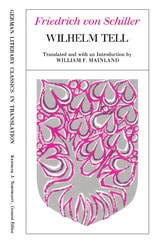
Wilhelm Tell
Friedrich von Schiller
University of Chicago Press, 1973
Schiller based his play on chronicles of the Swiss liberation movement, in which Wilhelm Tell played a major role. Since Tell's existence has never been proven, Schiller, a historian by profession, felt he had to devise a figure who would bring the uncertainties and contradictions of the various Swiss chronicles into focus. Respected for his courage and skill with a bow, for his peaceable nature and his integrity, Schiller's archer—while always ready to aid his fellows—habitually seeks solitude. In the midst of political turmoil Wilhelm Tell is the nonpolitical man of action.
Keenly interested in the problematic interplay of history and legend, Schiller turned it to be dramatic advantage. He constructed his play to illustrate the greatest possible development of the character traits suggested for Tell by the chronicles. The result of Schiller's supreme achievement in historical drama.
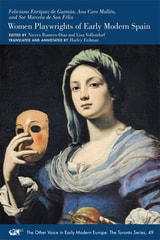
Women Playwrights of Early Modern Spain
Feliciana Enríquez de Guzmán, Ana Caro Mallén, and Sor Marcela de San Félix
Iter Press, 2016
This volume presents ten plays by three leading women playwrights of Spain’s Golden Age. Included are four bawdy and outrageous comic interludes; a full-length comedy involving sorcery, chivalry, and dramatic stage effects; and five short religious plays satirizing daily life in the convent. A critical introduction to the volume positions these women and their works in the world of seventeenth-century Spain.
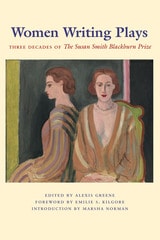
Women Writing Plays
Three Decades of the Susan Smith Blackburn PrizeEdited by Alexis Greene
University of Texas Press, 2006
Women's playwriting burgeoned in the United States and the United Kingdom as part of the feminist movement of the 1970s. Ever since, playwriting women have been embracing new subjects, experimenting with form, and devising new ways of looking at the world. To honor their achievements and inspire future endeavors, the Susan Smith Blackburn Prize was established in memory of an American actor, journalist, and feminist who died of breast cancer. In the nearly three decades of the award's existence, more than three hundred English-speaking women playwrights have been finalists for the Blackburn Prize in recognition of their work, including such prominent writers as Marsha Norman, Cheryl L. West, Wendy Wasserstein, Caryl Churchill, Paula Vogel, and Suzan-Lori Parks.
This volume offers a comprehensive overview of women's playwriting, as well as a celebration of the Susan Smith Blackburn Prize. It combines critical essays, playwrights' memoirs, and conversations and interviews with playwrights to explore how women's playwriting evolved in relation to the women's movement and how it continues to map new territory and find fresh modes of expression. The majority of contributors to this volume—playwrights, arts journalists, and theater critics—have had some connection to the Blackburn Prize, either as award recipients, play readers, or judges. The memoirs, conversations, and interviews come from some of the finest women playwrights of the last three decades. These dramatists offer fascinating insight into the playwriting art, theatrical careers, and women's goals in writing for the theater.
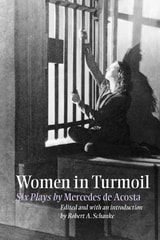
Women in Turmoil
Six Plays by Mercedes de AcostaEdited and with an introduction by Robert A. Schanke
Southern Illinois University Press, 2003
In this first publication of six plays by the flamboyantly uninhibited author, poet, and playwright Mercedes de Acosta (1893–1968), theater historian Robert A. Schanke rescues these lost theatrical writings from the dusty margins of obscurity. Often autobiographical, always rife with gender struggle, and still decidedly stageworthy, Women in Turmoil: Six Plays by Mercedes de Acosta constitutes a significant find for the canon of gay and lesbian drama.
In her 1960 autobiography Here Lies the Heart, de Acosta notes that as she was contemplating marriage to a man in 1920, she was "in a strange turmoil about world affairs, my own writing, suffrage, sex, and my inner spiritual development." The voice in these plays is that of a lesbian in turmoil, marginalized and ignored. Her same-sex desires and struggles for acceptance fueled her writings, and nowhere is that more evident than in the plays contained herein. The women characters struggle with unfulfilling marriages, divorce, unrequited sexual desire, suppressed identity, and a longing for recognition.
Of the six plays, only the first two were ever produced. Jehanne d’Arc (1922) premiered in Paris with de Acosta’s lover at the time, Eva Le Gallienne, starring and Norman Bel Geddes designing the set and lights. In 1934, de Acosta adapted it into a screenplay for Greta Garbo, then her lover, but it was never filmed. Portraying rampant anti-Semitism in a small New England town, Jacob Slovak (1923) was performed both on Broadway and in London, with the London production starring John Gielgud and Ralph Richardson.
The Mother of Christ (1924) is a long one-act play written for the internationally known actress Eleonora Duse. After Duse’s death, several other actresses including Eva Bartok, Jeanne Eagels, and Lillian Gish explored productions of the play. Igor Stravinsky wrote a score, Norman Bel Geddes designed a set, and Gladys Calthrop designed costumes. However, the play was never produced.
Her most autobiographical play, World Without End (1925), and her most sensational play, The Dark Light (1926), both unfold through plots of sibling rivalry, incest, and suicide. With overtones of Ibsen, Illusion (1928) continues the themes of de Acosta’s previous plays with her rough and seedy cast of characters, but here the playwright’s drama grows to incorporate a yearning for belonging as well as strong elements of class conflict.
What notoriety remains associated with de Acosta has less to do with her writing than with her infamous romances with the likes of Greta Garbo, Marlene Dietrich, Isadora Duncan, Alla Nazimova, Eva Le Gallienne, Tamara Karsavina, Pola Negri, and Ona Munson. Through this collection of six powerfully poignant dramas, editor Robert A. Schanke strives to correct myths about Mercedes de Acosta and to restore both her name and her literary achievements to their proper place in history.
Robert A. Schanke has authored the original biography, “That Furious Lesbian:” The Story of Mercedes de Acosta, also available from Southern Illinois University Press.
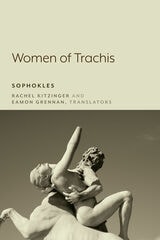
Women of Trachis
Rachel Kitzinger
Lever Press, 2021
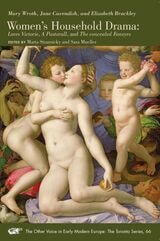
Women's Household Drama
Loves Victorie, A Pastorall, and The concealed FansyesMary Wroth, Jane Cavendish, and Elizabeth Brackley
Iter Press, 2018
Volume 66 in the Other Voice in Early Modern Europe - The Chicago Series
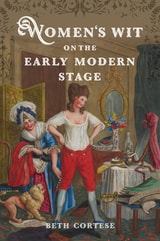
Women's Wit on the Early Modern Stage
Beth Cortese
University of Delaware Press, 2027
Women's Wit on the Early Modern Stage explores the overlooked, gendered challenge posed by heroines and villainesses in comedies, tragedies, and tragicomedies through who displayed their wit through repartee, plotting, and disguise, combining verbal skill with physical action to produce a feminized perspective. The chapters showcase the portrayal of women’s wit in the works of Frances Boothby, Aphra Behn, Elizabeth Polwhele, Mary Pix, Catharine Trotter, Delarivier Manley, and Susanna Centlivre, in which female characters criticize authority and address female spectators in the theater, including them as part of an emerging critical discourse on the public stage. As the first-ever scholarly monograph about women’s wit in drama before the twentieth century, this book draws attention to the cultural and social role that wit played in the public sphere as a mode of critique, empowerment, and play for women both on and offstage.
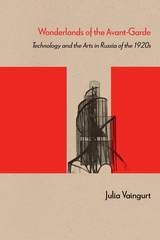
Wonderlands of the Avant-Garde
Technology and the Arts in Russia of the 1920sJulia Vaingurt
Northwestern University Press, 2013
In postrevolutionary Russia, as the Soviet government pursued rapid industrialization, avant-garde artists declared their intent to serve the nascent state and to transform life in accordance with their aesthetic designs. Despite their utilitarian intentions, however, most avant-gardists rarely created works regarded as practical instruments of societal transformation. Exploring this paradox, Vaingurt claims that the artists’ fusion of technology and aesthetics prevented their creations from being fully conscripted into the arsenal of political hegemony. The purposes of avant-garde technologies, she contends, are contemplative rather than constructive. Looking at Meyerhold’s theater, Tatlin’s and Khlebnikov’s architectural designs, Mayakovsky’s writings, and other works from the period, Vaingurt offers an innovative reading of an exceptionally complex moment in the formation of Soviet culture.
Words at Play
Creative Writing and DramaturgyFelicia Hardison Londre. Forewords by Dakin Williams and Barry Kyle
Southern Illinois University Press, 2005
In this encompassing and accessible introduction to dramaturgy, Felicia Hardison Londré promotes the dramaturgical essay as both an art form and as a method for improving creative writing skills. Words at Play: Creative Writing and Dramaturgy includes Londré’s essays on plays produced at several regional professional theatre companies interspersed with instructive examples for writing more clearly, economically, and compellingly.
Beginning with an introduction that outlines the purpose of the dramaturgical essay as well as its usefulness as a tool for teaching how to write for the theatre, Londré provides numerous examples of this specialized literary genre culled from program essays she has written for Missouri Repertory Theatre, Nebraska Shakespeare Festival, Heart of America Shakespeare Festival, American Heartland Theatre, and Cincinnati Playhouse in the Park. Words at Play: Creative Writing and Dramaturgy contains more than sixty complete essays and pertinent selections from twenty others.
Drawing on personal and professional experiences as a teacher and dramaturg, Londré considers plays from timeless classics, including those of Shakespeare and Chekhov, to contemporary favorites and a few unusual and largely unknown pieces. Words at Play: Creative Writing and Dramaturgy furthermore incorporates introductory paragraphs that are informal and personal yet cogent and critical, providing readers with object lessons in both writing style and analysis. Taking the reader into her confidence, Londré also shows how a dramaturg develops a print relationship with other theatre artists and the community. A foreword by Royal Shakespeare Company associate artist Barry Kyle addresses the evolving role of the dramaturg in Britain and America. Dakin Williams, brother of playwright Tennessee Williams, provides a letter.
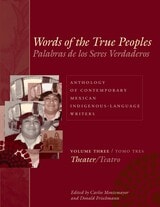
Words of the True Peoples/Palabras de los Seres Verdaderos
Anthology of Contemporary Mexican Indigenous-Language Writers/Antología de Escritores Actuales en Lenguas Indígenas de México: Volume Three/Tomo Tres: Theater/TeatroEdited by Carlos Montemayor and Donald Frischmann
University of Texas Press, 2007
As part of the larger, ongoing movement throughout Latin America to reclaim non-Hispanic cultural heritages and identities, indigenous writers in Mexico are reappropriating the written word in their ancestral tongues and in Spanish. As a result, the long-marginalized, innermost feelings, needs, and worldviews of Mexico's ten to twenty million indigenous peoples are now being widely revealed to the Western societies with which these peoples coexist. To contribute to this process and serve as a bridge of intercultural communication and understanding, this groundbreaking, three-volume anthology gathers works by the leading generation of writers in thirteen Mexican indigenous languages: Nahuatl, Maya, Tzotzil, Tzeltal, Tojolabal, Tabasco Chontal, Purepecha, Sierra Zapoteco, Isthmus Zapoteco, Mazateco, Ñahñu, Totonaco, and Huichol.
Volume Three contains plays by six Mexican indigenous writers. Their plays appear first in their native language, followed by English and Spanish translations. Montemayor and Frischmann have abundantly annotated the Spanish, English, and indigenous-language texts and added glossaries and essays that introduce the work of each playwright and discuss the role of theater within indigenous communities. These supporting materials make the anthology especially accessible and interesting for nonspecialist readers seeking a greater understanding of Mexico's indigenous peoples.
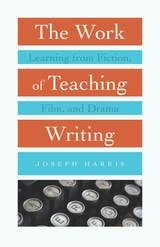
Work of Teaching Writing
Learning from Fiction, Film, and DramaJoseph Harris
Utah State University Press, 2020
Each chapter examines a fictional representation of writing classes—as portrayed in Dead Poets Society, Up the Down Staircase, Educating Rita, Push, and more—and shifts the conversation from how these works portray teachers to how they dramatize the actual work of teaching. Harris considers scenes of instruction from different stages of the writing process and depictions of students and teachers at work together to highlight the everyday aspects of teaching writing.
In the writing classroom the ideas of teachers come to life in the work of their students. The Work of Teaching Writing shows what fiction, film, and drama can convey about the moment of exchange between teacher and student as they work together to create new insights into writing. It will interest both high school and undergraduate English teachers, as well as graduate students and scholars in composition and rhetoric, literary studies, and film studies.