Results by title
374 books match the query 'Economic History' and 13 start with w
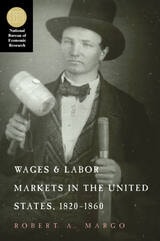
Wages and Labor Markets in the United States, 1820-1860
Robert A. Margo
University of Chicago Press, 1999
This volume makes a significant contribution to economic history by presenting a vast amount of previously unexamined data to advance the understanding of the history of wages and labor markets in the antebellum economy.
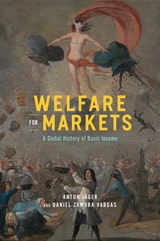
Welfare for Markets
A Global History of Basic IncomeAnton Jäger and Daniel Zamora Vargas
University of Chicago Press, 2023
A sweeping intellectual history of the welfare state’s policy-in-waiting.
The idea of a government paying its citizens to keep them out of poverty—now known as basic income—is hardly new. Often dated as far back as ancient Rome, basic income’s modern conception truly emerged in the late nineteenth century. Yet as one of today’s most controversial proposals, it draws supporters from across the political spectrum.
In this eye-opening work, Anton Jäger and Daniel Zamora Vargas trace basic income from its rise in American and British policy debates following periods of economic tumult to its modern relationship with technopopulist figures in Silicon Valley. They chronicle how the idea first arose in the United States and Europe as a market-friendly alternative to the postwar welfare state and how interest in the policy has grown in the wake of the 2008 credit crisis and COVID-19 crash.
An incisive, comprehensive history, Welfare for Markets tells the story of how a fringe idea conceived in economics seminars went global, revealing the most significant shift in political culture since the end of the Cold War.

Well Worth Saving
How the New Deal Safeguarded Home OwnershipPrice Fishback, Jonathan Rose, and Kenneth Snowden
University of Chicago Press, 2013
Well Worth Saving tells the story of the disastrous housing market during the Great Depression and the extent to which an immensely popular New Deal relief program, the Home Owners’ Loan Corporation (HOLC), was able to stem foreclosures by buying distressed mortgages from lenders and refinancing them. Drawing on historical records and modern statistical tools, Price Fishback, Jonathan Rose, and Kenneth Snowden investigate important unanswered questions to provide an unparalleled view of the mortgage loan industry throughout the 1920s and early ’30s. Combining this with the stories of those involved, the book offers a clear understanding of the HOLC within the context of the housing market in which it operated, including an examination of how the incentives and behaviors at play throughout the crisis influenced the effectiveness of policy.
More than eighty years after the start of the Great Depression, when politicians have called for similar programs to quell the current mortgage crisis, this accessible account of the Home Owners’ Loan Corporation holds invaluable lessons for our own time.

What We Are Fighting For
A Radical Collective ManifestoEdited by Federico Campagna and Emanuele Campiglio
Pluto Press, 2012
From the pens of major figures of the anti-austerity movement, comes the first radical, collective manifesto of the new decade.
From participatory democracy to media reform, from direct action to communal living, What Are We Fighting For is a bold look at alternatives to the economic, social and political travesty of contemporary capitalism. Chapters from Owen Jones, David Graeber, John Holloway, Nina Power, Mark Fisher, Franco Berardi Bifo and Marina Sitrin show a multifaceted but collective desire for a better world.
Anarchists, communists, feminists and autonomists come together to inspire us to think beyond neoliberalism.
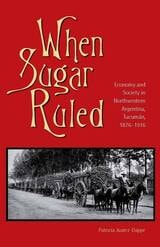
When Sugar Ruled
Economy and Society in Northwestern Argentina, Tucumán, 1876–1916Patricia Juarez-Dappe
Ohio University Press, 2010
Two tropical commodities—coffee and sugar—dominated Latin American export economies in the nineteenth and early twentieth centuries. When Sugar Ruled: Economy and Society in Northwestern Argentina, Tucumán, 1876–1916 presents a distinctive case that does not quite fit into the pattern of many Latin American sugar economies.
During the last quarter of the nineteenth century, the province of Tucumán emerged as Argentina’s main sugar producer, its industry catering almost exclusively to the needs of the national market and financed mostly by domestic capital. The expansion of the sugar industry provoked profound changes in Tucumán’s economy as sugar specialization replaced the province’s diversified productive structure. Since ingenios relied on outside growers for the supply of a large share of the sugarcane, sugar production did not produce massive land dispossession and resulted in the emergence of a heterogeneous planter group. The arrival of thousands of workers from neighboring provinces during the harvest season transformed rural society dramatically. As the most dynamic sector in Tucumán’s economy, revenues from sugar enabled the provincial government to participate in the modernizing movement sweeping turn-of-the-century Argentina.
Patricia Juarez-Dappe uncovers the unique features that characterized sugar production in Tucumán as well as the changes experienced by the province’s economy and society between 1876 and 1916, the period of most dramatic sugar expansion. When Sugar Ruled is an important addition to the literature on sugar economies in Latin America and Argentina.
While Waiting for Rain
Community, Economy, and Law in a Time of ChangeJohn Henry Schlegel
University of Michigan Press, 2022
What might a sensible community choose to do if its economy has fallen apart and becoming a ghost town is not an acceptable option? Unfortunately, answers to this question have long been measured against an implicit standard: the postwar economy of the 1950s. After showing why that economy provides an implausible standard—made possible by the lack of economic competition from the European and Asian countries, winners or losers, touched by the war—John Henry Schlegel attempts to answer the question of what to do.
While Waiting for Rain first examines the economic history of the United States as well as that of Buffalo, New York: an appropriate stand-in for any city that may have seen its economy start to fall apart in the 1960s, 70s, and 80s. It makes clear that neither Buffalo nor the United States as a whole has had an economy in the sense of “a persistent market structure that is the fusion of an understanding of economic life with the patterns of behavior within the economic, political, and social institutions that enact that understanding” since both economies collapsed. Next, this book builds a plausible theory of how economic growth might take place by examining the work of the famous urbanist, Jane Jacobs, especially her book Cities and the Wealth of Nations. Her work, like that of many others, emphasizes the importance of innovation for economic growth, but is singular in its insistence that such innovation has to come from local resources. It can neither be bought nor given, even by well-intentioned political actors. As a result Americans generally, as well as locally, are like farmers in the midst of a drought, left to review their resources and wait. Finally, it returns to both the local Buffalo and the national economies to consider what these political units might plausibly do while waiting for an economy to emerge.
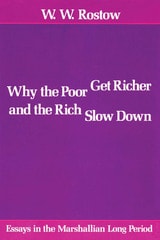
Why the Poor Get Richer and the Rich Slow Down
Essays in the Marshallian Long PeriodBy W. W. Rostow
University of Texas Press, 1980
Bearing on fundamental issues of economic theory, history, and public policy, this volume elaborates and goes beyond themes enunciated in W. W. Rostow's previous works. The eight essays presented here are unified by the author's insistence that neo-Keynesian and neoclassical theory are an inadequate basis for economic analysis and policy prescription. Changes in technology and in the supply of energy, food, and raw materials, he contends, must be taken into account. The scale and character of the investments required to respond to these changes link his analysis back to conventional income analysis. Rostow outlines in several contexts the framework for a general, disaggregated theory of production and prices that meets this criterion.
The theoretical and historical essays include a review and unification of various long-cycle theories; a formal mathematical model of the Kondratieff cycle; a review of theories relating technology and the price system, including Rostow's own formulation of the appropriate linkage; a lengthy analysis of the pre-1914 relation between money and prices, including a detailed critique of modern monetarist interpretations; and an analysis of the proposition that economic growth assumes an S-shaped path of acceleration and deceleration.
The policy essays include an examination of the links between energy-related investment, full employment, and patterns of regional development in the United States; the discussion of an appropriate framework and procedure for North-South international economic negotiations; and the text of a 1965 talk on inflation that touches on the relations among economics, economists, and the performance of societies as a whole.
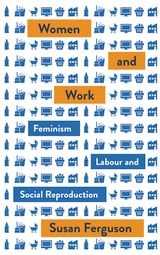
Women and Work
Feminism, Labour, and Social ReproductionSusan Ferguson
Pluto Press, 2019
Feminism is once again on the political agenda. Across the world women are taking to the streets to protest unfair working conditions, abortion laws, and sexual violence. They are demanding decent wages, better schools and free childcare.
But why do some feminists choose to fight for more women CEOs, while others fight for a world without CEOs?
To understand these divergent approaches, Susan Ferguson looks at the ideas that have inspired women to protest, exploring the ways in which feminists have placed work at the center of their struggle for emancipation. Two distinct trajectories emerge: “equality feminism” and “social reproduction feminism.” Ferguson argues that socialists have too often embraced the “liberal” tendencies of equality feminism, while neglecting the insights of social reproduction feminism. Engaging with feminist anti-work critiques, She proposes that women's emancipation depends upon a radical reimagining of all labor and advocates for a renewed social reproduction framework as a powerful basis for an inclusive feminist politics. Chapters here include;
*The Rational-Humanist Roots of Equality Feminism
*Socialist Feminism: Two Approaches to Understanding Women's Work
*Equal Work for and against Capital
*Anti-Racist Feminism and Women's Work
*A Political Economy of 'Women's Work': Producing Patriarchal Capitalism
*Renewing Social Reproduction Feminism
*The Social Reproduction Strike: Life-Making Beyond Capitalism
Women and Work offers a timely and important look at the intersectionality of feminism and workers rights. Scholars and students will both find valuable insights into the history of feminist theory and social movement.
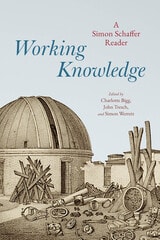
Working Knowledge
A Simon Schaffer ReaderSimon Schaffer
University of Chicago Press, 2026
Working Knowledge is the first English-language collection of essays by Simon Schaffer, coauthor of Leviathan and the Air-Pump, a landmark text in the history of science. Though the latter may be his most famous book, Schaffer is also renowned for seminal articles on Isaac Newton and the cultures of popular spectacle, nineteenth-century physics and its practices of labor discipline and standardization, the history of anthropology and collecting, and the globe-spanning cultural interactions that have shaped modern science. Working Knowledge compiles these well-known pieces alongside newer selections, making them accessible in a single place and representing the huge scope and impact of Schaffer’s oeuvre.
The Reader divides sixteen of Schaffer’s articles across five thematic sections, which take up timely issues like the turn toward global histories of science; the intersection of science and capitalism; the interaction between bodies and machines; and the connection between science, politics, and the environment. Eight new essays by notable historians such as Adrian Johns, Lissa Roberts, and Steven Shapin bring Schaffer’s pieces into discussion with current scholarship. Illustrations and brief commentaries by Schaffer and the artist Adam Lowe, a longtime collaborator, are included throughout the volume.
Bringing together essential articles that were previously scattered across several publications, Working Knowledge is an insightful introduction to Schaffer and his ever-relevant writing.
World Development
An IntroductionProdromos Panayiotopoulos
Pluto Press, 2001
World Development offers answers to these questions. A comprehensive introductory guide for students, teachers, volunteers and NGO workers in development, World Development examines the substantive issues surrounding development, industrialisation and globalization and places them within a historic context. It outlines the historical development of the world economy and assesses the current prospects for developing countries. The book contains in-depth analyses of how particular industries operate at local and global levels, drawing from case studies on textiles, tourism and copper. There are also case studies of specific countries, including South Korea, Cyprus, Mexico, China and Spain.
World Economy and National Finance in Historical Perspective
Charles P. Kindleberger
University of Michigan Press, 1995
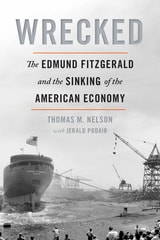
Wrecked
The Edmund Fitzgerald and the Sinking of the American EconomyThomas M Nelson
Michigan State University Press, 2025
Wrong Turnings
How the Left Got LostGeoffrey M. Hodgson
University of Chicago Press, 2017
With Wrong-Turnings, Geoffrey M. Hodgson tracks changes in the meaning of the Left and offers suggestions for how the Left might reclaim some of its core values. The term Left originated during the French Revolution, when revolutionaries sought to abolish the monarchy and privilege and to introduce a new society based on liberty, equality, fraternity, and universal rights. Over time, however, the meaning radically changed, especially through the influence of socialism and collectivism. Hodgson argues that the Left must rediscover its roots in the Enlightenment and readopt Enlightenment values it has abandoned, such as those concerning democracy and universal human rights. Only then will it be prepared to address contemporary problems of inequality and the survival of democracy. Possible measures could include enhanced educational provisions, a guaranteed basic income, and a viable mechanism for fair distribution of wealth.
Wrong-Turnings is a truly pathbreaking work from one of our most prolific and respected institutional theorists. It will change our understanding of how the left got lost.