Results by title
118 books match the query 'Epistemology' and 3 start with w

What Does It Mean to Be Human?
Elizabeth Minnich
Temple University Press, 2027
What does it mean to be human? It has long been a tantalizing question for religious figures, scientists, political leaders, artists, and autocrats, among others. Noted philosopher Elizabeth Minnich claims, “There are no answers to such a question (although we all have favored responses).”
In What Does It Mean to Be Human?, Minnich invites us to reclaim our freedom from the dangerously distorted rationales for supremacism. She explores how the simplest mistakes in responses to “what does it mean to be human?” have enabled deadly historical errors, totalizing regimes, colonialisms, genocides, and enslavement. Paying close attention to the languages, logics, and nonsense of authoritative pronouncements, Minnich considers ways of thinking that affect and reflect meaning. She offers a fresh understanding of how mistakenly limited definitions of “human being” can be.
What Does It Mean to Be Human? emerges from Minnich’s ongoing effort to find, think through, and dissolve past mistakes that keep resurfacing to disastrous effect.
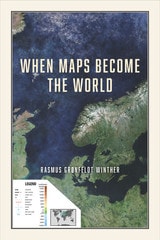
When Maps Become the World
Rasmus Grønfeldt Winther
University of Chicago Press, 2020
This book is about the promises and perils of map thinking. Maps are purpose-driven abstractions, discarding detail to highlight only particular features of a territory. By preserving certain features at the expense of others, they can be used to reinforce a privileged position.
When Maps Become the World shows us how the scientific theories, models, and concepts we use to intervene in the world function as maps, and explores the consequences of this, both good and bad. We increasingly understand the world around us in terms of models, to the extent that we often take the models for reality. Winther explains how in time, our historical representations in science, in cartography, and in our stories about ourselves replace individual memories and become dominant social narratives—they become reality, and they can remake the world.
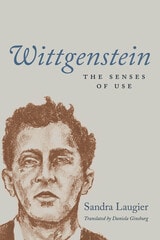
Wittgenstein
The Senses of UseSandra Laugier
University of Chicago Press, 2025
One of philosopher Ludwig Wittgenstein’s most consequential claims was that the meaning of the word, its sense, is its use in language. This deceptively simple claim, the foundation of what became known as ordinary language philosophy, has animated thinkers across disciplinary bounds from metaphysics to ethics and more. In The Senses of Use, Sandra Laugier embarks on a fresh journey through Wittgenstein’s corpus that emphasizes the place of ordinary life and language in its thought. Through his Tractatus Logico-Philosophicus, Philosophical Investigations, and rich posthumously published works, Laugier offers a compelling new look at Wittgenstein as a philosopher of mind.