Results by title
316 books match the query 'Ethnomusicology' and 6 start with w
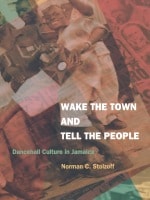
Wake the Town and Tell the People
Dancehall Culture in JamaicaNorman C. Stolzoff
Duke University Press, 2000
Norman C. Stolzoff brings a fan’s enthusiasm to his broad perspective on dancehall, providing extensive interviews, original photographs, and anthropological analysis from eighteen months of fieldwork in Kingston. Stolzoff argues that this enormously popular musical genre expresses deep conflicts within Jamaican society, not only along lines of class, race, gender, sexuality, and religion but also between different factions struggling to gain control of the island nation’s political culture. Dancehall culture thus remains a key arena where the future of this volatile nation is shaped. As his argument unfolds, Stolzoff traces the history of Jamaican music from its roots in the late eighteenth century to 1945, from the addition of sound systems and technology during the mid-forties to early sixties, and finally through the post-independence years from the early sixties to the present.
Wake the Town and Tell the People offers a general introduction for those interested in dancehall music and culture. For the fan or musicologist, it will serve as a comprehensive reference book.
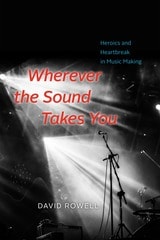
Wherever the Sound Takes You
Heroics and Heartbreak in Music MakingDavid Rowell
University of Chicago Press, 2019
This wide-ranging and openhearted book blossoms outward from there. Rowell visits clubs, concert halls, street corners, and open mics, traveling from the Rock and Roll Hall of Fame in Cleveland to a death metal festival in Maryland, with stops along the way in the Swiss Alps and Appalachia. His keen reportorial eye treats us to in-depth portraits of musicians from platinum-selling legend Peter Frampton to a devout Christian who spends his days alone in a storage unit bashing away on one of the largest drum sets in the world. Rowell illuminates the feelings that both spur music’s creation and emerge from its performance, as well as the physical instruments that enables their expression. With an uncommon sensitivity and grace, he charts the pleasure and pain of musicians consumed with what they do—as all of us listen in.
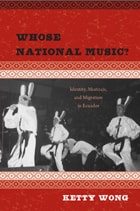
Whose National Music?
Identity, Mestizaje, and Migration in EcuadorKetty Wong
Temple University Press, 2012
Musical genres, musical instruments, and even songs can often capture the essence of a country's national character. In Whose National Music?, the first book-length study of Ecuadorian popular music, Ketty Wong explores Ecuadorians' views of their national identity in the twentieth and early twenty-first centuries through an examination of the music labels they use. Wong deftly addresses the notion of música nacional, an umbrella term for Ecuadorian popular songs often defined by the socio-economic, ethnic, racial, and generational background of people discussing the music.
Wong shows how the inclusion or exclusion of elite and working-class musics within the scope of música nacional articulate different social, ethnic, and racial configurations of the nation for white, mestizo, indigenous, and Afro-Ecuadorian populations.
Presenting a macropicture of what música nacional is—or should be—Whose National Music? provides a lively historical trajectory of a country's diverse musical scene.
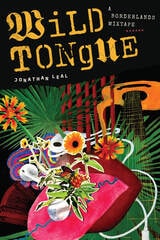
Wild Tongue
A Borderlands MixtapeJonathan Leal
Duke University Press, 2026
Women Musicians of Uzbekistan
From Courtyard to ConservatoryTanya Merchant
University of Illinois Press, 2015
Drawing on fieldwork and music study carried out between 2001 and 2014, Merchant challenges the Western idea of Central Asian women as sequestered and oppressed. Instead, she notes, Uzbekistan's women stand at the forefront of four prominent genres: maqom, folk music, Western art music, and popular music. Merchant's recounting of the women's experiences, stories, and memories underscores the complex role that these musicians and vocalists play in educational institutions and concert halls, street kiosks and the culturally essential sphere of wedding music. Throughout the book, Merchant ties nationalism and femininity to performances and reveals how the music of these women is linked to a burgeoning national identity.
Important and revelatory, Women Musicians of Uzbekistan looks into music's part in constructing gendered national identity and the complicated role of femininity in a former Soviet republic's national project.
World Flutelore
Folktales, Myths, and Other Stories of Magical Flute PowerDale A. Olsen
University of Illinois Press, 2013
Describing and interpreting many examples of flutes as they are found in mythology, poetry, lyrics, and other narrative and literary sources from around the world, veteran ethnomusicologist Dale Olsen seeks to determine what is singularly distinct or unique about flutes, flute playing, and flute players in a global context. He shows how and why flutes are important for personal, communal, religious, spiritual, and secular expression and even, perhaps, existence. This is a book for students, scholars, and any reader interested in the cultural power of flutes.