Results by title
375 books match the query 'Excavations (Archaeology)' and 6 start with w
Warfare and the Fall of a Fortified Center
Archaeological Investigations at AguatecaTakeshi Inomata
Vanderbilt University Press, 2006
VIMA Series #3
West African Early Towns
Archaeology of Households in Urban LandscapesAugustin F. C. Holl
University of Michigan Press, 2006
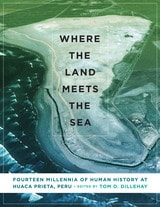
Where the Land Meets the Sea
Fourteen Millennia of Human History at Huaca Prieta, PeruEdited by Tom D. Dillehay
University of Texas Press, 2017
Huaca Prieta—one the world’s best-known, yet least understood, early maritime mound sites—and other Preceramic sites on the north coast of Peru bear witness to the beginnings of civilization in the Americas. Across more than fourteen millennia of human occupation, the coalescence of maritime, agricultural, and pastoral economies in the north coast settlements set in motion long-term biological and cultural transformations that led to increased social complexity and food production, and later the emergence of preindustrial states and urbanism. These developments make Huaca Prieta a site of global importance in world archaeology.
This landmark volume presents the findings of a major archaeological investigation carried out at Huaca Prieta, the nearby mound Paredones, and several Preceramic domestic sites in the lower Chicama Valley between 2006 and 2013 by an interdisciplinary team of more than fifty international specialists. The book’s contributors report on and analyze the extensive material records from the sites, including data on the architecture and spatial patterns; floral, faunal, and lithic remains; textiles; basketry; and more. Using this rich data, they build new models of the social, economic, and ontological practices of these early peoples, who appear to have favored cooperation and living in harmony with the environment over the accumulation of power and the development of ruling elites. This discovery adds a crucial new dimension to our understanding of emergent social complexity, cosmology, and religion in the Neolithic period.
Why Those Who Shovel Are Silent
A History of Local Archaeological Knowledge and LaborAllison Mickel
University Press of Colorado, 2020
Why Those Who Shovel Are Silent is based on six years of in-depth ethnographic work with current and former site workers at two major Middle Eastern archaeological sites—Petra, Jordan, and Çatalhöyük, Turkey—combined with thorough archival research. Author Allison Mickel describes the nature of the knowledge that locally hired archaeological laborers exclusively possess about artifacts, excavation methods, and archaeological interpretation, showing that archaeological workers are experts about a wide range of topics in archaeology. At the same time, Mickel reveals a financial incentive for site workers to pretend to be less knowledgeable than they actually are, as they risk losing their jobs or demotion if they reveal their expertise.
Despite a recent proliferation of critical research examining the history and politics of archaeology, the topic of archaeological labor has not yet been substantially examined. Why Those Who Shovel Are Silent employs a range of advanced qualitative, quantitative, and visual approaches and offers recommendations for archaeologists to include more diverse expert perspectives and produce more nuanced knowledge about the past. It will appeal to archaeologists, science studies scholars, and anyone interested in challenging the concept of “unskilled” labor.
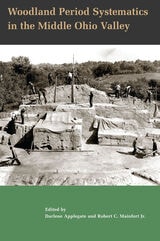
Woodland Period Systematics in the Middle Ohio Valley
Edited by Darlene Applegate and Robert C. Mainfort Jr.
University of Alabama Press, 2005
The important questions are diverse. What criteria are useful in defining periods and cultural types, and over what spatial and temporal boundaries do those criteria hold? How can we accommodate regional variation in the development and expression of traits used to delineate periods and cultural types? How does the concept of tradition relate to periods and cultural types? Is it prudent to equate culture types with periods? Is it prudent to equate archaeological cultures with ethnographic cultures? How does the available taxonomy hinder research? Contributing authors address these issues and others in the context of their Middle Ohio Valley Woodland Period research
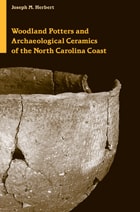
Woodland Potters and Archaeological Ceramics of the North Carolina Coast
Joseph M. Herbert
University of Alabama Press, 2009
The first comprehensive study of the meaning of pottery as a social activity in coastal North Carolina.
Pottery types, composed of specific sets of attributes, have long been defined for various periods and areas of the Atlantic coast, but their relationships and meanings have not been explicitly examined. In exploring these relationships for the North Carolina coast, this work examines the manner in which pottery traits cross-cut taxonomic types, tests the proposition that communities of practice existed at several scales, and questions the fundamental notion of ceramic types as ethnic markers.
Ethnoarchaeological case studies provide a means of assessing the mechanics of how social structure and gender roles may have affected the transmission of pottery-making techniques and how socio-cultural boundaries are reflected in the distribution of ceramic traditions. Another very valuable source of information about past practices is replication experimentation, which provides a means of understanding the practical techniques that lie behind the observable traits, thereby improving our understanding of how certain techniques may have influenced the transmission of traits from one potter to another. Both methods are employed in this study to interpret the meaning of pottery as an indicator of social activity on the North Carolina coast.