Results by title
70 books match the query 'Folk music' and 5 start with w
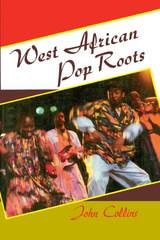
West African Pop Roots
John Collins
Temple University Press, 1992

What Did You Hear?
The Music of Bob DylanSteven Rings
University of Chicago Press, 2025
Named one of PopMatters’ Best Books of 2025! Discover a new side of the songs of Bob Dylan by exploring the virtues of rough sounds, peculiar intonation, and a raspy voice.
Folk troubadour, rock star, country crooner—for a musician who adopted so many personas, Bob Dylan always sounds like himself. While he’s written many of the most iconic and impactful lyrics of the past sixty years, Dylan’s music has also reshaped our sonic imagination with his ragged voice, wailing harmonica, and rough-hewn guitar.
Music theorist Steven Rings argues that such sonic imperfections are central to understanding Dylan’s songs and their appeal. These blemishes can invoke authenticity or persona, signal his social commitments, and betray his political shortcomings. Rings begins—where else?—with Dylan’s voice, exploring its changeability, its unmistakable features, and its ability to inhabit characters, including the female narrator of “House of the Rising Sun.” Rings then turns to Dylan as an instrumentalist, examining his infamous adoption of the electric guitar in 1965, as well as his stylistically varied acoustic playing, which borrows sounds and techniques from Black blues musicians, among other influences. Rings charts the histories audible in Dylan’s harmonica as well as piano, which has been central to his music making since his earliest days of imitating Little Richard in his hometown of Hibbing, Minnesota. Finally, Rings guides readers through one of Dylan’s most famous songs, “A Hard Rain’s a-Gonna Fall,” analyzing its musical sources as well as variations in live performances. A companion website of audio and video examples helps readers notice the nuances and idiosyncrasies inherent in Dylan’s work and, even more importantly, their effects.
A close look at an underdiscussed but essential aspect of Dylan’s oeuvre, What Did You Hear? offers a fresh understanding of a singular performer, his musical choices, and the meanings that we can hear in his imperfect sounds.
Why We Left
Untold Stories and Songs of America's First ImmigrantsJoanna Brooks
University of Minnesota Press, 2024
A grounded, tender, and mournful reckoning with the catastrophes that launched poor, white Anglos into their role as itinerant foot soldiers for modern imperialism—now in paperback with a new preface
Joanna Brooks’s ancestors were among the early waves of emigrants to leave England for North America. For generations, they lived hardscrabble lives, eking out subsistence in one place after another as they continually moved west in search of a better life. Why, Brooks wondered, did her people and countless other poor English subjects abandon their homeland for such unremitting hardship? The question leads her on a journey through an obscure dimension of American history.
Why We Left reveals the violence and dislocation that propelled seventeenth- and eighteenth-century working-class English emigration, presenting a powerful restorying of how we arrived at our present moment of precarity and rootlessness. Following American folk ballads back across the Atlantic to find histories of economic displacement, environmental destruction, and social betrayal at the heart of the early Anglo-American migrant experience, Brooks offers a scholarly and personal account of the intergenerational traumas that shape the history of white Anglos on Turtle Island.
She shares folk ballads such as “Edward,” which reveals the influence of deforestation on the dislocation of early Anglo-American peasant immigrants, and “The House Carpenter’s Wife,” which emphasizes the impact of economic instability and the colonial enterprise on women. From these ballads, tragic and heartrending, Brooks uncovers an archaeology of the worldviews of America’s earliest immigrants. This tenth-anniversary edition includes a new preface and develops a haunting historical perspective on the ancestors we thought we knew.
With Fiddle and Well-Rosined Bow
A History of Old-Time Fiddling In AlabamaJoyce H. Cauthen
University of Alabama Press, 2001
Relying on extensive archival research and on sixty interviews with fiddlers and their families and friends, Cauthen tells the rich, full story of old-time fiddling in Alabama.
Writing of life in the Alabama Territory in the late 1700s, A. J. Pickett, the state's first historian, noted that the country abounded in fiddlers, of high and low degree. After the defeat of the Creek Indians at the Battle of Horseshoe Bend in 1813, the number of fiddlers swelled as settlers from the southern states surrounding Alabama claimed the land. The music they played was based on tunes brought from Ireland, Scotland, and England, but in Alabama they developed their own southern accent as their songs became the music of celebration and relaxation for the state's pioneers. Early in the 20th century such music began to be called "old-time fiddling," to distinguish it from the popular music of the day, and the term is still used to distinguish that style from more modern bluegrass and country fiddle styles.
In With Fiddle and Well-Rosined Bow, Cauthen focuses on old-time fiddling in Alabama from the settlement of the state through World War II. Cauthen shows the effects of events, inventions, ethnic groups, and individuals upon fiddlers' styles and what they played. Cauthen gives due weight to the "modest masters of fiddle and bow" who were stars only to their families and communities. The fiddlers themselves tell why they play, how they learned without formal instruction and written music, and how they acquired their instruments and repertoires. Cauthen also tells the stories of "brag" fiddlers such as D.Dix Hollis, Y. Z. Hamilton, Charlie Stripling, "Fiddling" Tom Freeman,"Monkey" Brown, and the Johnson Brothers whose reputations spread beyond their communities through commercial recordings and fiddling contests. Described in vivid detail are the old-style square dances, Fourth of July barbeques and other celebrations, and fiddlers' conventions that fiddler shave reigned over throughout the state's history.
Women and Music in Cross-Cultural Perspective
Edited by Ellen Koskoff
University of Illinois Press, 1989