Results by title
340 books match the query 'Folklore' and 19 start with w
Walking the Land, Feeding the Fire
Knowledge and Stewardship Among the Tlicho DeneBy Allice Legat; Foreword by Joanne Barnaby
University of Arizona Press, 2012
In the Dene worldview, relationships form the foundation of a distinct way of knowing. For the Tlicho Dene, indigenous peoples of Canada's Northwest Territories, as stories from the past unfold as experiences in the present, so unfolds a philosophy for the future. Walking the Land, Feeding the Fire vividly shows how—through stories and relationships with all beings—Tlicho knowledge is produced and rooted in the land.
Tlicho-speaking people are part of the more widespread Athapaskan-speaking community, which spans the western sub-arctic and includes pockets in British Columbia, Alberta, California, and Arizona. Anthropologist Allice Legat undertook this work at the request of Tlicho Dene community elders, who wanted to provide younger Tlicho with narratives that originated in the past but provide a way of thinking through current critical land-use issues. Legat illustrates that, for the Tlicho Dene, being knowledgeable and being of the land are one and the same.
Walking the Land, Feeding the Fire marks the beginning of a new era of understanding, drawing both connections to and unique aspects of ways of knowing among other Dene peoples, such as the Western Apache. As Keith Basso did with his studies among the Western Apache in earlier decades, Legat sets a new standard for research by presenting Dene perceptions of the environment and the personal truths of the storytellers without forcing them into scientific or public-policy frameworks. Legat approaches her work as a community partner—providing a powerful methodology that will impact the way research is conducted for decades to come—and provides unique insights and understandings available only through traditional knowledge.
Warrior Ways
Explorations in Modern Military FolkloreEric Eliason and Tad Tuleja
Utah State University Press, 2012
Warrior Ways is one of the first book-length explorations of military folklife, and focuses on the lore produced by modern American warriors, illuminating the ways in which members of the armed services creatively express the complex experience of military life. In short, lively essays, contributors to the volume, all of whom have close personal or professional relationships to the military, examine battlefield talismans, personal narrative (storytelling), “Jody calls” (marching and running cadences), slang, homophobia and transgressive humor, music, and photography, among other cultural expressions.
Military folklore does not remain in an isolated subculture; it reveals our common humanity by delighting, disturbing, infuriating, and inspiring both those deeply invested in and those peripherally touched by military life. Highlighting the contemporary and historical importance of the military in American life, Warrior Ways will be of interest to scholars and students of folklore, anthropology, and popular culture; those involved in veteran services and education; and general readers interested in military culture.
Water Panthers, Bears, and Thunderbirds
Exploring Wisconsin's Effigy MoundsBobbie Malone and Amy Rosebrough
Wisconsin Historical Society Press, 2003
Based on recent archaeological interpretation, this standards-based resource enriches material covered in Native People of Wisconsin. Water Panthers, Bears, and Thunderbirds introduces young readers to effigy mound sites in five southern Wisconsin counties. Suggested activities encourage students to graph, compare, contrast, and analyze the ways these mound groups vary from county to county.
Watunna
An Orinoco Creation CycleBy Marc de Civrieux
University of Texas Press, 1997
Originally published in Spanish in 1970, Watunna is the epic history and creation stories of the Makiritare, or Yekuana, people living along the northern bank of the Upper Orinoco River of Venezuela, a region of mountains and virgin forest virtually unexplored even to the present. The first English edition of this book was published in 1980 to rave reviews. This edition contains a new foreword by David Guss, as well as Mediata, a detailed myth that recounts the origins of shamanism.
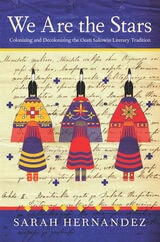
We Are the Stars
Colonizing and Decolonizing the Oceti Sakowin Literary TraditionSarah Hernandez
University of Arizona Press, 2023
Women and land form the core themes of the book, which brings tribal and settler colonial narratives into comparative analysis. Divided into two parts, the first section of the work explores how settler colonizers used the printing press and boarding schools to displace Oceti Sakowin women as traditional culture keepers and culture bearers with the goal of internally and externally colonizing the Dakota, Nakota, and Lakota nations. The second section focuses on decolonization and explores how contemporary Oceti Sakowin writers and scholars have started to reclaim Dakota, Nakota, and Lakota literatures to decolonize and heal their families, communities, and nations.
What's True in Mormon Folklore?
The Contribution of Folklore to Mormon StudiesWilliam Wilson
Utah State University Press, 2008
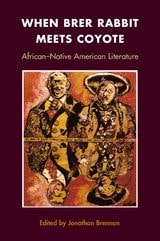
When Brer Rabbit Meets Coyote
AFRICAN-NATIVE AMERICAN LITERATUREEdited by Jonathan Brennan
University of Illinois Press, 2003
Jonathan Brennan, in a sweeping historical and analytical introduction to this collection of essays, surveys several centuries of literature in the context of the historical and cultural exchange and development of distinct African-Native American traditions. Positing a new African-Native American literary theory, he illuminates the roles subjectivity, situational identities, and strategic discourse play in defining African-Native American literatures.
Brennan provides a thorough background to the literary tradition and a valuable overview to topics discussed in the essays. He examines African-Native American political and historical texts, travel narratives, and the Mardi Gras Indian tradition, suggesting that this evolving oral tradition parallels the development of numerous Black Indian literary traditions in the United States and Latin America.
When Our Words Return
Writing, Hearing, and Remembering Oral Traditions from Alasak and the Yukonedited by Phyllis Morrow & William Schneider
Utah State University Press, 1995
The title to this interdisciplinary collection draws on the Yupik Eskimo belief that seals, fish, and other game are precious gifts that, when treated with respect and care, will return to be hunted again. Just so, if oral traditions are told faithfully and respectfully, they will return to benefit future generations. The contributors to this volume are concerned with the interpretation and representation of oral narrative and how it is shaped by its audience and the time, place, and cultural context of the narration. Thus, oral traditions are understood as a series of dialogues between tradition bearers and their listeners, including those who record, write, and interpret.
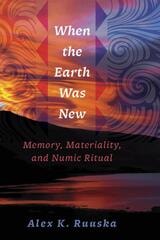
When the Earth Was New
Memory, Materiality, and Numic RitualAlex K. Ruuska
University of Utah Press, 2025
In When the Earth Was New, Alex K. Ruuska explores riveting multigenerational memories of Numic-speaking communities that extend back, potentially, to the late Pleistocene. These diverse oral traditions describe geological, climatic, and ecological events that occurred over thousands of years and were passed down across many generations. Through the examination of place-based memories and the architecture of Numic knowledge, Ruuska demonstrates convergences of oral traditions, ethnography, ethnohistory, archaeology, and geology.
When the Earth Was New critically compares and considers multiple forms of knowledge that contribute to overlapping as well as disparate understandings of both recent and distant pasts in the regions of California, the Great Basin, and the Colorado Plateau. It works at balancing key themes in these regions’ histories within a more holistic framework, exploring ancient and modern strands of knowledge with the assistance of twenty-four Tribes and Consolidated Organizations.
Whispers in the Echo Chamber
Folklore and the Role of Conspiracy Theory in Contemporary SocietyEdited by Jesse A. Fivecoate and Andrea Kitta
University of Wisconsin Press, 2025
This timely volume complements studies from political science, sociology, psychology, history, and more, while also crucially calling for the field of folklore studies to engage more assertively with conspiracy theories as a genre. Focusing on modern iterations of sometimes quite ancient conspiracy motifs and themes, the editors and contributors forcibly illustrate the crucial relevance of this prevalent and influential form of folklore in today’s interconnected world.
Contributors: Matthew D. Atkinson, John Bodner, Ian Brodie, Darin DeWitt, Bill Ellis, Jesse A. Fivecoate, Sandra Grady, David Guignion, Pavan Holur, Andrea Kitta, Afsane Rezaei, Vwani Roychowdhury, Lisa M. Ruch, Shadi Shahsavari, Timothy R. Tangherlini, Jeannie Banks Thomas, Anika Wilson
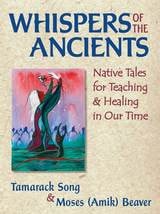
Whispers of the Ancients
Native Tales for Teaching and Healing in Our TimeTamarack Song and Moses (Amik) Beaver
University of Michigan Press, 2010
"Whispers of the Ancients helps us reconnect with the spirit of story that is a part of all our heritages. With respect for the wisdom of the past and with an eye toward the cross-cultural links that legends can make between us, Tamarack Song offers a gathering of tales and insightful comments that point the way back to the circle."
---Joseph Bruchac, author of more than 70 books for children and adults, including (with coauthor Michael J. Caduto) the best-selling Keepers of the Earth: Native American Stories and Environmental Activities for Children
It's easy to imagine yourself transported back to a time when an Elder might have told stories like those in Whispers of the Ancients around a glowing hearth. Thanks to Tamarack Song's storytelling skills, monsters, heroes, and shapeshifters come alive and open a doorway to the mysteries of life. Easily accessible to all ages, this is a book that speaks to each person at his or her own level of comprehension and need. It is as beautiful to read as it is to look at.
Stunning Aboriginal artwork by Moses (Amik) Beaver combines with provocative storytelling to renew, in all their traditional splendor, exceptional legends from around the world. Entertaining, profound, passionate, glorious---these are stories that illustrate and evoke themes common to everyone's life, with an ancient wisdom that helps the listener to cope with today's opportunities for tenderness, grief, passion, and irony.
Easily accessible to all ages, this is a book that speaks to each person at his or her own level of comprehension and need. It's as beautiful to read as it is to look at.
Tamarack Song has sought out the stories of the North African and Central Asian tribal peoples from whom he is descended, and he has listened to the tales of indigenous people from the tundra to the tropics. His books include Journey to the Ancestral Self, and he has contributed to Lois Einhorn's Forgiveness and Child Abuse. He is also a counselor, wilderness skills teacher, rites-of-passage guide, and founder of the Teaching Drum Outdoor School. Song lives in the Nicolet National Forest near Three Lakes, Wisconsin.
Moses (Amik) Beaver is an Ojibwe artist from the isolated fly-in community of Nibinamik (Summer Beaver), Ontario, three hundred miles north of Lake Superior. Grants from the Ontario Arts Council and other sources support his ongoing work with youth, and partial support for this book's illustrations comes from the District School Board of Nibinamik.

Who Owns Culture?
Appropriation and Authenticity in American LawScafidi, Susan
Rutgers University Press, 2005
While claims of authenticity or quality may prompt some consumers to seek cultural products at their source, the communities of origin are generally unable to exclude copyists through legal action. Like other works of unincorporated group authorship, cultural products lack protection under our system of intellectual property law. But is this legal vacuum an injustice, the lifeblood of American culture, a historical oversight, a result of administrative incapacity, or all of the above?
Who Owns Culture? offers the first comprehensive analysis of cultural authorship and appropriation within American law. From indigenous art to Linux, Susan Scafidi takes the reader on a tour of the no-man's-land between law and culture, pausing to ask: What prompts us to offer legal protection to works of literature, but not folklore? What does it mean for a creation to belong to a community, especially a diffuse or fractured one? And is our national culture the product of Yankee ingenuity or cultural kleptomania?
Providing new insights to communal authorship, cultural appropriation, intellectual property law, and the formation of American culture, this innovative and accessible guide greatly enriches future legal understanding of cultural production.
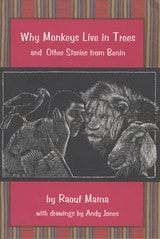
Why Monkeys Live in Trees and Other Stories from Benin
Raouf Mama
Northwestern University Press, 2006
The Western African Republic of Benin (formerly Dahomey) is gifted with a great folktale tradition, one of the richest in the world. As pieces of oral literature and cultural history, these tales shed light on some of the values and beliefs as well as the customs and traditions of the people of Benin.
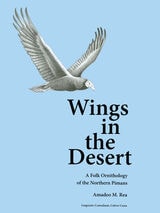
Wings in the Desert
A Folk Ornithology of the Northern PimansAmadeo M. Rea
University of Arizona Press, 2008
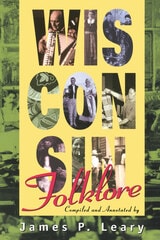
Wisconsin Folklore
Edited by James P. Leary
University of Wisconsin Press, 1999
Highly entertaining and richly informative, Wisconsin Folklore offers the first comprehensive collection of writings about the surprisingly varied folklore of Wisconsin. Beginning with a historical introduction to Wisconsin's folklore and concluding with an up-to-date bibliography, this anthology offers more than fifty annotated and illustrated entries in five sections: "Terms and Talk," "Storytelling," "Music, Song, and Dance," "Beliefs and Customs," and "Material Traditions and Folklife."
The various contributors, from 1884 to 1997, are anthropologists, ethnomusicologists, historians, journalists, museologists, ordinary citizens reminiscing, sociologists, students, writers of fiction, practitioners of folklore, and folklorists. Their interests cover an enormous range of topics: from Woodland Indian place names and German dialect expressions to Welsh nicknames and the jargon of apple-pickers, brewers, and farmers; from Ho-Chunk and Ojibwa mythological tricksters and Paul Bunyan legends to stories of Polish strongmen and Ole and Lena jokes; from Menominee dances and Norwegian fiddling and polka music to African-American gospel groups and Hmong musicians; from faith healers and wedding and funeral customs to seasonal ethnic festivities and tavern amusements; and from spearing decoys and needlework to church dinners, sacred shrines, and the traditional work practices of commercial fishers, tobacco growers, and pickle packers.
For general readers, teachers, librarians, and scholars alike, Wisconsin Folklore exemplifies and illuminates Wisconsin's cultural traditions, and establishes the state's significant but long neglected contributions to American folklore.
Witches, Ghosts, and Signs
Folklore of the Southern AppalachiansPatrick W. Gainer
West Virginia University Press, 2008
Witches, Ghosts, and Signs: Folklore of the Southern Appalachians by the renowned West Virginia folklorist and former West Virginia University English professor Patrick W. Gainer not only highlights stories that both amuse and raise goosebumps, but also begins with a description of the people and culture of the state. Based on material Gainer collected from over fifty years of field research in West Virginia and the region, Witches, Ghosts, and Signs presents the rich heritage of the southern Appalachians in a way that has never been equaled. Strange and supernatural tales of ghosts, witches, hauntings, disappearances, and unexplained murders that have been passed down from generation to generation from as far back as the earliest settlers in the region are included in this collection that will send chills down the spine.
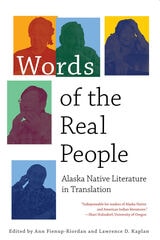
Words of the Real People
Alaska Native Literature in TranslationEdited by Ann Fienup-Riordan and Lawrence D. Kaplan
University of Alaska Press, 2007

World Flutelore
Folktales, Myths, and Other Stories of Magical Flute PowerDale A. Olsen
University of Illinois Press, 2013
Describing and interpreting many examples of flutes as they are found in mythology, poetry, lyrics, and other narrative and literary sources from around the world, veteran ethnomusicologist Dale Olsen seeks to determine what is singularly distinct or unique about flutes, flute playing, and flute players in a global context. He shows how and why flutes are important for personal, communal, religious, spiritual, and secular expression and even, perhaps, existence. This is a book for students, scholars, and any reader interested in the cultural power of flutes.
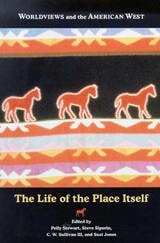
Worldviews And The American West
The Life of the Place ItselfPolly Stewart, Steve Siporin, C. W. Sullivan III, and Suzi Jones
Utah State University Press, 2003
A diverse group of writers and scholars follow the lead of noted folklorist Barre Toelken and consider, from the inside, the ways in which varied cultures in the American West understand and express their relations to the world around them. As Barre Toelken puts it in The Dynamics of Folklore, "'Worldview' refers to the manner in which a culture sees and expresses its relation to the world around it." In Worldviews and the American West, seventeen notable authors and scholars, employing diverse approaches and styles, apply Toelken's ideas about worldview to the American West. While the contributors represent a range of voices, methods, and visions, they are integrated through their focus on the theme of worldview in one region. Worldviews and the American West includes essays by Margaret K. Brady, Hal Cannon, Nora Marks Dauenhauer and Richard Dauenhauer, James S. Griffith, Barry Lopez, Robert McCarl, Elliott Oring, Twilo Scofield, Steve Siporin, Kim Stafford, C. W. Sullivan III, Jeannie B. Thomas, George Venn, George B. Wasson, and William A. Wilson. Each of the authors in this collection attempts to get inside one or more of the worldviews of the many cultures that have come to share and interpret the American West. The result is a lively mix of styles and voices as the authors' own worldviews interact with the multiple perspectives of the diverse peoples (and, in Barry Lopez's "The Language of Animals," other species) of the West. This diversity matches the geography of the region they all call home and gives varied life and meaning to its physical and cultural landscape.