74 books match the query 'Foreign countries' and 6 start with w

cover of Walt Whitman and the World

Walt Whitman and the World

Gay Wilson Allen

University of Iowa Press, 1995
Celebrating the various ethnic traditions that melded to create what we now call American literature, Whitman did his best to encourage an international reaction to his work. But even he would have been startled by the multitude of ways in which his call has been answered. By tracking this wholehearted international response and reconceptualizing American literature, Walt Whitman and the World demonstrates how various cultures have appropriated an American writer who ceases to sound quite so narrowly American when he is read into other cultures' traditions.
[more]
cover of Wandering Stars: Russian Emigré Theatre, 1905-1940

Wandering Stars

Russian Emigré Theatre, 1905-1940

Laurence Senelick

University of Iowa Press, 1992

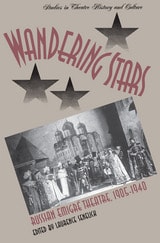
From the beginning of this century, wars, pogroms, revolution, and economic hardship have impelled Russian cultural figures to seek their fortunes abroad—and theatre people have been no exception. This movement was a windfall for Western Europe and North America, for often the most talented and exciting actors and directors put down roots in foreign lands. Their styles and messages were transmuted in the process, but the inspiration they provided was tremendous.
Now, Wandering Stars is the first book in any language to look closely at this theatrical emigration. Essays by Russian and American scholars and practitioners examine the ways in which the process of transplanting art distorted, magnified, or otherwise altered originals and how expectations on both sides led to disappointments and achievements. A particular strength of this collection is its attention to the question of the transmission of one culture to another.
The thirteen essays in Wandering Stars, originally presented at a landmark 1991 conference at Harvard University, approach a host of historical, cultural, and theatrical issues. The effects of the pioneer touring companies of Pavel Orlenev, Alla Nazimova, and, most significantly, the Moscow Art Theatre are traced. The fates of actors like Maria Germanova and directors like Theodore Komisarjevsky who settled in the West receive careful inquiry. The techniques and influences of charismatic teachers such as Michael Chekhov and Andrius Jilinsky are examined, and the fortunes of cabarets like the Chauve-Souris and experimental playwrights like Nikolay Evreinov are given careful study. In addition, essays analyze the fascination America has held for Russian artists throughout history and the problems which face any emigrant who tries to preserve the best of his or her culture in an alien environment.
With the continuing interest in interculturalism evinced in the academy, popular literature, and the media, Wandering Stars makes a vital and timely contribution to the ongoing inquiry and debate. This book should be of interest to all students of theatre and Russian life and all those with an abiding interest in the realities of a global society. 
[more]
cover of We Mark Your Memory: writings from the descendants of indenture

We Mark Your Memory

writings from the descendants of indenture

Edited by David Dabydeen, Maria del Pilar Kaladeen, and Tina K. Ramnarine

University of London Press, 2018
Customers based in the United States and Canada, please order from here: https://bit.ly/2GAV2YR The abolition of slavery was the catalyst for the arrival of the first Indian indentured labourers into the sugar colonies of Mauritius (1834), Guyana (1838) and Trinidad (1845), followed some years later by the inception of the system in South Africa (1860) and Fiji (1879). By the time indenture was abolished in the British Empire (1917–20), over one million Indians had been contracted, the overwhelming majority of whom never returned to India. Today, an Indian indentured labour diaspora is to be found in Commonwealth countries including Belize, Kenya, Malaysia, Sri Lanka and the Seychelles. Indenture, whereby individuals entered, or were coerced, into an agreement to work in a colony in return for a fixed period of labour, was open to abuse from recruitment to plantation. Hidden within this little-known system of nineteenth- and early twentieth-century Indian migration under the British Empire are hitherto neglected stories of workers who were both exploited and unfree. These include indentured histories from Madeira to the Caribbean, from West Africa to the Caribbean, and from China to the Caribbean, Mauritius and South Africa. To mark the centenary of the abolition of the system in the British Empire (2017–20) this volume brings together, for the first time, new writing from across the Commonwealth. It is a unique attempt to explore, through the medium of poetry and prose, the indentured heritage of the twenty-first century.
[more]
cover of Women on the Verge: Japanese Women, Western Dreams

Women on the Verge

Japanese Women, Western Dreams

Karen Kelsky

Duke University Press, 2001

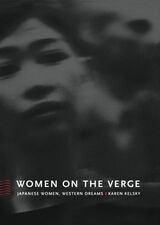
Over the past few decades, many young Japanese women have emerged as Japan’s most enthusiastic “internationalists,” investing in study or work abroad, or in romance with Western men as opportunities to circumvent what they consider their country’s oppressive corporate and family structures. Drawing on a rich supply of autobiographical narratives, as well as literary and cultural texts, Karen Kelsky situates this phenomenon against a backdrop of profound social change in Japan andwithin an intricate network of larger global forces.

In exploring the promises, limitations, and contradictions of these “occidental longings,” Women on the Verge exposes the racial and erotic politics of transnational mobility. Kelsky shows how female cosmopolitanism recontextualizes the well-known Western male romance with the Orient: Japanese women are now the agents, narrating their own desires for the “modern” West in ways that seem to defy Japanese nationalism as well as long-standing relations of power not only between men and women but between Japan and the West. While transnational movement is not available to all Japanese women, Kelsky shows that the desire for the foreign permeates many Japanese women’s lives. She also reveals how this feminine allegiance to the West—and particularly to white men—can impose its own unanticipated hegemonies of race, sexuality, and capital.

Combining ethnography and literary analysis, and bridging anthropology and cultural studies, Women on the Verge will also appeal to students and scholars of Japan studies, feminism, and global culture.


[more]
cover of Writing in the Margins: The Ethics of Expatriation from Lawrence to Ondaatje

Writing in the Margins

The Ethics of Expatriation from Lawrence to Ondaatje

Marilyn Adler Papayanis

Vanderbilt University Press, 2005
Looking closely at a group of writers who rejected the industrial West in favor of the expatriate life and made that quest the subject of their work, Marilynn Papayanis reveals their concerns to be ethical as well as aesthetic. Her book brims with fresh insights into such works as Paul Bowles's The Sheltering Sky, Lawrence Durrell's The Alexandria Quartet, and Michael Ondaatjes The English Patient.
[more]
cover of Written Here, Published There: How Underground Literature Crossed the Iron Curtain

Written Here, Published There

How Underground Literature Crossed the Iron Curtain

Friederike Kind-Kovács

Central European University Press, 2015

Written Here, Published There offers a new perspective on the role of underground literature in the Cold War and challenges us to recognize gaps in the Iron Curtain. The book identifies a transnational undertaking that reinforced détente, dialogue, and cultural transfer, and thus counterbalanced the persistent belief in Europe's irreversible division.

It analyzes a cultural practice that attracted extensive attention during the Cold War but has largely been ignored in recent scholarship: tamizdat, or the unauthorized migration of underground literature across the Iron Curtain. Through this cultural practice, I offer a new reading of Cold War Europe's history. Investigating the transfer of underground literature from the 'Other Europe' to Western Europe, the United States, and back illuminates the intertwined fabrics of Cold War literary cultures. Perceiving tamizdat as both a literary and a social phenomenon, the book focuses on how individuals participated in this border-crossing activity and used secretive channels to guarantee the free flow of literature.

[more]