Results by title
252 books match the query 'Future' and 7 start with w
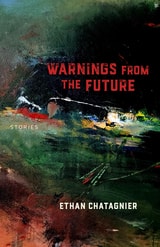
Warnings From the Future
StoriesEthan Chatagnier
Acre Books, 2018
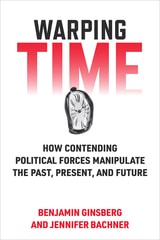
Warping Time
How Contending Political Forces Manipulate the Past, Present, and FutureBenjamin Ginsberg and Jennifer Bachner
University of Michigan Press, 2023
Warping Time shows how narratives of the past influence what people believe about the present and future state of the world. In Benjamin Ginsberg and Jennifer Bachner’s simple experiments, in which the authors measured the impact of different stories their subjects heard about the past, these “history lessons” moved contemporary policy preferences by an average of 16 percentage points; forecasts of the future moved contemporary policy preferences by an average of 12 percentage points; the two together moved preferences an average of 21 percentage points. And, in an Orwellian twist, the authors estimate that the “history lessons” had an average “erasure effect” of 8.5 percentage points—the difference between those with long-held preferences and those who did not recall that they previously held other opinions before participating in the experiment. The fact that the past, present, and future are subject to human manipulation suggests that history is not simply the product of impersonal forces, material conditions, or past choices. Humans are the architects of history, not its captives. Political reality is tenuous. Changes in our understanding of the past or future can substantially alter perceptions of and action in the present. Finally, the manipulation of time, especially the relationship between past and future, is a powerful political tool.
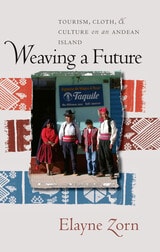
Weaving a Future
Tourism, Cloth, and Culture on an Andean IslandElayne Zorn
University of Iowa Press, 2004
The people of Taquile Island on the Peruvian side of beautiful Lake Titicaca, the highest navigable lake in the Americas, are renowned for the hand-woven textiles that they both wear and sell to outsiders. One thousand seven hundred Quechua-speaking peasant farmers, who depend on potatoes and the fish from the lake, host the forty thousand tourists who visit their island each year. Yet only twenty-five years ago, few tourists had even heard of Taquile. In Weaving a Future: Tourism, Cloth, and Culture on an Andean Island, Elayne Zorn documents the remarkable transformation of the isolated rocky island into a community-controlled enterprise that now provides a model for indigenous communities worldwide.
Over the course of three decades and nearly two years living on Taquile Island, Zorn, who is trained in both the arts and anthropology, learned to weave from Taquilean women. She also learned how gender structures both the traditional lifestyles and the changes that tourism and transnationalism have brought. In her comprehensive and accessible study, she reveals how Taquileans used their isolation, landownership, and communal organizations to negotiate the pitfalls of globalization and modernization and even to benefit from tourism. This multi-sited ethnography set in Peru, Washington, D.C., and New York City shows why and how cloth remains central to Andean society and how the marketing of textiles provided the experience and money for Taquilean initiatives in controlling tourism.
The first book about tourism in South America that centers on traditional arts as well as community control, Weaving a Future will be of great interest to anthropologists and scholars and practitioners of tourism, grassroots development, and the fiber arts.
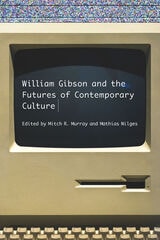
William Gibson and the Future of Contemporary Culture
Mitch R. Murray and Mathias Nilges
University of Iowa Press, 2021
In the 1970s and 80s, Gibson, the “Godfather of Cyberpunk,” rejuvenated science fiction. In groundbreaking works such as Neuromancer, which changed science fiction as we knew it, Gibson provided us with a language and imaginary through which it became possible to make sense of the newly emerging world of globalization and the digital and media age. Ever since, Gibson’s reformulation of science fiction has provided us not just with radically innovative visions of the future but indeed with trenchant analyses of our historical present and of the emergence and exhaustion of possible futures.
Contributors: Maria Alberto, Andrew M. Butler, Amy J. Elias, Christian Haines, Kylie Korsnack, Mathias Nilges, Malka Older, Aron Pease, Lisa Swanstrom, Takayuki Tatsumi, Sherryl Vint, Phillip E. Wegner, Roger Whitson, Charles Yu
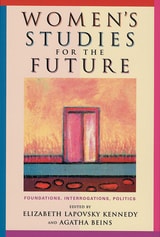
Women's Studies for the Future
Foundations, Interrogations, PoliticsEdited by Elizabeth Lapovsky Kennedy and Agatha Beins
Rutgers University Press, 2005
Established as an academic field in the 1970s, women’s studies is a relatively young but rapidly growing area of study. Not only has the number of scholars working in this subject expanded exponentially, but women’s studies has become institutionalized, offering graduate degrees and taking on departmental status in many colleges and universities. At the same time, this field—formed in the wake of the feminist movement—is finding itself in a precarious position in what is now often called a “post-feminist” society. This raises challenging issues for faculty, students, and administrators. How must the field adjust its goals and methods to continue to affect change in the future?
Bringing together essays by newcomers as well as veterans to the field, this essential volume addresses timely questions including:
- Without a unitary understanding of the subject, woman, what is the focus of women’s studies?
- How can women’s studies fulfill the promise of interdisciplinarity?
- What is the continuing place of activism in women’s studies?
- What are the best ways to think about, teach, and act upon the intersections of race, class, gender, disability, nation, and sexuality?
Offering innovative models for research and teaching and compelling new directions for action, Women’s Studies for the Future ensures the continued relevance and influence of this developing field.
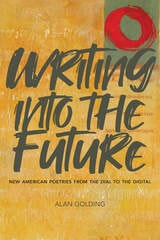
Writing into the Future
New American Poetries from "The Dial" to the DigitalAlan Golding
University of Alabama Press, 2022
Writing into the Future: New American Poetries from “The Dial” to the Digital collects Alan Golding’s essays on the futures (past and present) of poetry and poetics. Throughout the 13 essays gathered in this collection, Golding skillfully joins literary critique with a concern for history and a sociological inquiry into the creation of poetry. In Golding’s view, these are not disparate or even entirely distinct critical tasks. He is able to fruitfully interrogate canons and traditions, both on the page and in the politics of text, culture, and institution.
A central thread running through the chapters is a longstanding interest in how various versions of the “new” have been constructed, received, extended, recycled, resisted, and reanimated in American poetry since modernism. To chart the new, Golding contends with both the production and the reception of poetry, in addition to analyzing the poems themselves. In a generally chronological order, Golding reconsiders the meaning for contemporary poets of high modernists like Ezra Pound and William Carlos Williams, as well as the influential poetry venues The Dial and The Little Review, where less prominent but still vital poets contested what should come “next.” Subsequent essays track that contestation through The New American Poetry and later anthologies.
Mid-century major figures like Robert Creeley and George Oppen are discussed in their shared concern for the serial poem. Golding’s essays bring us all the way back to the present of the poetic future, with writing on active poets like Rachel Blau DuPlessis, Susan Howe, and Bruce Andrews and on the anticipation of digital poetics in the material texts of L=A=N=G=U=A=G=E writing. Golding charts the work of defining poetry’s future and how we rewrite the past for an unfolding present.
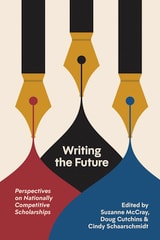
Writing the Future
Perspectives on Nationally Competitive ScholarshipsSuzanne McCray
University of Arkansas Press, 2025
Writing the Future: Perspectives on Nationally Competitive Scholarships offers a timely and nuanced exploration of fellowships advising. This volume brings together experienced practitioners, scholars, and scholarship foundation representatives to reflect on a rapidly evolving landscape—one shaped by shifting student demographics, emergent technologies, and renewed commitments to student success across a broad spectrum.
The essays in this collection engage deeply with the developmental, rhetorical, and institutional dimensions of nationally competitive awards advising. Topics include appreciative advising, writing strategies, and the complexities of guiding students as they envision and articulate aspirational futures. Contributors examine how fellowship applications serve as tools for student growth, knowledge transfer, and reflection. They also explore how advisors can navigate the tensions between authenticity, institutional representation, and the demands of prestige-based selection processes. Several chapters offer practical guidance on writing effective nomination letters, engaging in selection processes as external reviewers, and cultivating advising practices that are both ethical and empowering. A concluding chapter on NAFA’s history situates these contributions within a broader narrative of professionalization and purpose in the field.
Ideal for new and seasoned advisors alike—as well as faculty, administrators, and foundation partners—this volume affirms the transformative potential of a fellowships advising process that centers on student agency, fosters critical reflection, and reimagines what access to competitive awards can and should mean.