Results by title
167 books match the query 'Gardening' and 11 start with w
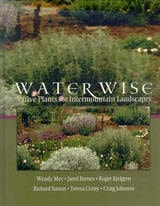
Water Wise
Native Plants for Intermountain LandscapesWendy Mee, Jared Barnes, Roger Kjelgren, Richard Sutton, Teresa Cerny, and Craig Johnson
Utah State University Press, 2003
Today, native plants and water conservation are subjects of vital interest to cities, offices, homeowners, and agriculture alike, as all are affected by the growing shortage of water in the Intermountain region.
This comprehensive volume provides specific information about shrubs, trees, grasses, forbs, and cacti that are native to most states in the Intermountain West, and that can be used in landscaping to conserve water, reflect and preserve the region's landscape character, and help protect its ecological integrity. The book is an invaluable guide for the professional landscaper, horticulturist, and others in the Intermountain nursery industry, as well as for the student, general reader, gardener, and homeowner.
Water Wise is both convenient and comprehensive. The heart of the book presents hundreds of species, devoting a full page to each, with a description of appearance, habitat, landscape use, and other comments. Color photographs illustrate each plant described. A reader-friendly introduction provides important background on the ecology of the Intermountain West, along with full descriptions of native plant habitats and associations.
An accessible resource of accurate native plant information for all readers, Water Wise will be indispensable to professional landscapers and amateurs alike.
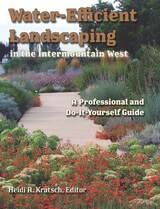
Water-Efficient Landscaping in the Intermountain West
A Professional and Do-It-Yourself GuideHeidi Kratsch
Utah State University Press, 2011
This working manual provides complete information on the technical aspects of designing, building, and maintaining waterwise landscapes in the Mountain West. Written particularly for professionals, including landscape designers, architects, contractors, and maintenance and irrigation specialists, it has an attractive, well-illustrated, user-friendly format that will make it useful as well to DIY homeowners and to educators, plant retailers, extension agents, and many others.
The manual is organized according to landscape principles that are adapted to the climate of the intermountain region. Beginning with planning and design, the topical principles proceed through soil preparation, appropriate plant selection, practicalities of turfgrass, use of mulch, and irrigation planning, winding up with landscape maintenance. Designed for onsite, handy use, the book is illustrated with color images of landscapes, plants, and materials. Tables, charts, diagrams, landscape plans, plant lists, checklists, and other graphic resources are scattered throughout the manual, which is written in an accessible but information-rich style. Water-Efficient Landscaping in the Intermountain West answers, more comprehensively than any other single book, the need for professional information that addresses both growing awareness of the necessity for water conservation and the desire for beautiful, healthy yards and properties.
Weathering Winter
A Gardener's DaybookCarl H. Klaus
University of Iowa Press, 2003
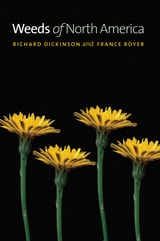
Weeds of North America
Richard Dickinson and France Royer
University of Chicago Press, 2014
Encyclopedic in scope, the book is the first to cover North American weeds at every stage of growth. The book is organized by plant family, and more than five hundred species are featured. Each receives a two-page spread with images and text identification keys. Species are arranged within family alphabetically by scientific name, and entries include vital information on seed viability and germination requirements.
Whether you believe, like Donald Culross Peattie, that “a weed is a plant out of place,” or align with Elizabeth Wheeler Wilcox’s “weeds are but unloved flowers,” Dickinson and Royer provide much-needed background on these intrusive organisms. In the battle with weeds, knowledge truly is power. Weeds of North America is the perfect tool for gardeners, as well as anyone working in the business of weed ecology and control.
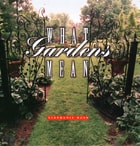
What Gardens Mean
Stephanie Ross
University of Chicago Press, 1998
In What Gardens Mean, Stephanie Ross draws on philosophy as well as the histories of art, gardens, culture, and ideas to explore the magical lure of gardens. Paying special attention to the amazing landscape gardens of eighteenth-century England, she situates gardening among the other fine arts, documenting the complex messages gardens can convey and tracing various connections between gardens and the art of painting.
What Gardens Mean offers a distinctive blend of historical and contemporary material, ranging from extensive accounts of famous eighteenth-century gardens to incisive connections with present-day philosophical debates. And while Ross examines aesthetic writings from the seventeenth and eighteenth centuries, including Joseph Addison's Spectator essays on the pleasures of imagination, the book's opening chapter surveys more recent theories about the nature and boundaries of art. She also considers gardens on their own terms, following changes in garden style, analyzing the phenomenal experience of viewing or strolling through a garden, and challenging the claim that the art of gardening is now a dead one.
Showing that an artistic lineage can be traced from gardens in the Age of Satire to current environmental installations, this book is a sophisticated account of the myriad pleasures that gardens offer and a testimony to their enduring sensory and cognitive appeal. Beautifully illustrated and elegantly written, What Gardens Mean will delight all those interested in the history of gardens and the aesthetic and philosophical issues that they invite.
"Replete with provocative musings, Ross delineates links that should prove interesting to readers engaged in pondering our capacity to relate to the natural world through the gardens we create."—Booklist
"[A]n innovative and absorbing study of the garden as an object of aesthetic interest."—Allen Carlson, Journal of Aesthetics and Art Criticism
"[P]leasantly readable. . . . A thought-provoking book for all who reflect as they dig."—Noel Kingsbury, Country Life
"[A] refreshing view of the subject. . . . Ross's book is continually illuminating in unexpected ways."—Gillian Darley, Architects' Journal
"What Gardens Mean is a wonderful intellectual combination of discussions on the interdisciplinary histories of art, gardening, and philosophy."—Choice
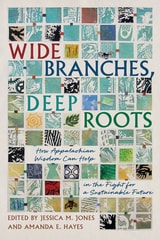
Wide Branches, Deep Roots
How Appalachian Wisdom Can Help in the Fight for a Sustainable FutureJessica M Jones
West Virginia University Press, 2026
To be Appalachian is to define oneself in terms of a place. Where we’re from plays a tremendous role in who we are, through storytelling about our homeplaces and the people who have loved them. However, what goes largely unaddressed is how this love of place can contribute to sustainability within the region, which has notoriously faced on-going environmental threats from extraction industries. The reality is that our relationship with the environment is thorny and intertwined with our identities, histories, and economic realities. The authors in the collection get down among the thorns to explore what sustainability means in Appalachia and how we can utilize the power of traditional folkways to achieve it.
This collection of over thirty pieces explores the connections between Appalachia’s stories, traditions, and modern events and the pathway to regional sustainability. The contributors — writers and scholars — examine how our definitions of sustainability have been formed, the power of education to encourage or inhibit it, and what moves are being made toward efficacy in the future. They also offer specific actions readers can take to better understand and build sustainability where they live.
Contributors: Greg Bealer, Luc Biscan-White, David Blackmore, Aysha Bodenhamer, Ivy Brashear, Matthew Calloway, Nicole Drewitz-Crockett, Christina Fisanick, Deborah Fleming, Amanda V. Garner, Karie Gunter-Seymour, Richard Hague, Amanda E. Hayes, Lockie Hunter, Jessica M. Jones, Kristen LeFevers, Sarah Long, Meghan Moore-Hubbard, Barbara Marie Minney, Jessica Radicic, Elizabeth Emmerth Rexroad, Barbara Sabol, Larry Smith, Patrice Stank, Taylor Nasim Stone, Paul Thomas, Elizabeth Tussey, and Betsy Weems.
Wildflowers and Other Plants of Iowa Wetlands
Sylvan T. Runkel
University of Iowa Press, 1999
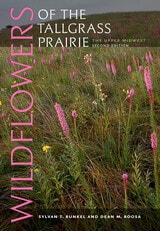
Wildflowers of the Tallgrass Prairie
The Upper MidwestSylvan T. Runkel
University of Iowa Press, 2009
This classic of midwestern natural history is back in print with a new format and new photographs. Originally published in 1989, Wildflowers of the Tallgrass Prairie introduced many naturalists to the beauty and diversity of the native plants of the huge grasslands that once stretched from Manitoba to Texas. Now redesigned with updated names and all-new photographs, this reliable field companion will introduce tallgrass prairie wildflowers to a new generation of outdoor enthusiasts in the Upper Midwest.
Each species account is accompanied by a brilliant full-page color photograph by botanist Thomas Rosburg. In clear, straightforward, and accessible prose, authors Sylvan Runkel and Dean Roosa provide common, scientific, and family names; the Latin or Greek meaning of the scientific names; habitat and blooming times; and a complete description of plant, flower, and fruit. Particularly interesting is the information on the many ways in which Native Americans and early pioneers used these plants for everything from pain relief to dyes to hairbrushes.
Runkel and Roosa say that prairies can be among the most peaceful places on earth; certainly they are among the most beleaguered. Wildflowers of the Tallgrass Prairie will inspire both amateurs and professionals with the desire to learn more about the wonders of the prairie landscape.
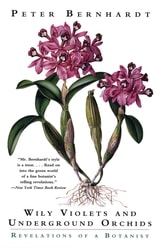
Wily Violets and Underground Orchids
Revelations of a BotanistPeter Bernhardt
University of Chicago Press, 2003
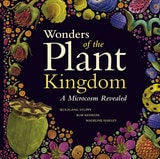
Wonders of the Plant Kingdom
A Microcosm RevealedWolfgang Stuppy, Rob Kesseler, and Madeline Harley
University of Chicago Press, 2015
With Wonders of the Plant Kingdom, the naked eye gets an unforgettable boost. A stunning collaboration between science and art, this gorgeous book presents hundreds of images of plants taken with a scanning electron microscope and hand-colored by artist Rob Kesseler to reveal the awe-inspiring adaptations all around us. The surface of a peach—with its hairs, or trichomes, and sunken stomata, or breathing pores—emerges from these pages in microscopic detail. The dust-like seeds of the smallest cactus species in the world, the Blossfeldia liliputana—which measures just twelve millimeters fully grown—explode here with form, color, and character, while the flower bud of a kaffir lime, cross-sectioned, reveals the complex of a flower bud with the all-important pistil in the center.
Accompanying these extraordinary images are up-to-date explanations of the myriad ways that these plants have ensured their own survival—and, by proxy, our own. Gardeners and science buffs alike will marvel at this wholly new perspective on the world of plant diversity.

Wordsworth and the Green Romantics
Affect and Ecology in the Nineteenth CenturyLisa Ottum
University of New Hampshire Press, 2016