Results by title
932 books match the query 'Genres & Styles' and 34 start with w
Waiting for Buddy Guy
Chicago Blues at the CrossroadsAlan Harper
University of Illinois Press, 2016
Walk a Mile in My Blues
A MemoirCurtis Salgado with Rebecca Pillsbury; Foreword by Steve Miller
University of Illinois Press, 2027
In this memoir, Salgado shares stories of his career against the backdrop of encounters with music legends, the Oregon scene’s cultural heyday, and his journey to overcome addiction and life-threatening health challenges. His poignant and at times humorous stories of touring and playing with artists like Robert Cray, Muddy Waters, Cab Calloway, and Stevie Ray Vaughan fuse with an invitation to embrace the blues and soul music that shaped his life and help define America.
Walk a Mile in My Blues shares the hidden and heartfelt story of a musical legend, living and loving the blues.
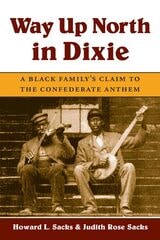
Way Up North in Dixie
A Black Family's Claim to the Confederate AnthemHoward L. Sacks and Judith Rose Sacks
University of Illinois Press, 2003
We Take Care of Our Own
Faith, Class, and Politics in the Art of Bruce SpringsteenJune Skinner Sawyers
Rutgers University Press, 2024
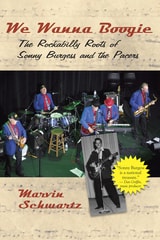
We Wanna Boogie
The Rockabilly Roots of Sonny Burgess and the PacersMarvin Schwartz
Butler Center for Arkansas Studies, 2014
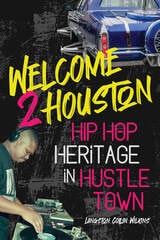
Welcome 2 Houston
Hip Hop Heritage in Hustle TownLangston Collin Wilkins
University of Illinois Press, 2023
A vivid journey through a southern hip hop bastion, Welcome 2 Houston offers readers an inside look at a unique musical culture.
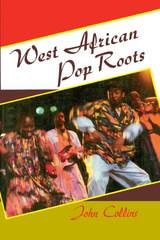
West African Pop Roots
John Collins
Temple University Press, 1992
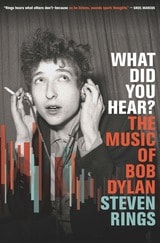
What Did You Hear?
The Music of Bob DylanSteven Rings
University of Chicago Press, 2025
Named one of PopMatters’ Best Books of 2025! Discover a new side of the songs of Bob Dylan by exploring the virtues of rough sounds, peculiar intonation, and a raspy voice.
Folk troubadour, rock star, country crooner—for a musician who adopted so many personas, Bob Dylan always sounds like himself. While he’s written many of the most iconic and impactful lyrics of the past sixty years, Dylan’s music has also reshaped our sonic imagination with his ragged voice, wailing harmonica, and rough-hewn guitar.
Music theorist Steven Rings argues that such sonic imperfections are central to understanding Dylan’s songs and their appeal. These blemishes can invoke authenticity or persona, signal his social commitments, and betray his political shortcomings. Rings begins—where else?—with Dylan’s voice, exploring its changeability, its unmistakable features, and its ability to inhabit characters, including the female narrator of “House of the Rising Sun.” Rings then turns to Dylan as an instrumentalist, examining his infamous adoption of the electric guitar in 1965, as well as his stylistically varied acoustic playing, which borrows sounds and techniques from Black blues musicians, among other influences. Rings charts the histories audible in Dylan’s harmonica as well as piano, which has been central to his music making since his earliest days of imitating Little Richard in his hometown of Hibbing, Minnesota. Finally, Rings guides readers through one of Dylan’s most famous songs, “A Hard Rain’s a-Gonna Fall,” analyzing its musical sources as well as variations in live performances. A companion website of audio and video examples helps readers notice the nuances and idiosyncrasies inherent in Dylan’s work and, even more importantly, their effects.
A close look at an underdiscussed but essential aspect of Dylan’s oeuvre, What Did You Hear? offers a fresh understanding of a singular performer, his musical choices, and the meanings that we can hear in his imperfect sounds.
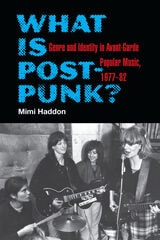
What Is Post-Punk?
Genre and Identity in Avant-Garde Popular Music, 1977-82Mimi Haddon
University of Michigan Press, 2020
Popular music in the US and UK during the late 1970s and early 1980s was wildly eclectic and experimental. “Post-punk,” as it was retroactively labeled, could include electro-pop melodies, distorted guitars, avant-garde industrial sounds, and reggae beats, and thus is not an easily definable musical category.
What Is Post-Punk? combines a close reading of the late-1970s music press discourse with musical analyses and theories of identity to unpack post-punk’s status as a genre. Mimi Haddon traces the discursive foundations of post-punk across publications such as Sounds, ZigZag, Melody Maker, the Village Voice, and NME, and presents case studies of bands including Wire, PiL, Joy Division, the Raincoats, and Pere Ubu. By positioning post-punk in relation to genres such as punk, new wave, dub, and disco, Haddon explores the boundaries of post-punk, and reveals it as a community of tastes and predilections rather than a stylistically unified whole. Haddon diversifies the discourse around post-punk, exploring both its gender and racial dynamics and its proto-industrial aesthetics to restore the historical complexity surrounding the genre’s terms and origins.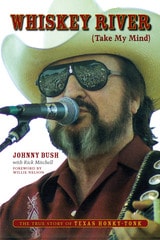
Whiskey River (Take My Mind)
The True Story of Texas Honky-TonkBy Johnny Bush with Rick Mitchell
University of Texas Press, 2007
When it comes to Texas honky-tonk, nobody knows the music or the scene better than Johnny Bush. Author of Willie Nelson's classic concert anthem "Whiskey River," and singer of hits such as "You Gave Me a Mountain," "Undo the Right," "Jim, Jack and Rose," and "I'll Be There," Johnny Bush is a legend in country music, a singer-songwriter who has lived the cheatin', hurtin', hard-drinkin' life and recorded some of the most heart-wrenching songs about it. He has one of the purest honky-tonk voices ever to come out of Texas. And Bush's career has been just as dramatic as his songs—on the verge of achieving superstardom in the early 1970s, he was sidelined by a rare vocal disorder that he combated for thirty years. But, survivor that he is, Bush is once again filling dance halls across Texas and inspiring a new generation of musicians who crave the authenticity—the "pure D" country—that Johnny Bush has always had and that Nashville country music has lost.
In Whiskey River (Take My Mind), Johnny Bush tells the twin stories of his life and of Texas honky-tonk music. He recalls growing up poor in Houston's Kashmere Gardens neighborhood and learning his chops in honky-tonks around Houston and San Antonio—places where chicken wire protected the bandstand and deadly fights broke out regularly. Bush vividly describes life on the road in the 1960s as a band member for Ray Price and Willie Nelson, including the booze, drugs, and one-night stands that fueled his songs but destroyed his first three marriages. He remembers the time in the early 1970s when he was hotter than Willie and on the fast track to superstardom—until spasmodic dysphonia forced his career into the slow lane. Bush describes his agonizing, but ultimately successful struggle to keep performing and rebuild his fan base, as well as the hard-won happiness he has found in his personal life.
Woven throughout Bush's autobiography is the never-before-told story of Texas honky-tonk music, from Bob Wills and Floyd Tillman to Junior Brown and Pat Green. Johnny Bush has known almost all the great musicians, past and present, and he has wonderful stories to tell. Likewise, he offers shrewd observations on how the music business has changed since he started performing in the 1950s—and pulls no punches in saying how Nashville music has lost its country soul. For everyone who loves genuine country music, Johnny Bush, Willie Nelson, and stories of triumph against all odds, Whiskey River (Take My Mind) is a must-read.
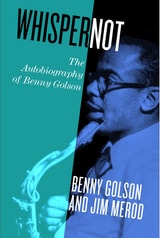
Whisper Not
The Autobiography of Benny GolsonBenny Golson
Temple University Press, 2016
“One of the greatest artists our country has is Benny Golson. He is not only a great musician, but an original and fabulous composer. He is inventive and creative and his work is loved the world over. Benny is a rare, creative genius. All I would like to say is THREE CHEERS for Benny Golson!”—Tony Bennett
“Composer supreme, tenor man supreme, jazz man supreme, good guy supreme: that’s BENNY GOLSON!"—Sonny Rollins
Born during the de facto inaugural era of jazz, saxophonist Benny Golson learned his instrument and the vocabulary of jazz alongside John Coltrane while Golson was still in high school in Philadelphia. Quickly establishing himself as an iconic fixture on the jazz landscape, Golson performed with dozens of jazz greats, from Sonny Rollins, Coleman Hawkins, and Jimmy Heath to Dizzy Gillespie, Freddie Hubbard, and many others. An acclaimed composer, Golson also wrote music for Hollywood films and television and composed such memorable jazz standards as “Stablemates,” “Killer Joe,” and “Whisper Not.”
An eloquent account of Golson’s exceptional life—presented episodically rather than chronologically—Whisper Not includes a dazzling collection of anecdotes, memories, experiences, and photographs that recount the successes, the inevitable failures, and the rewards of a life eternally dedicated to jazz.
Who Got the Camera?
A History of Rap and RealityEric Harvey
University of Texas Press, 2021
Reality first appeared in the late 1980s—in the sense not of real life but rather of the TV entertainment genre inaugurated by shows such as Cops and America’s Most Wanted; the daytime gabfests of Geraldo, Oprah, and Donahue; and the tabloid news of A Current Affair. In a bracing work of cultural criticism, Eric Harvey argues that reality TV emerged in dialog with another kind of entertainment that served as its foil while borrowing its techniques: gangsta rap. Or, as legendary performers Ice Cube and Ice-T called it, “reality rap.”
Reality rap and reality TV were components of a cultural revolution that redefined popular entertainment as a truth-telling medium. Reality entertainment borrowed journalistic tropes but was undiluted by the caveats and context that journalism demanded. While N.W.A.’s “Fuck tha Police” countered Cops’ vision of Black lives in America, the reality rappers who emerged in that group’s wake, such as Snoop Doggy Dogg and Tupac Shakur, embraced reality’s visceral tabloid sensationalism, using the media's obsession with Black criminality to collapse the distinction between image and truth. Reality TV and reality rap nurtured the world we live in now, where politics and basic facts don’t feel real until they have been translated into mass-mediated entertainment.
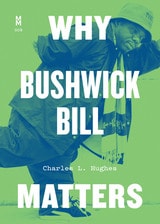
Why Bushwick Bill Matters
By Charles L. Hughes
University of Texas Press, 2021
In 1989 the Geto Boys released a blistering track, “Size Ain’t Shit,” that paid tribute to the group’s member Bushwick Bill. Born with dwarfism, Bill was one of the few visibly disabled musicians to achieve widespread fame and one of the even fewer to address disability in a direct, sustained manner. Initially hired as a dancer, Bill became central to the Geto Boys as the Houston crew became one of hip-hop’s most important groups.
Why Bushwick Bill Matters chronicles this crucial artist and explores what he reveals about the relationships among race, sex, and disability in pop music. Charles L. Hughes examines Bill's recordings and videos (both with the Geto Boys and solo), from the horror-comic persona of “Chuckie” to vulnerable verses in songs such as “Mind Playing Tricks On Me,” to discuss his portrayals of dwarfism, addiction, and mental illness. Hughes also explores Bill’s importance to his era and to the longer history of disability in music. A complex figure, Bill exposed the truths of a racist and ableist society even as his violent and provocative lyrics put him in the middle of debates over censorship and misogyny. Confrontational and controversial, Bushwick Bill left a massive legacy as he rhymed and swaggered through an often-inaccessible world.
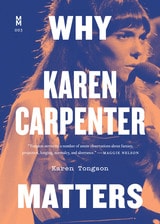
Why Karen Carpenter Matters
By Karen Tongson
University of Texas Press, 2019
In the '60s and '70s, America's music scene was marked by raucous excess, reflected in the tragic overdoses of young superstars such as Jimi Hendrix and Janis Joplin. At the same time, the uplifting harmonies and sunny lyrics that propelled Karen Carpenter and her brother, Richard, to international fame belied a different sort of tragedy—the underconsumption that led to Karen's death at age thirty-two from the effects of an eating disorder.
In Why Karen Carpenter Matters, Karen Tongson (whose Filipino musician parents named her after the pop icon) interweaves the story of the singer’s rise to fame with her own trans-Pacific journey between the Philippines—where imitations of American pop styles flourished—and Karen Carpenter’s home ground of Southern California. Tongson reveals why the Carpenters' chart-topping, seemingly whitewashed musical fantasies of "normal love" can now have profound significance for her—as well as for other people of color, LGBT+ communities, and anyone outside the mainstream culture usually associated with Karen Carpenter’s legacy. This hybrid of memoir and biography excavates the destructive perfectionism at the root of the Carpenters’ sound, while finding the beauty in the singer's all too brief life.
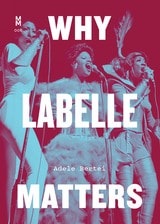
Why Labelle Matters
By Adele Bertei
University of Texas Press, 2021
Finalist, 2022 Lesbian Memoir/Biography, Lambda Literary Award for Arts and Culture
Crafting a legacy all their own, the reinvented Labelle subverted the “girl group” aesthetic to invoke the act’s Afrofuturist spirit and make manifest their vision of Black womanhood.
Performing as the Bluebelles in the 1960s, Patti LaBelle, Nona Hendryx, and Sarah Dash wore bouffant wigs and chiffon dresses, and they harmonized vocals like many other girl groups of the era. After a decade on the Chitlin Circuit, however, they were ready to write their own material, change their name, and deliver—as Labelle—an electrifyingly celestial sound and styling that reached a crescendo with a legendary performance at the Metropolitan Opera House to celebrate the release of Nightbirds and its most well-known track, “Lady Marmalade.” In Why Labelle Matters, Adele Bertei tells the story of the group that sang the opening aria of Afrofuturism and proclaimed a new theology of musical liberation for women, people of color, and LGBTQ people across the globe.
With sumptuous and galactic costumes, genre-bending lyrics, and stratospheric vocals, Labelle’s out-of-this-world performances changed the course of pop music and made them the first Black group to grace the cover of Rolling Stone. Why Labelle Matters, informed by interviews with members of the group as well as Bertei’s own experience as a groundbreaking musician, is the first cultural assessment of this transformative act.
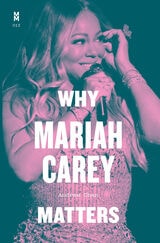
Why Mariah Carey Matters
Andrew Chan
University of Texas Press, 2023
The first book to critically examine the legacy of pop superstar Mariah Carey.
When it comes to Mariah Carey, star power is never in doubt. She has sold hundreds of millions of albums and cut more chart-topping hits than any other solo artist—ever. And she has that extraordinary five-octave vocal range. But there is more to her legacy than eye-popping numbers.
Why Mariah Carey Matters examines the creative evolution and complicated biography of a true diva, making the case that, despite her celebrity, Carey’s musicianship and influence are insufficiently appreciated. A pioneering songwriter and producer, Carey pairs her vocal gifts with intimate lyrics and richly layered sonic details. In the mid-1990s, she perfected a blend of pop, hip-hop, and R&B with songs such as “Fantasy” and “Honey” and drew from her turbulent life to create the introspective masterpiece Butterfly. Andrew Chan looks beyond Carey’s glamorous persona to explore her experience as a mixed-race woman in show business, her adventurous forays into house music and gospel, and her appeal to multiple generations of queer audiences. He also reckons with the transcendent ideal of the voice that Carey represents, showing how this international icon taught artists around the world to sing with soul-shaking intensity and a spirit of innovation.
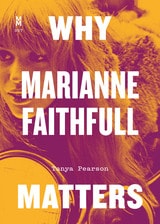
Why Marianne Faithfull Matters
By Tanya Pearson
University of Texas Press, 2021
First as a doe-eyed ingénue with “As Tears Go By,” then as a gravel-voiced phoenix rising from the ashes of the 1960s with a landmark punk album, Broken English, and finally as a genre-less icon, Marianne Faithfull carved her name into the history of rock ’n’ roll to chart a career spanning five decades and multiple detours. In Why Marianne Faithfull Matters, Tanya Pearson crafts a feminist account that explains the musician’s absence from the male-dominated history of the British Invasion and champions the eclectic late career that confirmed her redemption.
Putting memoir on equal footing with biographical history, Pearson writes about Faithfull as an avid fan, recovered addict, and queer musician at a crossroads. She’s also a professional historian unafraid to break from the expectations of the discipline if a “titty-centered analysis” or astrology can illuminate the work of her subject. Whether exploring Faithfull’s rise to celebrity, her drug addiction and fall from grace as spurned “muse,” or her reinvention as a sober, soulful chanteuse subverting all expectations for an aging woman in music, Pearson affirms the deep connections between listeners and creators and reveals, in her own particular way, why Marianne Faithfull matters.
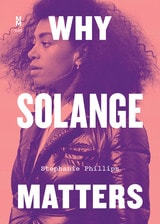
Why Solange Matters
By Stephanie Phillips
University of Texas Press, 2021
Growing up in the shadow of her superstar sister, Solange Knowles became a pivotal musician in her own right. Defying an industry that attempted to bend her to its rigid image of a Black woman, Solange continually experimented with her sound and embarked on a metamorphosis in her art that continues to this day.
In Why Solange Matters, Stephanie Phillips chronicles the creative journey of an artist who became a beloved voice for the Black Lives Matter generation. A Black feminist punk musician herself, Phillips addresses not only the unpredictable trajectory of Solange Knowles's career but also how she and other Black women see themselves through the musician's repertoire. First, she traces Solange’s progress through an inflexible industry, charting the artist’s development up to 2016, when the release of her third album, A Seat at the Table, redefined her career. Then, with A Seat at the Table and 2019’s When I Get Home, Phillips describes how Solange embraced activism, anger, Black womanhood, and intergenerational trauma to inform her remarkable art. Why Solange Matters not only cements the place of its subject in the pantheon of world-changing twenty-first century musicians, it introduces its writer as an important new voice.
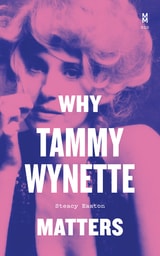
Why Tammy Wynette Matters
Steacy Easton
University of Texas Press, 2023
How Tammy Wynette channeled the conflicts of her life into her music and performance.
With hits such as “Stand By Your Man” and “Golden Ring,” Tammy Wynette was an icon of American domesticity and femininity. But there were other sides to the first lady of country. Steacy Easton places the complications of Wynette’s music and her biography in sharp-edged relief, exploring how she made her sometimes-tumultuous life into her work, a transformation that was itself art.
Wynette created a persona of high femininity to match the themes she sang about—fawning devotion, redemption in heterosexual romance, the heartbreak of loneliness. Behind the scenes, her life was marked by persistent class anxieties; despite wealth and fame, she kept her beautician’s license. Easton argues that the struggle to meet expectations of southernness, womanhood, and southern womanhood, finds subtle expression in Wynette’s performance of “Apartment #9”—and it’s because of these vocal subtleties that it came to be called the saddest song ever written. Wynette similarly took on elements of camp and political critique in her artistry, demonstrating an underappreciated genius. Why Tammy Wynette Matters reveals a musician who doubled back on herself, her façade of earnestness cracked by a melodrama that weaponized femininity and upended feminist expectations, while scoring twenty number-one hits.
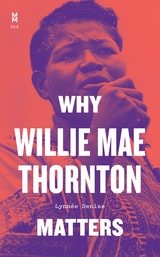
Why Willie Mae Thornton Matters
Lynnée Denise
University of Texas Press, 2023
Finalist, 2024 Lesbian Memoir/Biography, Lambda Literary Award for Arts and Culture
Winner — Walter & Lillian Lowenfels Criticism Award, 45th Annual American Book Awards, Before Columbus Foundation
A queer, Black “biography in essays” about the performer who gave us “Hound Dog,” “Ball and Chain,” and other songs that changed the course of American music.
Born in Alabama in 1926, raised in the church, appropriated by white performers, buried in an indigent’s grave—Willie Mae “Big Mama” Thornton's life events epitomize the blues—but Lynnée Denise pushes past the stereotypes to read Thornton’s life through a Black, queer, feminist lens and reveal an artist who was an innovator across her four-decade-long career.
Why Willie Mae Thornton Matters “samples” elements of Thornton’s art—and, occasionally, the author’s own story—to create “a biography in essays” that explores the life of its subject as a DJ might dig through a crate of records. Denise connects Thornton’s vaudevillesque performances in Sammy Green’s Hot Harlem Revue to the vocal improvisations that made “Hound Dog” a hit for Peacock Records (and later for Elvis Presley), injecting music criticism into what’s often framed as a cautionary tale of record-industry racism. She interprets Thornton’s performing in men’s suits as both a sly, Little Richard–like queering of the Chitlin Circuit and a simple preference for pants over dresses that didn’t have a pocket for her harmonica. Most radical of all, she refers to her subject by her given name rather than "Big Mama," a nickname bestowed upon her by a white man. It's a deliberate and crucial act of reclamation, because in the name of Willie Mae Thornton is the sound of Black musical resilience.
Why the Beach Boys Matter
By Tom Smucker
University of Texas Press, 2018
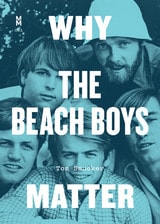
Of all the white American pop music groups that hit the charts before the Beatles, only the Beach Boys continued to thrive throughout the British Invasion to survive into the 1970s and beyond. The Beach Boys helped define both sides of the era we broadly call the sixties, split between their early surf, car, and summer pop and their later hippie, counterculture, and ambitious rock. No other group can claim the Ronettes and the Four Seasons as early 1960s rivals; the Mamas and the Papas and Crosby, Stills and Nash as later 1960s rivals; and the Beatles and the Temptations as decade-spanning counterparts.
This is the first book to take an honest look at the themes running through the Beach Boys’ art and career as a whole and to examine where they sit inside our culture and politics—and why they still grab our attention.
Why the Grateful Dead Matter
Michael Benson
University Press of New England, 2016
Why the Ramones Matter
By Donna Gaines
University of Texas Press, 2018
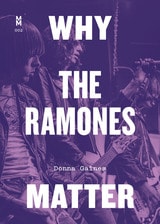
The central experience of the Ramones and their music is of being an outsider, an outcast, a person who’s somehow defective, and the revolt against shame and self-loathing. The fans, argues Donna Gaines, got it right away, from their own experience of alienation at home, at school, on the streets, and from themselves. This sense of estrangement and marginality permeates everything the Ramones still offer us as artists, and as people. Why the Ramones Matter compellingly makes the case that the Ramones gave us everything; they saved rock and roll, modeled DIY ethics, and addressed our deepest collective traumas, from the personal to the historical.
William Kentridge
Being Led by the NoseJane Taylor
University of Chicago Press, 2017
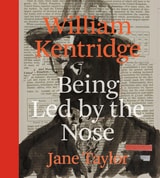
Kentridge has long been admired for his unconventional use of conventional media to produce art that is stunning, evocative, and narratively powerful—and how he works is as important as what he creates. This book is more than just a simple record of The Nose. The opera serves as a springboard into a bracing conversation about how Kentridge’s methods serve his unique mode of expression as a narrative and political artist. Taylor draws on his etchings, sculptures, and drawings to render visible the communication that occurs between his mind and hand as he thinks through the activity of making. Beautifully illustrated in color, William Kentridge offers striking insights about one of the most innovative artists of our present moment.
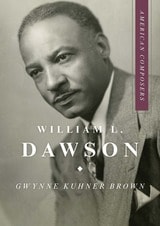
William L. Dawson
Gwynne Kuhner Brown
University of Illinois Press, 2024
Born in 1899, Dawson studied at the Tuskegee Institute in Alabama. He worked as a church, jazz, and orchestral musician in Kansas City and Chicago in the 1920s while continuing his education as a composer. He then joined the Tuskegee faculty, where for 25 years he led the Tuskegee Institute Choir to national prominence through performances of spirituals at the opening of Radio City Music Hall, on radio and television, and at the White House. The Philadelphia Orchestra conducted by Leopold Stokowski premiered Dawson’s Negro Folk Symphony in 1934.
Engaging and long overdue, William L. Dawson celebrates a pioneering Black composer whose contributions to African American music, history, and education inspire performers and audiences to this day.
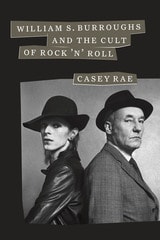
William S. Burroughs and the Cult of Rock 'n' Roll
By Casey Rae
University of Texas Press, 2019
William S. Burroughs's fiction and essays are legendary, but his influence on music's counterculture has been less well documented—until now. Examining how one of America's most controversial literary figures altered the destinies of many notable and varied musicians, William S. Burroughs and the Cult of Rock 'n' Roll reveals the transformations in music history that can be traced to Burroughs.
A heroin addict and a gay man, Burroughs rose to notoriety outside the conventional literary world; his masterpiece, Naked Lunch, was banned on the grounds of obscenity, but its nonlinear structure was just as daring as its content. Casey Rae brings to life Burroughs's parallel rise to fame among daring musicians of the 1960s, '70s, and '80s, when it became a rite of passage to hang out with the author or to experiment with his cut-up techniques for producing revolutionary lyrics (as the Beatles and Radiohead did). Whether they tell of him exploring the occult with David Bowie, providing Lou Reed with gritty depictions of street life, or counseling Patti Smith about coping with fame, the stories of Burroughs's backstage impact will transform the way you see America's cultural revolution—and the way you hear its music.
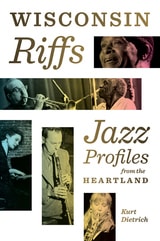
Wisconsin Riffs
Jazz Profiles from the HeartlandKurt Dietrich
Wisconsin Historical Society Press, 2018
Although New York City, Los Angeles, and Chicago are often considered the epicenters of American jazz, this extensive, upbeat compilation of jazz musician biographies details Wisconsin’s rich association the genre since its the inception of the genre in the early 1900s. Iconic musicians Bunny Berigan, Woody Herman, Les Paul, and Al Jarreau all hailed from Wisconsin, as have many other influential players, composers, and teachers. Wisconsin Riffs features these musicians side-by-side—from the world-renowned to obscure regional artists—to portray a comprehensive history of jazz in Wisconsin.
Through meticulous research and more than a hundred interviews, author Kurt Dietrich has assembled a group of musicians who represent a wide range of backgrounds, ages, stylistic schools, and experiences—from leaders of swing-era big bands to legendary Wisconsin Conservatory instructors to today’s up-and-coming practitioners of contemporary jazz and jazz rock. For aspiring musicians, jazz enthusiasts, and fans of Wisconsin culture alike, Wisconsin Riffs presents a compelling, complex, and multi-layered concoction—just like jazz itself.
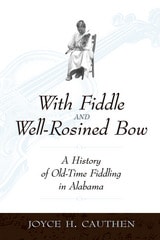
With Fiddle and Well-Rosined Bow
A History of Old-Time Fiddling In AlabamaJoyce H. Cauthen
University of Alabama Press, 2001
Relying on extensive archival research and on sixty interviews with fiddlers and their families and friends, Cauthen tells the rich, full story of old-time fiddling in Alabama.
Writing of life in the Alabama Territory in the late 1700s, A. J. Pickett, the state's first historian, noted that the country abounded in fiddlers, of high and low degree. After the defeat of the Creek Indians at the Battle of Horseshoe Bend in 1813, the number of fiddlers swelled as settlers from the southern states surrounding Alabama claimed the land. The music they played was based on tunes brought from Ireland, Scotland, and England, but in Alabama they developed their own southern accent as their songs became the music of celebration and relaxation for the state's pioneers. Early in the 20th century such music began to be called "old-time fiddling," to distinguish it from the popular music of the day, and the term is still used to distinguish that style from more modern bluegrass and country fiddle styles.
In With Fiddle and Well-Rosined Bow, Cauthen focuses on old-time fiddling in Alabama from the settlement of the state through World War II. Cauthen shows the effects of events, inventions, ethnic groups, and individuals upon fiddlers' styles and what they played. Cauthen gives due weight to the "modest masters of fiddle and bow" who were stars only to their families and communities. The fiddlers themselves tell why they play, how they learned without formal instruction and written music, and how they acquired their instruments and repertoires. Cauthen also tells the stories of "brag" fiddlers such as D.Dix Hollis, Y. Z. Hamilton, Charlie Stripling, "Fiddling" Tom Freeman,"Monkey" Brown, and the Johnson Brothers whose reputations spread beyond their communities through commercial recordings and fiddling contests. Described in vivid detail are the old-style square dances, Fourth of July barbeques and other celebrations, and fiddlers' conventions that fiddler shave reigned over throughout the state's history.

Wolfgang Amadeus Mozart
A BiographyPiero Melograni
University of Chicago Press, 2006
This year marks the 250th anniversary of the birth of Wolfgang Amadeus Mozart, one of the most enduringly popular and celebrated composers to have ever lived. His substantial oeuvre contains works that are considered to be among the most exquisite pieces of symphonic, chamber, and choral music ever written. His operas too cast a long shadow over those staged in their wake. And since his untimely death in 1791, he remains an enigmatic figure—the subject of fascination for aficionados and novices alike.
Piero Melograni here offers a wholly readable account of Mozart’s remarkable life and times. This masterful biography proceeds from the young Mozart’s earliest years as a Wunderkind—the child prodigy who traveled with his family to perform concerts throughout Europe—to his formative years in Vienna, where he fully absorbed the artistic and intellectual spirit of the Enlightenment, to his deathbed, his unfinished Requiem, and the mystery that still surrounds his burial. Melograni’s deft use of Mozart’s letters throughout confers authority and vitality to his recounting, and his expertise brings Mozart’s eighteenth-century milieu evocatively to life. Written with a gifted historian’s flair for narrative and unencumbered by specialized analyses of Mozart’s music, Melograni’s is the most vivid and enjoyable biography available.
At a time when music lovers around the world are paying honor to Mozart and his legacy, Wolfgang Amadeus Mozart will be welcomed by his enthusiasts—or anyone wishing to peer into the mind of one of the greatest composers ever known.
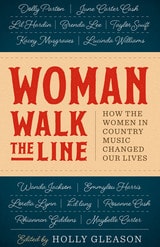
Woman Walk the Line
How the Women in Country Music Changed Our LivesBy Holly Gleason
University of Texas Press, 2017
Full-tilt, hardcore, down-home, and groundbreaking, the women of country music speak volumes with every song. From Maybelle Carter to Dolly Parton, k.d. lang to Taylor Swift—these artists provided pivot points, truths, and doses of courage for women writers at every stage of their lives. Whether it’s Rosanne Cash eulogizing June Carter Cash or a seventeen-year-old Taylor Swift considering the golden glimmer of another precocious superstar, Brenda Lee, it’s the humanity beneath the music that resonates.
Here are deeply personal essays from award-winning writers on femme fatales, feminists, groundbreakers, and truth tellers. Acclaimed historian Holly George Warren captures the spark of the rockabilly sensation Wanda Jackson; Entertainment Weekly’s Madison Vain considers Loretta Lynn’s girl-power anthem “The Pill”; and rocker Grace Potter embraces Linda Ronstadt’s unabashed visual and musical influence. Patty Griffin acts like a balm on a post-9/11 survivor on the run; Emmylou Harris offers a gateway through paralyzing grief; and Lucinda Williams proves that greatness is where you find it.
Part history, part confessional, and part celebration of country, Americana, and bluegrass and the women who make them, Woman Walk the Line is a very personal collection of essays from some of America’s most intriguing women writers. It speaks to the ways in which artists mark our lives at different ages and in various states of grace and imperfection—and ultimately how music transforms not just the person making it, but also the listener.

Women of Valor
Orthodox Jewish Troll Fighters, Crime Writers, and Rock Stars in Contemporary Literature and CultureKaren E. H. Skinazi
Rutgers University Press, 2018
Media portrayals of Orthodox Jewish women frequently depict powerless, silent individuals who are at best naive to live an Orthodox lifestyle, and who are at worst, coerced into it. Karen E. H. Skinazi delves beyond this stereotype in Women of Valor to identify a powerful tradition of feminist literary portrayals of Orthodox women, often created by Orthodox women themselves. She examines Orthodox women as they appear in memoirs, comics, novels, and movies, and speaks with the authors, filmmakers, and musicians who create these representations. Throughout the work, Skinazi threads lines from the poem “Eshes Chayil,” the Biblical description of an Orthodox “Woman of Valor.” This proverb unites Orthodoxy and feminism in a complex relationship, where Orthodox women continuously question, challenge, and negotiate Orthodox and feminist values. Ultimately, these women create paths that unite their work, passions, and families under the framework of an “Eshes Chayil,” a woman who situates religious conviction within her own power.
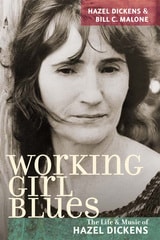
Working Girl Blues
The Life and Music of Hazel DickensHazel Dickens and Bill C. Malone
University of Illinois Press, 2007
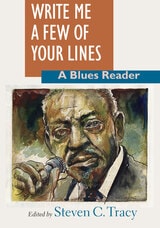
Write Me a Few of Your Lines
A Blues ReaderSteven C. Tracy
University of Massachusetts Press, 1999
Among the signal achievements of African American culture is the style of music known as the blues, an art form evolved from southern black songs of the late nineteenth century. From the field hollers and steel-bodied guitar of its early days to the electric amplification of today's performers, the visceral power of the blues has long been celebrated for its creativity, spontaneity, and ingenuity. It has served as a wellspring for other forms of music, including gospel, jazz, rhythm and blues, soul, rock, and rap, and has exerted an influence on literature and the visual arts as well.
This book brings together some of the most significant writings about the blues published between 1911 and 1998. Included are selections by folklorists, anthropologists, sociologists, literary artists, musicians, critics, and aficionados. The extraordinary appeal of the blues is reflected in the range of contributors to this volume, among them Howard W. Odum, Alan Lomax, Richard Alan Waterman, Langston Hughes, Paul Oliver, Sam Charters, Janheinz Jahn, James Baldwin, Leroi Jones, Charles Keil, Jeff Todd Titon, Houston Baker, Hazel Carby, and Angela Davis. From these various perspectives emerges a new understanding of the blues: its origins in African aesthetics; the impact of slavery and Reconstruction; its early folk manifestations; and the importance of religion, style, gender, audience, protest, and the record business in its development as an art form. Further context is provided by a comprehensive introduction, section overviews, and an extensive bibliography, discography, and videography of blues materials.
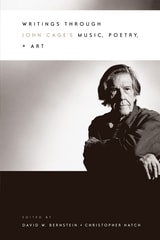
Writings through John Cage's Music, Poetry, and Art
Edited by David W. Bernstein and Christopher Hatch
University of Chicago Press, 2001
The essays in this collection grew out of a pivotal gathering during which a spectrum of participants including composers, music scholars, and visual artists, literary critics, poets, and filmmakers convened to examine Cage's extraordinary artistic legacy. Beginning with David Bernstein's introductory essay on the reception of Cage's music, the volume addresses topics ranging from Cage's reluctance to discuss his homosexuality, to his work as a performer and musician, and his forward-looking, provocative experimentation with electronic and other media. Several of the essays draw upon previously unseen sketches and other source materials. Also included are transcripts of lively panel discussions among some of Cage's former colleagues. Taken together, this collection is a much-needed contribution to the study of one of the most significant American artists of the twentieth century.