Results by title
341 books match the query 'Geography' and 10 start with w
Water and Climate in the Western United States
W Lewis
University Press of Colorado, 2003
Water in the Middle East
A Geography of PeaceEdited by Hussein A. Amery and Aaron Wolf
University of Texas Press, 2000
Finding "streams in the desert" has never been more urgent for the peoples of the Middle East. Rapid population growth and a rising standard of living are driving water demand inexorably upward, while the natural supply has not increased since Biblical times. Ensuring a fair and adequate distribution of water in the region is vitally important for building a lasting peace among the nations of the Middle East.
Addressing water needs from a geographical perspective, the contributors to this book analyze and assess the impact of scarce water resources in the Jordan River basin countries and territories (Israel, Jordan, Lebanon, Palestine, and Syria) as these long-time antagonists work toward peace. After geographical and historical overviews, the authors envision the future-what the water issues may be when Israel and Syria begin negotiating, the "hydro-security" needs of each nation, and the difficulties of planning for uncertainty. Without proposing any one ideal scheme, they discuss the possibilities for cooperative sharing of water resources, while honestly acknowledging the political constraints that may limit such projects. The final essay speaks to the needs of the one party so rarely represented at the negotiating table—the Jordan River itself.
Wetlands of the American Midwest
A Historical Geography of Changing AttitudesHugh Prince
University of Chicago Press, 1997
As attitudes changed, so did scientific research agendas, government policies, and farmers' strategies for managing their land. Originally viewed as bountiful sources of wildlife by indigenous peoples, wet areas called "wet prairies," "swamps," or "bogs" in the late nineteenth and early twentieth centuries were considered productive only when drained for agricultural use. Beginning in the 1950s, many came to see these renamed "wetlands" as valuable for wildlife and soil conservation.
Prince's book will appeal to a wide readership, ranging from geographers and environmental historians to the many government and private agencies and individuals concerned with wetland research, management, and preservation.
Who Owns America?
Social Conflict over Property RightsEdited by Harvey M. Jacobs
University of Wisconsin Press, 1998
Land ownership by individual citizens is a cornerstone of American heritage and a centerpiece of the American dream. Thomas Jefferson called it the key to our success as a democracy. Yet the question of who owns America not only remains unanswered but is central to a fundamental conflict that can pit private property rights advocates against government policymakers and environmentalists.
Land use authority Harvey M. Jacobs has gathered a provocative collection of perspectives from eighteen contributors in the fields of law, history, anthropology, economics, sociology, forestry, and environmental studies. Who Owns America? begins with the popular view of land ownership as seen though the television show Bonanza! It examines public regulation of private land; public land management; the roles culture and ethnic values play in land use; and concludes with Jacobs’ title essay.
Who Owns America? is a powerful and illuminating exploration of the very terrain that makes us Americans. Its broad set of theoretical and historical perspectives will fascinate historians, environmental activists, policy makers, and all who care deeply about the land we share.
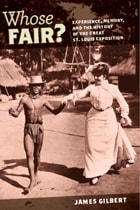
Whose Fair?
Experience, Memory, and the History of the Great St. Louis ExpositionJames Gilbert
University of Chicago Press, 2009
The 1904 St. Louis World’s Fair was a major event in early-twentieth-century America. Attracting millions of tourists, it exemplified the Victorian predilection for public spectacle. The Fair has long served as a touchstone for historians interested in American culture prior to World War I and has endured in the memories of generations of St. Louis residents and visitors. In Whose Fair? James Gilbert asks: what can we learn about the lived experience of fairgoers when we compare historical accounts, individual and collective memories, and artifacts from the event?
Exploring these differing, at times competing, versions of history and memory prompts Gilbert to dig through a rich trove of archival material. He examines the papers of David Francis, the Fair’s president and subsequent chief archivist; guidebooks and other official publications; the 1944 film Meet Me in St. Louis; diaries, oral histories, and other personal accounts; and a collection of striking photographs. From this dazzling array of sources, Gilbert paints a lively picture of how fairgoers spent their time, while also probing the ways history and memory can complement each other.
Wildlife in the Anthropocene
Conservation after NatureJamie Lorimer
University of Minnesota Press, 2015
Elephants rarely breed in captivity and are not considered domesticated, yet they interact with people regularly and adapt to various environments. Too social and sagacious to be objects, too strange to be human, too captive to truly be wild, but too wild to be domesticated—where do elephants fall in our understanding of nature?
In Wildlife in the Anthropocene, Jamie Lorimer argues that the idea of nature as a pure and timeless place characterized by the absence of humans has come to an end. But life goes on. Wildlife inhabits everywhere and is on the move; Lorimer proposes the concept of wildlife as a replacement for nature. Offering a thorough appraisal of the Anthropocene—an era in which human actions affect and influence all life and all systems on our planet— Lorimer unpacks its implications for changing definitions of nature and the politics of wildlife conservation. Wildlife in the Anthropocene examines rewilding, the impacts of wildlife films, human relationships with charismatic species, and urban wildlife. Analyzing scientific papers, policy documents, and popular media, as well as a decade of fieldwork, Lorimer explores the new interconnections between science, politics, and neoliberal capitalism that the Anthropocene demands of wildlife conservation.
Imagining conservation in a world where humans are geological actors entangled within and responsible for powerful, unstable, and unpredictable planetary forces, this work nurtures a future environmentalism that is more hopeful and democratic.
William James at the Boundaries
Philosophy, Science, and the Geography of KnowledgeFrancesca Bordogna
University of Chicago Press, 2008
What was the goal of this unusual speech? Rather than an oddity, Francesca Bordogna asserts that the APA address was emblematic—it was just one of many gestures that James employed as he plowed through the barriers between academic, popular, and pseudoscience, as well as the newly emergent borders between the study of philosophy, psychology, and the “science of man.” Bordogna reveals that James’s trespassing of boundaries was an essential element of a broader intellectual and social project. By crisscrossing divides, she argues, James imagined a new social configuration of knowledge, a better society, and a new vision of the human self. As the academy moves toward an increasingly interdisciplinary future, William James at the Boundaries reintroduces readers to a seminal influence on the way knowledge is pursued.
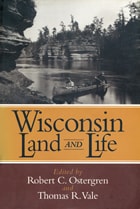
Wisconsin Land and Life
A Portrait of the StateRobert C. Ostergren
University of Wisconsin Press, 1997
These are images of Wisconsin's land and life, images that evoke a strong sense of place. This book, Wisconsin Land and Life, is an exploration of place, a series of original essays by Wisconsin geographers that offers an introduction to the state's natural environment, the historical processes of its human habitation, and the ways that nature and people interact to create distinct regional landscapes. To read it is to come away with a sweeping view of Wisconsin's geography and history: the glaciers that carved lakes and moraines; the soils and climate that fostered the prairies and great northern pine forests; the early Native Americans who began to shape the landscape and who established forest trails and river portages; the successive waves of Europeans who came to trade in furs, mine for lead and iron, cut the white pines, establish farms, work in the lumber and paper mills, and transform spent wheatfields into pasture for dairy cattle.
Readers will learn, too, about the platting and naming of Wisconsin's towns, the establishment of county and township governments, the growth of urban neighborhoods and parishes, the role of rivers, railroads, and religion in shaping the state's growth, and the controversial reforestation of the cutover lands that eventually transformed hardscrabble farms and swamps into a sportsman's paradise.
Abundantly illustrated with photos and maps, this book will richly reward anyone who wishes to learn more about the land and life of the place we know as Wisconsin.
Worldly Consumers
The Demand for Maps in Renaissance ItalyGenevieve Carlton
University of Chicago Press, 2015
Drawing on a variety of sixteenth-century sources, including household inventories, epigrams, dedications, catalogs, travel books, and advice manuals, Worldly Consumers studies how individuals displayed different maps in their homes as deliberate acts of self-fashioning. One citizen decorated with maps of Bruges, Holland, Flanders, and Amsterdam to remind visitors of his military prowess, for example, while another hung maps of cities where his ancestors fought or governed, in homage to his auspicious family history. Renaissance Italians turned domestic spaces into a microcosm of larger geographical places to craft cosmopolitan, erudite identities for themselves, creating a new class of consumers who drew cultural capital from maps of the time.
Writing the Land
French Imperial and Colonial Mapping of West Africa, 1854–1892Thomas J. Bassett
University of Chicago Press, 2027
Reveals the intertwined nature of imperial mapping and map history through the making of the colony of French Soudan in nineteenth-century West Africa.
Thomas J. Bassett’s Writing the Land argues that mapping played a key role in France’s territorial conquest of Africa, and that the process of imperial expansion and colonization shaped map history by influencing how maps were constructed, circulated, and used. Analyzing military and surveying campaigns over half a century in an area that became the colony of French Soudan, Bassett focuses on the social and spatial problems that surveyors and mapmakers tried to solve in the process of territorial conquest, as well as the conflicts that arose as they pursued their goals.
In their efforts to obtain this territory, French military leaders, cartographers, and expedition members came into continual contact with local Africans, with whom they negotiated and clashed. Often, imperial officers relied on intermediaries to navigate West African geography, drawing on the knowledge of political authorities, interpreters, guides, and long-distance traders; the maps they produced are inextricable from these interactions. Ultimately, Bassett claims, examining the processes of mapping in the context of these encounters leads us to understand these maps anew as Euro-African constructions, ones that emerge from a complex process of exchange and domination.