Results by title
64 books match the query 'Georgia' and 3 start with w
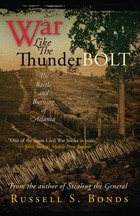
War Like the Thunderbolt
The Battle and Burning of AtlantaRussell S. Bonds
Westholme Publishing, 2009
A masterpiece of prose and research, the definitive history of the struggle for Atlanta during the Civil War, an episode immortalized by the novel Gone with the Wind
Called “the greatest event of the Civil War” by New York diarist George Templeton Strong, the epic struggle for the city of Atlanta in the bloody summer of 1864 was a pivotal moment in American history. Union commander William Tecumseh Sherman’s relentless fight for the city secured the reelection of Abraham Lincoln, sealed the fate of the Southern Confederacy, and set a precedent for military campaigns that endures today. Its depiction in the novel and motion picture Gone with the Wind established the fight for Atlanta as an iconic episode in our nation’s most terrible war. In War Like the Thunderbolt: The Battle and Burning of Atlanta, award-winning author Russell S. Bonds takes the reader behind the lines and across the smoky battlefields of Peachtree Creek, Atlanta, Ezra Church, and Jonesboro, and into the lives of fascinating characters, both the famous and the forgotten, including the fiery and brilliant Sherman; General John Bell Hood, the Confederacy’s last hope to defend Atlanta; Benjamin Harrison, the diminutive young Indiana colonel who would rise to become President of the United States; Patrick Cleburne, the Irishmanturned- Southern officer; and ten-year-old diarist Carrie Berry, who bravely withstood and bore witness to the fall of the city. Here also is the dramatic story of the ordeal of Atlanta itself—the five-week artillery bombardment, the expulsion of its civilian population, and the infamous fire that followed. Based on new research in diaries, newspapers, previously unpublished letters, and other archival sources, War Like the Thunderbolt is a combination of captivating narrative and insightful military analysis—a stirring account of the battle and burning of the “Gate City of the South.”
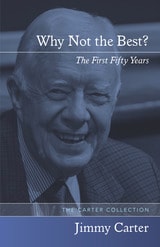
Why Not the Best?
The First Fifty YearsJimmy Carter
University of Arkansas Press, 1996
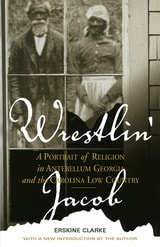
Wrestlin' Jacob
A Portrait of Religion in Antebellum Georgia and the Carolina Low CountryErskine Clarke
University of Alabama Press, 2000
Wrestling with God, scripture, and conscience in the nineteenth‑century South
First published in 1979, Wrestlin’ Jacob offers important insights into the intersection of black and white religious history in the South. Erskine Clarke provides two arenas—one urban and one rural—that show what happened when white ministers tried to bring black slaves into the fold of Christianity. Clarke illustrates how the good intentions—and vain illusions—of the white preachers, coupled with the degradation and cultural strength of the slaves, played a significant role in the development of black churches in the South.
From 1833 to 1847, Reverend Charles Colcock Jones served as an itinerant minister to slaves on the rice and cotton plantations in Liberty County, Georgia. The aim of Jones, and of the largely Puritan-descended slave owners, was to harvest not only good Christians but also obedient and hard-working slaves. At the same time, similar efforts were under way in cosmopolitan Charleston, South Carolina. Charleston permitted blacks to worship only under the supervision of whites, and partially as a result, whites and blacks worshiped together in ways that would be unheard of later in the segregated South.
Clarke examines not only the white ministers’ motivation in their missionary work but also the slaves’ reasons for becoming a part of the church. He addresses the important issue of the continuity of African traditions with the religious life of slaves and provides a significant introduction to the larger issues of slavery and religion in the South.