Results by title
86 books match the query 'Governors' and 5 start with w
Why Not the Best?
The First Fifty YearsJimmy Carter
University of Arkansas Press, 1996
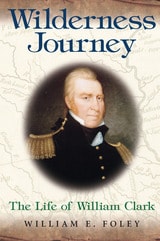
Wilderness Journey
The Life of William ClarkWilliam E. Foley
University of Missouri Press, 2005
Coinciding with the bicentennial in 2004 of the departure of Lewis and Clark’s famed Corps of Discovery, Wilderness Journey fills a major gap in scholarship. Intended for the general reader, as well as for specialists in the field, this fascinating book provides a well-balanced and thorough account of one of America’s most significant frontiersmen.
Winthrop Rockefeller, Philanthropist
A Life of ChangeJohn Ward
University of Arkansas Press, 2004

Wizards
David Duke, America's Wildest Election, and the Rise of the Far RightBrian Fairbanks
Vanderbilt University Press, 2022
A surging Republican populist.
The Democrat, hounded by corruption allegations; the Republican, dogged by business failures and ties to white supremacists.
The Republican turned out thousands of screaming supporters for speeches blaming illegal immigrants and crime on the Democrats, and the Democrat plummeted in the polls.
Sound familiar?
The '91 Louisiana Governor's race was supposed to be forgettable. But when former KKK Grand Wizard David Duke shocked the nation by ousting incumbent Republican Governor Buddy Roemer in the primary, the world took notice. Democrat Edwin Edwards, a former three-term governor and two-time corruption defendant, was left alone to face Duke in the general election—and he was going to lose.
Then a little-known state committeewoman stepped in with evidence of Duke's nefarious past. Could her evidence be enough to sway the minds of fired-up voters, or would Louisiana welcome a far-right radical into the highest office in the state?
Journalist Brian Fairbanks explores how the final showdown between Duke and Edwards in November 1991 led to a major shift in our national politics, as well as the rise of the radical right and white supremacist groups, and how history repeated itself in the 2016 presidential election. The story of these political "wizards," almost forgotten by history, remains eerily prescient and disturbingly relevant, and a compulsive page-turner.
Wounded Warrior
The Rise and Fall of Michigan Governor John SwainsonLawrence M. Glazer
Michigan State University Press, 2010
Few people today remember John Swainson. As a teenage soldier he lost both legs in a WWII landmine explosion. Back in the United States, following a meteoric political rise in the Michigan State Senate, Swainson was elected as Michigan's youngest governor since Stevens T. Mason.
In 1970 Swainson was elected to the Michigan Supreme Court, becoming one of the few public officials to have served in the legislative, executive, and judicial branches of state government. Then, in 1957, he was indicted on federal charges of bribery and perjury, and convicted of lying to a federal grand jury. Forced to leave the state Supreme Court and disbarred from practicing law, he became a pariah, sinking into depression and alcoholism. He virtually disappeared from public view.
Lawrence M. Glazer re-examines the FBI's investigation of Swainson and delves into his 1975 trial in detail. He reveals new information from eye-witnesses who never testified and, in a poignant coda, relates the little-known story of Swainson's rehabilitation and return to public life as a historian.