Results by title
116 books match the query 'Health aspects' and 3 start with w
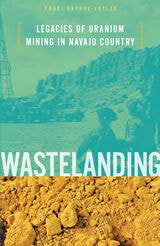
Wastelanding
Legacies of Uranium Mining in Navajo CountryTraci Brynne Voyles
University of Minnesota Press, 2015
Wastelanding tells the history of the uranium industry on Navajo land in the U.S. Southwest, asking why certain landscapes and the peoples who inhabit them come to be targeted for disproportionate exposure to environmental harm. Uranium mines and mills on the Navajo Nation land have long supplied U.S. nuclear weapons and energy programs. By 1942, mines on the reservation were the main source of uranium for the top-secret Manhattan Project. Today, the Navajo Nation is home to more than a thousand abandoned uranium sites. Radiation-related diseases are endemic, claiming the health and lives of former miners and nonminers alike.
Traci Brynne Voyles argues that the presence of uranium mining on Diné (Navajo) land constitutes a clear case of environmental racism. Looking at discursive constructions of landscapes, she explores how environmental racism develops over time. For Voyles, the “wasteland,” where toxic materials are excavated, exploited, and dumped, is both a racial and a spatial signifier that renders an environment and the bodies that inhabit it pollutable. Because environmental inequality is inherent in the way industrialism operates, the wasteland is the “other” through which modern industrialism is established.
In examining the history of wastelanding in Navajo country, Voyles provides “an environmental justice history” of uranium mining, revealing how just as “civilization” has been defined on and through “savagery,” environmental privilege is produced by portraying other landscapes as marginal, worthless, and pollutable.
What Do I Say?
Talking with Patients about SpiritualityElizabeth Johnston-Taylor
Templeton Press, 2007
•How do I answer a "why" question?
•What do I say to a patient who believes a miracle will happen to cure them?
•What if I'm not religious? How can I talk about it?
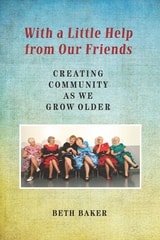
With a Little Help from Our Friends
Creating Community as We Grow OlderBeth Baker
Vanderbilt University Press, 2014
• a mobile home cooperative in small-town Oregon
• a senior artists colony in Los Angeles
• neighbors helping neighbors in "Villages" or "naturally occurring retirement communities"
• intentional cohousing communities
• best friends moving in together
• multigenerational families that balance togetherness and privacy
• niche communities including such diverse groups as retired postal workers, gays and lesbians, and Zen Buddhists
Drawing on new research showing the importance of social support to healthy aging and the risks associated with loneliness and isolation, the author encourages the reader to plan for a future with strong connections. Baker explores whether individuals in declining health can really stay rooted in their communities through the end of life and concludes by examining the challenge of expanding the home-care workforce and the potential of new technologies like webcams and assistive robots.
This book is the recipient of the annual Norman L. and Roselea J. Goldberg Prize for the best project in the area of medicine.