Results by title
111 books match the query 'Historical geography' and 4 start with w
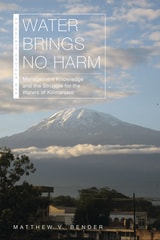
Water Brings No Harm
Management Knowledge and the Struggle for the Waters of KilimanjaroMatthew V. Bender
Ohio University Press, 2019
In Water Brings No Harm, Matthew V. Bender explores the history of community water management on Mount Kilimanjaro in Tanzania. Kilimanjaro’s Chagga-speaking peoples have long managed water by employing diverse knowledge: hydrological, technological, social, cultural, and political. Since the 1850s, they have encountered groups from beyond the mountain—colonial officials, missionaries, settlers, the independent Tanzanian state, development agencies, and climate scientists—who have understood water differently. Drawing on the concept of waterscapes—a term that describes how people “see” water, and how physical water resources intersect with their own beliefs, needs, and expectations—Bender argues that water conflicts should be understood as struggles between competing forms of knowledge.
Water Brings No Harm encourages readers to think about the origins and interpretation of knowledge and development in Africa and the global south. It also speaks to the current global water crisis, proposing a new model for approaching sustainable water development worldwide.
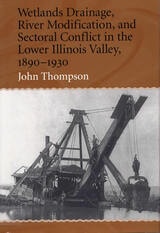
Wetlands Drainage, River Modification, and Sectoral Conflict in the Lower Illinois Valley, 1890-1930
John Thompson
Southern Illinois University Press, 2002
Thompson examines the history of the land drainage movement and the inevitable environmental changes caused by the intensification of urban and rural land use in the Midwest between sixty and one hundred years ago. He shows how institutions of land drainage were organized and operated and how the nascent drainage engineering and contracting sectors functioned. Focusing on the lower valley, Thompson also deals with drainage as it affects the nation, the Midwest, Chicago, and downstate Illinois.
Thompson is the first to address the array of interrelated physical, economic, and political circumstances caused by the development of competing and incompatible uses for the waters and the floodplain of the Illinois River when large-scale land reclamation and great volumes of water from Lake Michigan and Chicago changed land and water relationships, destroyed a major riverine fishing industry, and severely damaged renowned waterfowl hunting grounds.
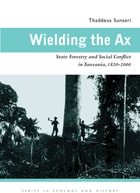
Wielding the Ax
State Forestry and Social Conflict in Tanzania, 1820–2000Thaddeus Sunseri
Ohio University Press, 2009
Forests have been at the fault lines of contact between African peasant communities in the Tanzanian coastal hinterland and outsiders for almost two centuries. In recent decades, a global call for biodiversity preservation has been the main challenge to Tanzanians and their forests.
Thaddeus Sunseri uses the lens of forest history to explore some of the most profound transformations in Tanzania from the nineteenth century to the present. He explores anticolonial rebellions, the world wars, the depression, the Cold War, oil shocks, and nationalism through their intersections with and impacts on Tanzania’s coastal forests and woodlands. In Wielding the Ax, forest history becomes a microcosm of the origins, nature, and demise of colonial rule in East Africa and of the first fitful decades of independence.
Wielding the Ax is a story of changing constellations of power over forests, beginning with African chiefs and forest spirits, both known as “ax–wielders,” and ending with international conservation experts who wield scientific knowledge as a means to controlling forest access. The modern international concern over tropical deforestation cannot be understood without an awareness of the long–term history of these forest struggles.

Writing Cities
Exploring Early Modern Urban DiscourseJames S. Amelang
Central European University Press, 2020