Results by title
54 books match the query 'Indians in literature' and 3 start with w
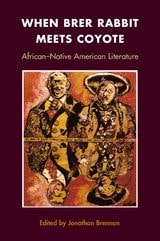
When Brer Rabbit Meets Coyote
AFRICAN-NATIVE AMERICAN LITERATUREEdited by Jonathan Brennan
University of Illinois Press, 2003
Jonathan Brennan, in a sweeping historical and analytical introduction to this collection of essays, surveys several centuries of literature in the context of the historical and cultural exchange and development of distinct African-Native American traditions. Positing a new African-Native American literary theory, he illuminates the roles subjectivity, situational identities, and strategic discourse play in defining African-Native American literatures.
Brennan provides a thorough background to the literary tradition and a valuable overview to topics discussed in the essays. He examines African-Native American political and historical texts, travel narratives, and the Mardi Gras Indian tradition, suggesting that this evolving oral tradition parallels the development of numerous Black Indian literary traditions in the United States and Latin America.
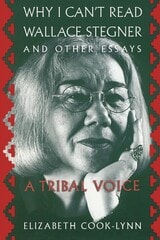
Why I Can't Read Wallace Stegner and Other Essays
A Tribal VoiceElizabeth Cook-Lynn
University of Wisconsin Press, 1996
This provocative collection of essays reveals the passionate voice of a Native American feminist intellectual. Elizabeth Cook-Lynn, a poet and literary scholar, grapples with issues she encountered as a Native American in academia. She asks questions of critical importance to tribal people: who is telling their stories, where does cultural authority lie, and most important, how is it possible to develop an authentic tribal literary voice within the academic community?
In the title essay, “Why I Can’t Read Wallace Stegner,” Cook-Lynn objects to Stegner’s portrayal of the American West in his fiction, contending that no other author has been more successful in serving the interests of the nation’s fantasy about itself. When Stegner writes that “Western history sort of stopped at 1890,” and when he claims the American West as his native land, Cook-Lynn argues, he negates the whole past, present, and future of the native peoples of the continent. Her other essays include discussion of such Native American writers as Michael Dorris, Ray Young Bear, and N. Scott Momaday; the importance of a tribal voice in academia, the risks to American Indian women in current law practices, the future of Indian Nationalism, and the defense of the land.
Cook-Lynn emphasizes that her essays move beyond the narrowly autobiographical, not just about gender and power, not just focused on multiculturalism and diversity, but are about intellectual and political issues that engage readers and writers in Native American studies. Studying the “Indian,” Cook-Lynn reminds us, is not just an academic exercise but a matter of survival for the lifeways of tribal peoples. Her goal in these essays is to open conversations that can make tribal life and academic life more responsive to one another.
Writing Home
Indigenous Narratives of ResistanceMichael D. Wilson
Michigan State University Press, 2008