Results by title
164 books match the query 'Individual Composer & Musician' and 19 start with w
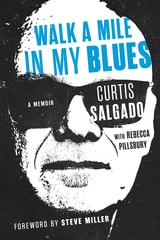
Walk a Mile in My Blues
A MemoirCurtis Salgado with Rebecca Pillsbury; Foreword by Steve Miller
University of Illinois Press, 2027
In this memoir, Salgado shares stories of his career against the backdrop of encounters with music legends, the Oregon scene’s cultural heyday, and his journey to overcome addiction and life-threatening health challenges. His poignant and at times humorous stories of touring and playing with artists like Robert Cray, Muddy Waters, Cab Calloway, and Stevie Ray Vaughan fuse with an invitation to embrace the blues and soul music that shaped his life and help define America.
Walk a Mile in My Blues shares the hidden and heartfelt story of a musical legend, living and loving the blues.
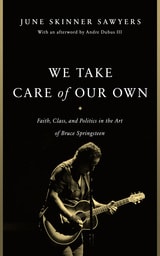
We Take Care of Our Own
Faith, Class, and Politics in the Art of Bruce SpringsteenJune Skinner Sawyers
Rutgers University Press, 2024
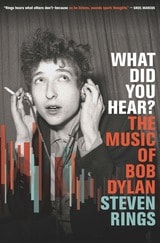
What Did You Hear?
The Music of Bob DylanSteven Rings
University of Chicago Press, 2025
Named one of PopMatters’ Best Books of 2025! Discover a new side of the songs of Bob Dylan by exploring the virtues of rough sounds, peculiar intonation, and a raspy voice.
Folk troubadour, rock star, country crooner—for a musician who adopted so many personas, Bob Dylan always sounds like himself. While he’s written many of the most iconic and impactful lyrics of the past sixty years, Dylan’s music has also reshaped our sonic imagination with his ragged voice, wailing harmonica, and rough-hewn guitar.
Music theorist Steven Rings argues that such sonic imperfections are central to understanding Dylan’s songs and their appeal. These blemishes can invoke authenticity or persona, signal his social commitments, and betray his political shortcomings. Rings begins—where else?—with Dylan’s voice, exploring its changeability, its unmistakable features, and its ability to inhabit characters, including the female narrator of “House of the Rising Sun.” Rings then turns to Dylan as an instrumentalist, examining his infamous adoption of the electric guitar in 1965, as well as his stylistically varied acoustic playing, which borrows sounds and techniques from Black blues musicians, among other influences. Rings charts the histories audible in Dylan’s harmonica as well as piano, which has been central to his music making since his earliest days of imitating Little Richard in his hometown of Hibbing, Minnesota. Finally, Rings guides readers through one of Dylan’s most famous songs, “A Hard Rain’s a-Gonna Fall,” analyzing its musical sources as well as variations in live performances. A companion website of audio and video examples helps readers notice the nuances and idiosyncrasies inherent in Dylan’s work and, even more importantly, their effects.
A close look at an underdiscussed but essential aspect of Dylan’s oeuvre, What Did You Hear? offers a fresh understanding of a singular performer, his musical choices, and the meanings that we can hear in his imperfect sounds.
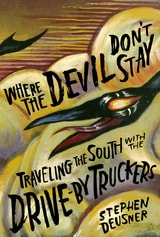
Where the Devil Don't Stay
Traveling the South with the Drive-By TruckersStephen Deusner
University of Texas Press, 2021
In 1996, Patterson Hood recruited friends and fellow musicians in Athens, Georgia, to form his dream band: a group with no set lineup that specialized in rowdy rock and roll. The Drive-By Truckers, as they named themselves, grew into one of the best and most consequential rock bands of the twenty-first century, a great live act whose songs deliver the truth and nuance rarely bestowed on Southerners, so often reduced to stereotypes.
Where the Devil Don’t Stay tells the band’s unlikely story not chronologically but geographically. Seeing the Truckers’ albums as roadmaps through a landscape that is half-real, half-imagined, their fellow Southerner Stephen Deusner travels to the places the band’s members have lived in and written about. Tracking the band from Muscle Shoals, Alabama, to Richmond, Virginia, to the author’s hometown in McNairy County, Tennessee, Deusner explores the Truckers’ complex relationship to the South and the issues of class, race, history, and religion that run through their music. Drawing on new interviews with past and present band members, including Jason Isbell, Where the Devil Don’t Stay is more than the story of a great American band; it’s a reflection on the power of music and how it can frame and shape a larger culture.
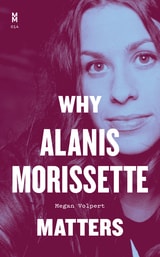
Why Alanis Morissette Matters
Megan Volpert
University of Texas Press, 2025
The first critical biography of iconic musician Alanis Morissette, creator of Jagged Little Pill.
The 1990s hardly saw a bigger hit than Jagged Little Pill. Alanis Morissette’s defining album won Grammys, dominated the Billboard charts, and sold more than 30 million copies worldwide. It left a deep mark on the psyches of countless listeners. Three decades later, Megan Volpert checks in with Morissette, probing her rich and varied post-JLP career and bearing feminist witness to the existential anger that ties her recent work to enduring classics like “You Oughta Know,” “One Hand in My Pocket,” and “Ironic.”
Why Alanis Morissette Matters builds a bridge from Jagged Little Pill to the fascinating life and subtle intellect of its creator, exploring how the artist’s philosophical interests and personal journey are reflected in each track. Morissette’s struggles with censorship, mental health challenges, and Catholicism; her queer allyship, spiritual skepticism, zealous fandom, and philanthropic passions—all are carefully observed by a critic whose own life was touched by Jagged Little Pill. In the album’s wake, Morissette has evolved as an artist and global citizen. With sensitivity and a profound love for the music, Volpert guides readers through the case for Morissette’s enduring cultural relevance and creative impact.
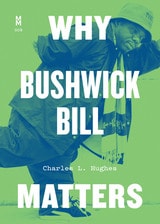
Why Bushwick Bill Matters
By Charles L. Hughes
University of Texas Press, 2021
In 1989 the Geto Boys released a blistering track, “Size Ain’t Shit,” that paid tribute to the group’s member Bushwick Bill. Born with dwarfism, Bill was one of the few visibly disabled musicians to achieve widespread fame and one of the even fewer to address disability in a direct, sustained manner. Initially hired as a dancer, Bill became central to the Geto Boys as the Houston crew became one of hip-hop’s most important groups.
Why Bushwick Bill Matters chronicles this crucial artist and explores what he reveals about the relationships among race, sex, and disability in pop music. Charles L. Hughes examines Bill's recordings and videos (both with the Geto Boys and solo), from the horror-comic persona of “Chuckie” to vulnerable verses in songs such as “Mind Playing Tricks On Me,” to discuss his portrayals of dwarfism, addiction, and mental illness. Hughes also explores Bill’s importance to his era and to the longer history of disability in music. A complex figure, Bill exposed the truths of a racist and ableist society even as his violent and provocative lyrics put him in the middle of debates over censorship and misogyny. Confrontational and controversial, Bushwick Bill left a massive legacy as he rhymed and swaggered through an often-inaccessible world.
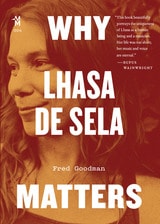
Why Lhasa de Sela Matters
By Fred Goodman
University of Texas Press, 2019
An artist in every sense of the word, Lhasa de Sela wowed audiences around the globe with her multilingual songs and spellbinding performances, mixing together everything from Gypsy music to Mexican rancheras, Americana and jazz, chanson française, and South American folk melodies. In Canada, her album La Llorona won the Juno Award and went gold, and its follow-up, The Living Road, won a BBC World Music Award. Tragically, de Sela succumbed to breast cancer in 2010 at the age of thirty-seven after recording her final album, Lhasa.
Tracing de Sela’s unconventional life and introducing her to a new generation, Why Lhasa de Sela Matters is the first biography of this sophisticated creative icon. Raised in a hippie family traveling between the United States and Mexico in a converted school bus, de Sela developed an unquenchable curiosity, with equal affinities for the romantic, mystic, and cerebral. Becoming a sensation in Montreal and Europe, the trilingual singer rejected a conventional path to fame, joining her sisters’ circus troupe in France. Revealing the details of these and other experiences that inspired de Sela to write such vibrant, otherworldly music, Why Lhasa de Sela Matters sings with the spirit of this gifted firebrand.

Why Mariah Carey Matters
Andrew Chan
University of Texas Press, 2023
The first book to critically examine the legacy of pop superstar Mariah Carey.
When it comes to Mariah Carey, star power is never in doubt. She has sold hundreds of millions of albums and cut more chart-topping hits than any other solo artist—ever. And she has that extraordinary five-octave vocal range. But there is more to her legacy than eye-popping numbers.
Why Mariah Carey Matters examines the creative evolution and complicated biography of a true diva, making the case that, despite her celebrity, Carey’s musicianship and influence are insufficiently appreciated. A pioneering songwriter and producer, Carey pairs her vocal gifts with intimate lyrics and richly layered sonic details. In the mid-1990s, she perfected a blend of pop, hip-hop, and R&B with songs such as “Fantasy” and “Honey” and drew from her turbulent life to create the introspective masterpiece Butterfly. Andrew Chan looks beyond Carey’s glamorous persona to explore her experience as a mixed-race woman in show business, her adventurous forays into house music and gospel, and her appeal to multiple generations of queer audiences. He also reckons with the transcendent ideal of the voice that Carey represents, showing how this international icon taught artists around the world to sing with soul-shaking intensity and a spirit of innovation.
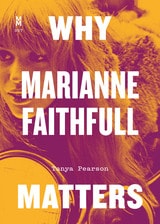
Why Marianne Faithfull Matters
By Tanya Pearson
University of Texas Press, 2021
First as a doe-eyed ingénue with “As Tears Go By,” then as a gravel-voiced phoenix rising from the ashes of the 1960s with a landmark punk album, Broken English, and finally as a genre-less icon, Marianne Faithfull carved her name into the history of rock ’n’ roll to chart a career spanning five decades and multiple detours. In Why Marianne Faithfull Matters, Tanya Pearson crafts a feminist account that explains the musician’s absence from the male-dominated history of the British Invasion and champions the eclectic late career that confirmed her redemption.
Putting memoir on equal footing with biographical history, Pearson writes about Faithfull as an avid fan, recovered addict, and queer musician at a crossroads. She’s also a professional historian unafraid to break from the expectations of the discipline if a “titty-centered analysis” or astrology can illuminate the work of her subject. Whether exploring Faithfull’s rise to celebrity, her drug addiction and fall from grace as spurned “muse,” or her reinvention as a sober, soulful chanteuse subverting all expectations for an aging woman in music, Pearson affirms the deep connections between listeners and creators and reveals, in her own particular way, why Marianne Faithfull matters.
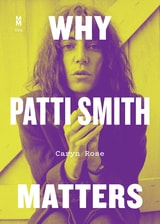
Why Patti Smith Matters
Caryn Rose
University of Texas Press, 2022
Patti Smith arrived in New York City at the end of the Age of Aquarius in search of work and purpose. What she found—what she fostered—was a cultural revolution. Through her poetry, her songs, her unapologetic vocal power, and her very presence as a woman fronting a rock band, she kicked open a door that countless others walked through. No other musician has better embodied the “nothing-to-hide” rawness of punk, nor has any other done more to nurture a place in society for misfits of every stripe.
Why Patti Smith Matters is the first book about the iconic artist written by a woman. The veteran music journalist Caryn Rose contextualizes Smith’s creative work, her influence, and her wide-ranging and still-evolving impact on rock and roll, visual art, and the written word. Rose goes deep into Smith’s oeuvre, from her first album, Horses, to acclaimed memoirs operating at a surprising remove from her music. The portrait of a ceaseless inventor, Why Patti Smith Matters rescues punk’s poet laureate from “strong woman” clichés. Of course Smith is strong. She is also a nuanced thinker. A maker of beautiful and challenging things. A transformative artist who has not simply entertained but also empowered millions.

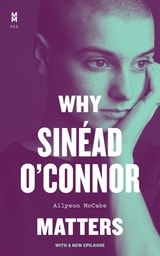
Why Sinéad O'Connor Matters
Allyson McCabe
University of Texas Press, 2023
A stirring defense of Sinéad O’Connor’s music and activism, and an indictment of the culture that cancelled her.
In 1990, Sinéad O’Connor’s video for “Nothing Compares 2 U” turned her into a superstar. Two years later, an appearance on Saturday Night Live turned her into a scandal. For many people—including, for years, the author—what they knew of O’Connor stopped there. Allyson McCabe believes it’s time to reassess our old judgments about Sinéad O’Connor and to expose the machinery that built her up and knocked her down.
Addressing triumph and struggle, sound and story, Why Sinéad O’Connor Matters argues that its subject has been repeatedly manipulated and misunderstood by a culture that is often hostile to women who speak their minds (in O’Connor’s case, by shaving her head, championing rappers, and tearing up a picture of the pope on live television). McCabe details O’Connor’s childhood abuse, her initial success, and the backlash against her radical politics without shying away from the difficult issues her career raises. She compares O’Connor to Madonna, another superstar who challenged the Catholic Church, and Prince, who wrote her biggest hit and allegedly assaulted her. A journalist herself, McCabe exposes how the media distorts not only how we see O’Connor but how we see ourselves, and she weighs the risks of telling a story that hits close to home.
In an era when popular understanding of mental health has improved and the public eagerly celebrates feminist struggles of the past, it can be easy to forget how O’Connor suffered for being herself. This is the book her admirers and defenders have been waiting for.
Why Sinéad O'Connor Matters
Allyson McCabe
University of Texas Press, 2023
A stirring defense of Sinéad O’Connor’s music and activism, and an indictment of the culture that cancelled her.
In 1990, Sinéad O’Connor’s video for “Nothing Compares 2 U” turned her into a superstar. Two years later, an appearance on Saturday Night Live turned her into a scandal. For many people—including, for years, the author—what they knew of O’Connor stopped there. Allyson McCabe believes it’s time to reassess our old judgments about Sinéad O’Connor and to expose the machinery that built her up and knocked her down.
Addressing triumph and struggle, sound and story, Why Sinéad O’Connor Matters argues that its subject has been repeatedly manipulated and misunderstood by a culture that is often hostile to women who speak their minds (in O’Connor’s case, by shaving her head, championing rappers, and tearing up a picture of the pope on live television). McCabe details O’Connor’s childhood abuse, her initial success, and the backlash against her radical politics without shying away from the difficult issues her career raises. She compares O’Connor to Madonna, another superstar who challenged the Catholic Church, and Prince, who wrote her biggest hit and allegedly assaulted her. A journalist herself, McCabe exposes how the media distorts not only how we see O’Connor but how we see ourselves, and she weighs the risks of telling a story that hits close to home.
In an era when popular understanding of mental health has improved and the public eagerly celebrates feminist struggles of the past, it can be easy to forget how O’Connor suffered for being herself. This is the book her admirers and defenders have been waiting for.
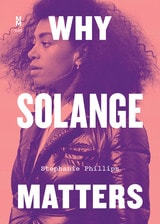
Why Solange Matters
By Stephanie Phillips
University of Texas Press, 2021
Growing up in the shadow of her superstar sister, Solange Knowles became a pivotal musician in her own right. Defying an industry that attempted to bend her to its rigid image of a Black woman, Solange continually experimented with her sound and embarked on a metamorphosis in her art that continues to this day.
In Why Solange Matters, Stephanie Phillips chronicles the creative journey of an artist who became a beloved voice for the Black Lives Matter generation. A Black feminist punk musician herself, Phillips addresses not only the unpredictable trajectory of Solange Knowles's career but also how she and other Black women see themselves through the musician's repertoire. First, she traces Solange’s progress through an inflexible industry, charting the artist’s development up to 2016, when the release of her third album, A Seat at the Table, redefined her career. Then, with A Seat at the Table and 2019’s When I Get Home, Phillips describes how Solange embraced activism, anger, Black womanhood, and intergenerational trauma to inform her remarkable art. Why Solange Matters not only cements the place of its subject in the pantheon of world-changing twenty-first century musicians, it introduces its writer as an important new voice.
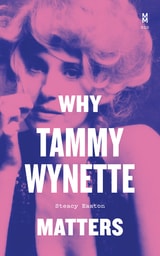
Why Tammy Wynette Matters
Steacy Easton
University of Texas Press, 2023
How Tammy Wynette channeled the conflicts of her life into her music and performance.
With hits such as “Stand By Your Man” and “Golden Ring,” Tammy Wynette was an icon of American domesticity and femininity. But there were other sides to the first lady of country. Steacy Easton places the complications of Wynette’s music and her biography in sharp-edged relief, exploring how she made her sometimes-tumultuous life into her work, a transformation that was itself art.
Wynette created a persona of high femininity to match the themes she sang about—fawning devotion, redemption in heterosexual romance, the heartbreak of loneliness. Behind the scenes, her life was marked by persistent class anxieties; despite wealth and fame, she kept her beautician’s license. Easton argues that the struggle to meet expectations of southernness, womanhood, and southern womanhood, finds subtle expression in Wynette’s performance of “Apartment #9”—and it’s because of these vocal subtleties that it came to be called the saddest song ever written. Wynette similarly took on elements of camp and political critique in her artistry, demonstrating an underappreciated genius. Why Tammy Wynette Matters reveals a musician who doubled back on herself, her façade of earnestness cracked by a melodrama that weaponized femininity and upended feminist expectations, while scoring twenty number-one hits.
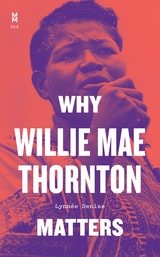
Why Willie Mae Thornton Matters
Lynnée Denise
University of Texas Press, 2023
Finalist, 2024 Lesbian Memoir/Biography, Lambda Literary Award for Arts and Culture
Winner — Walter & Lillian Lowenfels Criticism Award, 45th Annual American Book Awards, Before Columbus Foundation
A queer, Black “biography in essays” about the performer who gave us “Hound Dog,” “Ball and Chain,” and other songs that changed the course of American music.
Born in Alabama in 1926, raised in the church, appropriated by white performers, buried in an indigent’s grave—Willie Mae “Big Mama” Thornton's life events epitomize the blues—but Lynnée Denise pushes past the stereotypes to read Thornton’s life through a Black, queer, feminist lens and reveal an artist who was an innovator across her four-decade-long career.
Why Willie Mae Thornton Matters “samples” elements of Thornton’s art—and, occasionally, the author’s own story—to create “a biography in essays” that explores the life of its subject as a DJ might dig through a crate of records. Denise connects Thornton’s vaudevillesque performances in Sammy Green’s Hot Harlem Revue to the vocal improvisations that made “Hound Dog” a hit for Peacock Records (and later for Elvis Presley), injecting music criticism into what’s often framed as a cautionary tale of record-industry racism. She interprets Thornton’s performing in men’s suits as both a sly, Little Richard–like queering of the Chitlin Circuit and a simple preference for pants over dresses that didn’t have a pocket for her harmonica. Most radical of all, she refers to her subject by her given name rather than "Big Mama," a nickname bestowed upon her by a white man. It's a deliberate and crucial act of reclamation, because in the name of Willie Mae Thornton is the sound of Black musical resilience.
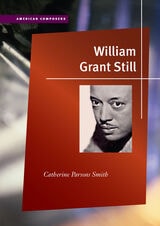
William Grant Still
Catherine Parsons Smith
University of Illinois Press, 2008
Catherine Parsons Smith’s biography tracks the composer's interrelated careers in popular and concert music. Still’s artistic journey took him from conservatory study with George W. Chadwick to collaborating with Langston Hughes, working as a commercial arranger and composer on Broadway and radio, arranging for artists like Sophie Tucker and Artie Shaw, and serving as the recording director for the first Black-owned record label. But despite his prolific production and multidimensional talents, Still endured financial struggles and declining attention to his work.
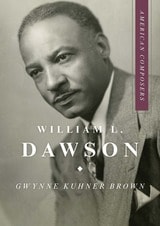
William L. Dawson
Gwynne Kuhner Brown
University of Illinois Press, 2024
Born in 1899, Dawson studied at the Tuskegee Institute in Alabama. He worked as a church, jazz, and orchestral musician in Kansas City and Chicago in the 1920s while continuing his education as a composer. He then joined the Tuskegee faculty, where for 25 years he led the Tuskegee Institute Choir to national prominence through performances of spirituals at the opening of Radio City Music Hall, on radio and television, and at the White House. The Philadelphia Orchestra conducted by Leopold Stokowski premiered Dawson’s Negro Folk Symphony in 1934.
Engaging and long overdue, William L. Dawson celebrates a pioneering Black composer whose contributions to African American music, history, and education inspire performers and audiences to this day.
Women Singers in Global Contexts
Music, Biography, IdentityEdited by Ruth Hellier: Afterword by Ellen Koskoff
University of Illinois Press, 2016
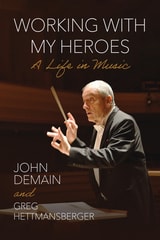
Working with My Heroes
A Life in MusicJohn L. DeMain and Greg Hettmansberger
University of Wisconsin Press, 2026
A Grammy and Tony Award–winning conductor, John DeMain has been a fixture of Madison, Wisconsin, for more than three decades, serving as music director of the Madison Symphony Orchestra and artistic director of the Madison Opera. Before and since then, he has been an internationally recognized conductor, equally at home in the worlds of classical music, opera, and Broadway.
In Working with My Heroes, written with the late Greg Hettmansberger, DeMain recounts incredible experiences—from his days studying piano in Youngstown, Ohio, to his years as an undergraduate and graduate student at Julliard, to his early jobs in summer stock productions, to numerous acclaimed productions—without ever losing sight of the wonder and awe he felt as a young musician first learning his way in the world. With warmth and humor, he provides valuable insight into the business of music making, while also sharing behind-the-scenes stories of entertaining situations he found himself in throughout the years—from playing piano at a gangster’s wedding to an unexpected dressing room encounter with a Broadway star to conducting an opera with circus elephants.
DeMain has had many career-defining moments behind the podium, conducting world premieres of Leonard Bernstein’s A Quiet Place, John Adams’s Nixon in China, and Jeanine Tesoro’s Blue, as well as the U.S. premiere of Philip Glass’s Akhnaten, among others. He guest-conducted symphonies and operas in New York, Chicago, Los Angeles, and elsewhere. DeMain cemented his reputation with the 1976 Houston Grand Opera performances of George and Ira Gershwin’s Porgy and Bess, establishing its stature as a quintessentially American opera. The singers, musicians, and composers DeMain has worked with over the past six decades are a veritable Who’s Who of American classical music. This memoir places readers by his side, allowing them to experience all the wonders and joy of a life spent making music.