Results by title
130 books match the query 'Indonesia' and 3 start with w
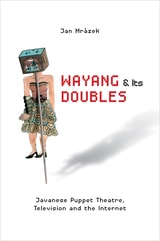
Wayang and Its Doubles
Javanese Puppet Theatre, Television and the InternetJan Mrázek
National University of Singapore Press, 2019
This book explores the ways two complex forms of media coexist and meet as well as haunt and invade each other. It looks at performance aesthetics and the technicalities of television production, as well as issues of time, space, light, place, and movement. It compares audience experiences of live and televised performances, and highlights the collaboration and struggle between performers and television producers. Interviews with performers from both sides are brought into a larger conversation on media and technology, one that includes ideas from Karl Marx, Martin Heidegger, Maurice Merleau-Ponty, Jacques Derrida, Paul Virilio, and James Siegel. The book also looks ahead to new formats that have the potential to disrupt in ways never imagined: the worlds of streaming and social media.
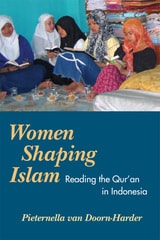
Women Shaping Islam
Reading the Qu'ran in IndonesiaPieternella van Doorn-Harder
University of Illinois Press, 2006
In Women Shaping Islam, Pieternella van Doorn-Harder explores the work of these contemporary women leaders, examining their attitudes toward the rise of radical Islamists; the actions of the authoritarian Soeharto regime; women's education and employment; birth control and family planning; and sexual morality. Ultimately, van Doorn-Harder reveals the many ways in which Muslim women leaders understand and utilize Islam as a significant force for societal change; one that ultimately improves the economic, social, and psychological condition of women in Indonesian society.
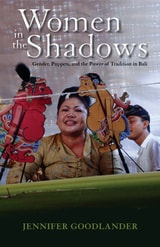
Women in the Shadows
Gender, Puppets, and the Power of Tradition in BaliJennifer Goodlander
Ohio University Press, 2016
Wayang kulit, or shadow puppetry, connects a mythic past to the present through public ritual performance and is one of most important performance traditions in Bali. The dalang, or puppeteer, is revered in Balinese society as a teacher and spiritual leader. Recently, women have begun to study and perform in this traditionally male role, an innovation that has triggered resistance and controversy.
In Women in the Shadows, Jennifer Goodlander draws on her own experience training as a dalang as well as interviews with early women dalang and leading artists to upend the usual assessments of such gender role shifts. She argues that rather than assuming that women performers are necessarily mounting a challenge to tradition, “tradition” in Bali must be understood as a system of power that is inextricably linked to gender hierarchy.
She examines the very idea of “tradition” and how it forms both an ideological and social foundation in Balinese culture. Ultimately, Goodlander offers a richer, more complicated understanding of both tradition and gender in Balinese society. Following in the footsteps of other eminent reflexive ethnographies, Women in the Shadows will be of value to anyone interested in performance studies, Southeast Asian culture, or ethnographic methods.