Results by title
89 books match the query 'Interpersonal relations' and 8 start with w

Wandering Spirits
Loneliness and Longing in GreenlandJanne Flora
University of Chicago Press, 2019
In this innovative study, Flora focuses on Inuit communities in Greenland and addresses a central puzzle: their alarmingly high suicide rate. She explores the deep connections between loneliness and modernity in the Arctic, tracing the history of Greenland and analyzing the social dynamics that shaped it. Flora’s thorough, sensitive engagement with the families that make up these communities uncovers the complex interplay between loneliness and a host of economic and environmental practices, including the widespread local tradition of hunting. Wandering Spirits offers a vivid portrait of a largely overlooked world, in all its fragility and nuance, while engaging with core anthropological concerns of kinship and the structure of social relations.
Well-Being
Foundations of Hedonic PsychologyDaniel Kahneman
Russell Sage Foundation, 1999

What the River Said
A Novelsandra cavallo miller
University of Nevada Press, 2021
In this riveting third book of the Dr. Abby Wilmore series, Dr. Abby returns to her medical clinic in Grand Canyon National Park. Happy to be reunited with her staff and her partner, Dr. John Pepper, Abby is back treating park visitors and personnel as well as local residents. However, a wave of heart attacks among apparently healthy hikers creates a new puzzle, and soon there are rumors of people using performance-enhancing drugs. Abby’s situation deteriorates when a new female friend suddenly disappears, and Abby berates herself for missing the woman’s depression.
As Abby struggles with the disappearance of her friend, Dr. Pepper is preoccupied by a mysterious threat from his past and becomes badly
injured in an apparent fall. While he recuperates, Abby takes over much of the clinic work while they provide a home for Pepper’s troubled teenage niece and an adopted stray dog.
Abby soon discovers that there is something more sinister behind the recent troubling events. In this exhilarating follow-up to The Color of Rock and Where Light Comes and Goes, Abby must learn to confront her past in order to stand up for the ones she loves.
When Tutor Meets Student
Martha Maxwell, Editor
University of Michigan Press, 1994

Whenever Two or More Are Gathered
Relationship as the Heart of Ethical DiscourseMichael M. Harmon and O. C. McSwite
University of Alabama Press, 2011
A Scholarly Exploration of How Relationships Shape Moral Understanding.
Whenever Two or More Are Gathered focuses on the critical role of ethics and moral responsibility in the field of public administration. Michael M. Harmon and O. C. McSwite posit that administrative ethics, as presently conceived and practiced, is largely a failure, incapable of delivering on its original promise of effectively regulating official conduct in order to promote the public interest. They argue that administrative ethics is compromised at its very foundations by two core assumptions: that human beings act rationally and that language is capable of conveying clear, stable, and unambiguous principles of ethical conduct.
The result is the illusion that values, principles, and rules of ethical conduct can be specified in workably clear ways, in particular, through their formalization in official codes of ethics; that people are capable of comprehending and responding to them as they are intended; and that the rewards and punishments attached to them will be effective in structuring daily behavior.
In a series of essays that draw on both fiction and film, as well as the disciplines of pragmatism, organizational theory, psychoanalysis, structural linguistics, and economics, Harmon and McSwite make their case for human relationship as the proper foundation of administrative ethics. “Exercising responsible ethical practice requires attaining a special kind of relationship with other people. Relationship is how the pure freedom that resides in the human psyche—for ethical choice, creativity, or original action of any type—can be brought into the structured world of human social relations without damaging or destroying it.” Furthermore, they make the case for dropping the term “ethics” in favor of the term “responsibility,” as “responsibility accentuates the social [relational] nature of moral action.”

Where No One Should Live
A NovelSandra Cavallo Miller
University of Nevada Press, 2021
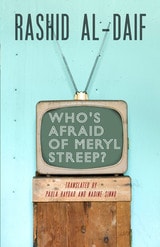
Who's Afraid of Meryl Streep?
By Rashid al-Daif Translated by Paula Haydar and Nadine Sinno
University of Texas Press, 2014
Rashid al-Daif’s provocative novel Who’s Afraid of Meryl Streep? takes an intimate look at the life of a recently married Lebanese man. Rashoud and his wife struggle as they work to negotiate not only their personal differences but also rapidly changing attitudes toward sex and marriage in Lebanese culture. As their fragile bond disintegrates, Rashoud finds television playing a more prominent role in his life; his wife uses the presence of a television at her parents’ house as an excuse to spend time away from her new home. Rashoud purchases a television in the hopes of luring his wife back home, but in a pivotal scene, he instead finds himself alone watching Kramer vs. Kramer. Without the aid of subtitles, he struggles to make sense of the film, projecting his wife’s behavior onto the character played by Meryl Streep, who captivates him but also frightens him in what he sees as an effort to take women’s liberation too far.
Who’s Afraid of Meryl Streep? offers a glimpse at evolving attitudes toward virginity, premarital sex, and abortion in Lebanon and addresses more universal concerns such as the role of love and lust in marriage. The novel has found wide success in Arabic and several European languages and has also been dramatized in both Arabic and French.
Why Harry Met Sally
Subversive Jewishness, Anglo-Christian Power, and the Rhetoric of Modern LoveBy Joshua Louis Moss
University of Texas Press, 2017
From immigrant ghetto love stories such as The Cohens and the Kellys (1926), through romantic comedies including Meet the Parents (2000) and Knocked Up (2007), to television series such as Transparent (2014–), Jewish-Christian couplings have been a staple of popular culture for over a century. In these pairings, Joshua Louis Moss argues, the unruly screen Jew is the privileged representative of progressivism, secular modernism, and the cosmopolitan sensibilities of the mass-media age. But his/her unruliness is nearly always contained through romantic union with the Anglo-Christian partner. This Jewish-Christian meta-narrative has recurred time and again as one of the most powerful and enduring, although unrecognized, mass-culture fantasies.
Using the innovative framework of coupling theory, Why Harry Met Sally surveys three major waves of Jewish-Christian couplings in popular American literature, theater, film, and television. Moss explores how first-wave European and American creators in the early twentieth century used such couplings as an extension of modernist sensibilities and the American “melting pot.” He then looks at how New Hollywood of the late 1960s revived these couplings as a sexually provocative response to the political conservatism and representational absences of postwar America. Finally, Moss identifies the third wave as emerging in television sitcoms, Broadway musicals, and “gross-out” film comedies to grapple with the impact of American economic globalism since the 1990s. He demonstrates that, whether perceived as a threat or a triumph, Jewish-Christian couplings provide a visceral, easily graspable, template for understanding the rapid transformations of an increasingly globalized world.