328 books match the query 'Islam' and 11 start with w
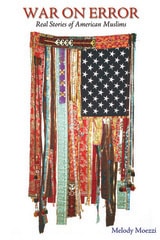
cover of War on Error: Real Stories of American Muslims

War on Error

Real Stories of American Muslims

Melody Moezzi

University of Arkansas Press, 2007
War on Error brings together the stories of twelve young people, all vastly different but all American, and all Muslim. Their approaches to religion couldn’t be more diverse: from a rapper of Korean and Egyptian descent to a bisexual Sudanese American to a converted white woman from Colorado living in Cairo and wearing the hijab. These individuals, whether they were born to the religion or came to it on their own, have made their own decisions about how observant they’ll be, whether or not to fast, how often to pray, and what to wear. Though each story is unique, each is also seen through the searching eyes of Melody Moezzi, herself an American Muslim of Iranian descent. She finds that the people she interviews are horrified that, in a post-9/11 world, they have seen their religion come to be represented, in the minds of many Americans, by terrorism. These thoughtful and articulate individuals represent the truth about the faith and its adherents who are drawn to the logic, compassion, and tolerance they find in Muslim teachings. Moezzi, ever comfortable with contradiction and nuance, is a likable narrator whose underlying assumption that “faith is greater than dogma” is strengthened as she learns more about her religion and faces her own biases and blind spots. This fresh new voice, combined with the perceptions and experiences of her fellow American Muslims, make for a read that is both illuminating and enjoyable.
[more]
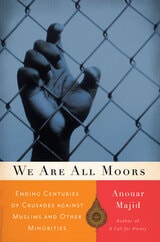
cover of We Are All Moors: Ending Centuries of Crusades against Muslims and Other Minorities

We Are All Moors

Ending Centuries of Crusades against Muslims and Other Minorities

Anouar Majid

University of Minnesota Press, 2012

In 1609 King Philip III ordered the expulsion of all Moriscos—Spaniards of Muslim descent—from Spain in an ongoing attempt to establish a homogeneous state and remove the last vestiges of Islam from his nation. Four centuries later, Spain and Europe are once again outraged by the presence of Islam within their borders, and, for many, the millions of Muslim immigrants now living there pose a fundamental challenge to European identity. Across the Atlantic Ocean, the vast Hispanic community in the United States, both legal and illegal, has raised similar fears. Exacerbated by globalization and 9/11, these nativist, anti-Islamic, and broadly anti-immigrant attitudes fatally undermine meaningful dialogue and progress essential to creating a more peaceful and just world.

In We Are All Moors, Anouar Majid contends that the acrimonious debates about immigration and Islam in the West are the cultural legacy of the conflict between Christians and Moors. Offering a groundbreaking new history of the West’s perception and treatment of minority cultures, Majid explores how “the Moor” emerged as the archetypal Other against which Europe would define itself. The characteristics attributed to this quintessential minority—racial inferiority, religious impurity, cultural incompatibility—would be reapplied to other non-European and non-Christian peoples: Native Americans, black Africans, Jews, and minority immigrant communities, among others.

The Moor, Majid reveals, has served as an unacknowledged but potent metaphor for all minority peoples in the West, endlessly reincarnated by the majority. Only by recognizing the connections between current fears about immigration and Islam and medieval Christianity’s crusade against the Moor, he argues, can we begin to redress centuries of oppression, learn from the tragedies of the past, and find common ground in a globalized world.
[more]
cover of What Is Islamophobia?: Racism, Social Movements and the State

What Is Islamophobia?

Racism, Social Movements and the State

Edited by Narzanin Massoumi, Tom Mills and David Miller

Pluto Press, 2017

Since Israel began its construction in 2002, the Wall has sparked intense debate, being condemned as illegal by the International Court of Justice. 

Israel claims it is a security measure to protect Israeli citizens from terrorist attacks. Opponents point to the serious impact on the rights of Palestinians, depriving them of their land, mobility and access to health and educational services. 

This book explores the Palestinian experience of the Wall in their international context. What are the real intentions behind the Israeli security argument? Is it a means of securing territory permanently through an illegal annexation of East Jerusalem? The West Bank Wall is a cutting account of the impact of the wall and how it affects prospects of a future peace in the Middle East.
[more]
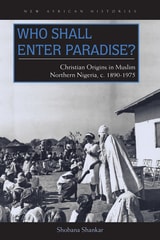
cover of Who Shall Enter Paradise?: Christian Origins in Muslim Northern Nigeria, c. 1890–1975

Who Shall Enter Paradise?

Christian Origins in Muslim Northern Nigeria, c. 1890–1975

Shobana Shankar

Ohio University Press, 2014
Who Shall Enter Paradise? recounts in detail the history of Christian-Muslim engagement in a core area of sub-Saharan Africa’s most populous nation, home to roughly equal numbers of Christians and Muslims. It is a region today beset by religious violence, in the course of which history has often been told in overly simplified or highly partisan terms. This book reexamines conversion and religious identification not as fixed phenomena, but as experiences shaped through cross-cultural encounters, experimentation, collaboration, protest, and sympathy. Shobana Shankar relates how Christian missions and African converts transformed religious practices and politics in Muslim Northern Nigeria during the colonial and early postcolonial periods. Although the British colonial authorities prohibited Christian evangelism in Muslim areas and circumscribed missionary activities, a combination of factors—including Mahdist insurrection, the abolition of slavery, migrant labor, and women’s evangelism—brought new converts to the faith. By the 1930s, however, this organic growth of Christianity in the north had given way to an institutionalized culture based around medical facilities established in the Hausa emirates. The end of World War II brought an influx of demobilized soldiers, who integrated themselves into the local Christian communities and reinvigorated the practice of lay evangelism. In the era of independence, Muslim politicians consolidated their power by adopting many of the methods of missionaries and evangelists. In the process, many Christian men and formerly non-Muslim communities converted to Islam. A vital part of Northern Nigerian Christianity all but vanished, becoming a religion of “outsiders.”
[more]
cover of With Respect to Sex: Negotiating Hijra Identity in South India

With Respect to Sex

Negotiating Hijra Identity in South India

Gayatri Reddy

University of Chicago Press, 2005

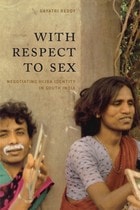
With Respect to Sex is an intimate ethnography that offers a provocative account of sexual and social difference in India. The subjects of this study are hijras or the "third sex" of India—individuals who occupy a unique, liminal space between male and female, sacred and profane.

Hijras are men who sacrifice their genitalia to a goddess in return for the power to confer fertility on newlyweds and newborn children, a ritual role they are respected for, at the same time as they are stigmatized for their ambiguous sexuality. By focusing on the hijra community, Gayatri Reddy sheds new light on Indian society and the intricate negotiations of identity across various domains of everyday life. Further, by reframing hijra identity through the local economy of respect, this ethnography highlights the complex relationships among local and global, sexual and moral, economies.

This book will be regarded as the definitive work on hijras, one that will be of enormous interest to anthropologists, students of South Asian culture, and specialists in the study of gender and sexuality.
[more]
cover of Women Embracing Islam: Gender and Conversion in the West

Women Embracing Islam

Gender and Conversion in the West

Edited by Karin van Nieuwkerk

University of Texas Press, 2006

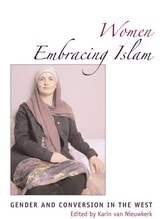
Many Westerners view Islam as a religion that restricts and subordinates women in both private and public life. Yet a surprising number of women in Western Europe and America are converting to Islam. What attracts these women to a belief system that is markedly different from both Western Christianity and Western secularism? What benefits do they gain by converting, and what are the costs? How do Western women converts live their new Islamic faith, and how does their conversion affect their families and communities? How do women converts transmit Islamic values to their children? These are some of the questions that Women Embracing Islam seeks to answer.

In this vanguard study of gender and conversion to Islam, leading historians, sociologists, anthropologists, and theologians investigate why non-Muslim women in the United States, several European countries, and South Africa are converting to Islam. Drawing on extensive interviews with female converts, the authors explore the life experiences that lead Western women to adopt Islam, as well as the appeal that various forms of Islam, as well as the Nation of Islam, have for women. The authors find that while no single set of factors can explain why Western women are embracing Islamic faith traditions, some common motivations emerge. These include an attraction to Islam's high regard for family and community, its strict moral and ethical standards, and the rationality and spirituality of its theology, as well as a disillusionment with Christianity and with the unrestrained sexuality of so much of Western culture.
[more]
cover of Women Shaping Islam: Reading the Qu'ran in Indonesia

Women Shaping Islam

Reading the Qu'ran in Indonesia

Pieternella van Doorn-Harder

University of Illinois Press, 2006

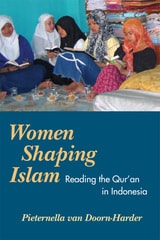
In the United States, precious little is known about the active role Muslim women have played for nearly a century in the religious culture of Indonesia, the largest majority-Muslim country in the world. While much of the Muslim world excludes women from the domain of religious authority, the country's two leading Muslim organizations--Muhammadiyah and Nahdlatul Ulama (NU)--have created enormous networks led by women who interpret sacred texts and exercise powerful religious influence.
In Women Shaping Islam, Pieternella van Doorn-Harder explores the work of these contemporary women leaders, examining their attitudes toward the rise of radical Islamists; the actions of the authoritarian Soeharto regime; women's education and employment; birth control and family planning; and sexual morality. Ultimately, van Doorn-Harder reveals the many ways in which Muslim women leaders understand and utilize Islam as a significant force for societal change; one that ultimately improves the economic, social, and psychological condition of women in Indonesian society. 
 
[more]
cover of Women in Iran from the Rise of Islam to 1800

Women in Iran from the Rise of Islam to 1800

Edited by Guity Nashat and Lois Beck

University of Illinois Press, 2003

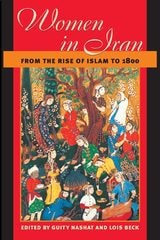
Combining scholarship from a range of disciplines, this collection of essays is a comprehensive examination of the role of women in Iranian society and culture, from pre-Islamic times to 1800. The contributors challenge common assumptions about women in Iran and Islam. Sweeping away modern myths, these essays show that women have had significant influence in almost every area of Iranian life.
 
Focusing on a region wider than today's nation-state of Iran, this book explores developments in the spheres that most affect women: gender constructs, family structure, community roles, education, economic participation, Islamic practices and institutions, politics, and artistic representations.
 
The contributors to this volume are prominent international scholars working in this field, and each draws on decades of research to address the history of Iranian women within the context of his or her area of expertise. This broad framework allows for a thorough and nuanced examination of the history of a complex society.
 
[more]
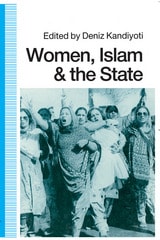
cover of Women, Islam and the State

Women, Islam and the State

Deniz Kandiyoti

Temple University Press, 1991

"The most significant theoretical advance in Muslim-world women's studies for years." --Voice Literary Supplement This collection of original essays examines the relationship between Islam, the nature of state projects, and the position of women in the modern nation states of the Middle East and South Asia. Arguing that Islam is not uniform across Muslim societies and that women's roles in these societies cannot be understood simply by looking at texts and laws. the contributors focus, instead, on the effects of the political projects of states on the lives of women.
[more]
cover of Writing and Muslim Identity: Representations of Islam in German and English Transcultural Literature, 1990-2006

Writing and Muslim Identity

Representations of Islam in German and English Transcultural Literature, 1990-2006

Frauke Matthes

University of London Press, 2012
Writing and Muslim Identity is a comparative study of Islam in contemporary German- and English-language literature. At a time when the non-Islamic world seems to be defining itself increasingly in contrast to the Islamic world, this literary exploration of Islam-related issues sheds new and valuable light on the cultural interaction between the Muslim world and 'the West'. Writing and Muslim Identity engages with literary representations of different versions of Islam and asks how travel and migration, the transcultural experiences of migrant and post-migrant Muslims, may have shaped the Islams encountered in today's Germany and Britain. With its comparative approach to 'cultural translations' as creative and challenging interactions between cultures that are constantly in flux, the study develops methods of engaging with notions of home and movement, gender and language, all of which may shape a (post-)migrant's transcultural experience. The book also offers a complex understanding of transcultural writing in relation to 'traditional' (Anglophone) as well as 'marginal' (German) postcoloniality. Frauke Matthes is Lecturer in German at the University of Edinburgh.
[more]
cover of Writings Against the Saracens

Writings Against the Saracens

Catholic University of America Press, 2016

Peter the Venerable's extensive literary legacy includes poems, a large epistolary collection, and polemical treatises. The first of his four major polemics targeted a Christian heresy, the Petrobrussians (Against the Petrobrusians); the rest took aim at Jews and Saracens. Catholic University of America Press has published his Against the Inveterate Obduracy of the Jews. This present volume will make available in their entirety Peter the Venerable's twin polemics against Islam - A Summary of the entire heresy of the Saracens and Against the sect of the Saracens - as well as related correspondence. These works resulted from a sustained engagement with Islam begun during Peter's journey to Spain in 1142-43. There the abbot commissioned a translation of sources from the Arabic, the so-called Toledan Collection, that include the Letter of a Saracen with a Christian Response (from the Apology of [Ps.] Al-Kindi ); Fables of the Saracens (a potpourri of Islamic hadith traditions); and Robert of Ketton's first Latin translation of the whole of the Qur'an. Thanks to Peter's efforts, from the second half of the twelfth century Christians could acquire a far better understanding of the teachings of Islam, and Peter may rightly be viewed as the initiator of Islamic studies in the West.
[more]