Results by title
99 books match the query 'Kinship' and 6 start with w
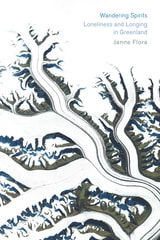
Wandering Spirits
Loneliness and Longing in GreenlandJanne Flora
University of Chicago Press, 2019
In this innovative study, Flora focuses on Inuit communities in Greenland and addresses a central puzzle: their alarmingly high suicide rate. She explores the deep connections between loneliness and modernity in the Arctic, tracing the history of Greenland and analyzing the social dynamics that shaped it. Flora’s thorough, sensitive engagement with the families that make up these communities uncovers the complex interplay between loneliness and a host of economic and environmental practices, including the widespread local tradition of hunting. Wandering Spirits offers a vivid portrait of a largely overlooked world, in all its fragility and nuance, while engaging with core anthropological concerns of kinship and the structure of social relations.
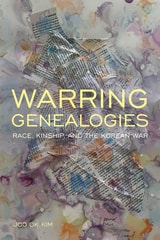
Warring Genealogies
Race, Kinship, and the Korean WarJoo Ok Kim
Temple University Press, 2022
Warring Genealogies examines the elaboration of kinships between Chicano/a and Asian American cultural production, such as the 1954 proxy adoption of a Korean boy by Leavenworth prisoners. Joo Ok Kim considers white supremacist expressions of kinship—in prison magazines, memorials, U.S. military songbooks—as well as critiques of such expressions in Chicana/o and Korean diasporic works to conceptualize racialized formations of kinship emerging from the Korean War.
Warring Genealogies unpacks writings by Rolando Hinojosa (Korean Love Songs, The Useless Servants) and Luis Valdez (I Don’t Have to Show You No Stinking Badges, Zoot Suit) to show the counter-representations of the Korean War and the problematic depiction of the United States as a benevolent savior. Kim also analyzes Susan Choi’s The Foreign Student as a novel that proposes alternative temporalities to dominant Korean War narratives. In addition, she examines Chicano military police procedurals, white supremacist women’s organizations, and the politics of funding Korean War archives.
Kim’s comparative study Asian American and Latinx Studies makes insightful connections about race, politics, and citizenship to critique the Cold War conception of the “national family.”
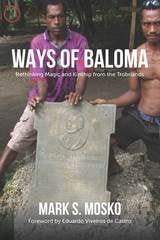
Ways of Baloma
Rethinking Magic and Kinship From the TrobriandsMark S. Mosko
HAU, 2017
Informed by a synthesis of Strathern’s model of “dividual personhood” and Lévy-Bruhl’s theory of “participation,” Mosko upends a century of discussion and debate extending from Malinowski to anthropology’s other leading thinkers. His account of the intimate interdependencies of humans and spirits in the cosmic generation and coordination of “life” (momova) and “death” (kaliga) strikes at the nexus of anthropology’s received wisdom, and Ways of Baloma will inevitably lead practitioners and students to reflect anew on the discipline’s multifold theories of personhood, ritual agency, and sociality.
What Kinship Is-And Is Not
Marshall Sahlins
University of Chicago Press, 2013

Women and the Ancestors
BLACK CARIB KINSHIP AND RITUALVirginia Kerns
University of Illinois Press, 1997
This classic study of Black
Carib culture and its preservation through ancestral rituals organized
by older women now includes a foreword by Constance R. Sutton and an afterword
by the author.
"One of the outstanding
studies of this genre. . . . Refreshingly, the book has good photographs,
as well as strong endnotes and bibliography, and very useful tables, figures,
maps, and index." -- Choice
"An outstanding contribution
to the literature on female-centered bilateral kinship and residence."
-- Grant D. Jones, American Ethnologist
"A richly detailed account
of a contemporary culture in which older women are important, valued,
and self-respecting."
-- Anthropology and Humanism Quarterly
"A combination of competent
research, interwoven themes, and an easily readable, sometimes beautifully
evocative, prose style." -- Heather Strange, The Gerontologist
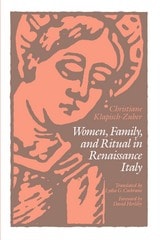
Women, Family, and Ritual in Renaissance Italy
Christiane Klapisch-Zuber
University of Chicago Press, 1987