Results by title
98 books match the query 'Labor movement' and 5 start with w
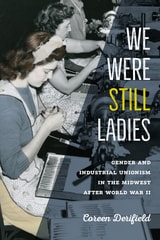
We Were Still Ladies
Gender and Industrial Unionism in the Midwest after World War IICoreen Derifield
University of Iowa Press, 2025
How did this transition into industrial work affect a woman’s sense of self? How did this new workforce change the dynamic of families and communities? While women choosing to work outside of the home may seem to have been a mundane decision, it caused tremendous change within families and with household roles. These alterations in daily life rippled throughout midwestern culture and society, even changing the landscape of small towns into decentralized industrial centers.
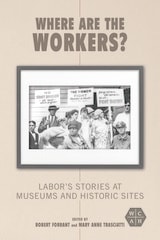
Where Are the Workers?
Labor's Stories at Museums and Historic SitesEdited by Robert Forrant and Mary Anne Trasciatti
University of Illinois Press, 2022
A wide-ranging blueprint for change, Where Are the Workers? shows how working-class perspectives can expand our historical memory and inform and inspire contemporary activism.
Contributors: Jim Beauchesne, Rebekah Bryer, Rebecca Bush, Conor Casey, Rachel Donaldson, Kathleen Flynn, Elijah Gaddis, Susan Grabski, Amanda Kay Gustin, Karen Lane, Rob Linné, Erik Loomis, Tom MacMillan, Lou Martin, Scott McLaughlin, Kristin O’Brassill-Kulfan, Karen Sieber, and Katrina Windon

Where Was the Working Class?
REVOLUTION IN EASTERN GERMANYLinda Fuller
University of Illinois Press, 1999
In this unprecedented study, Linda Fuller sets out to explain why the working class was largely missing from the 1989-90 revolution. Drawing on pre- and post-revolutionary visits to East German work sites and dozens of interviews, Fuller documents workers' day-to-day experience of the labor process, workplace union politics, and class. She shows how all three factors led most workers to withdraw from politics, even while prompting a handful to become actively involved in the struggle.
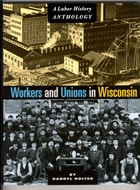
Workers and Unions in Wisconsin
A Labor History AnthologyDarryl Holter
Wisconsin Historical Society Press, 1999
Wisconsin accounts for about two percent of the nation's total population, but its contribution to the history of working people and social reform extends far beyond these numbers. In the early years of the twentieth century, Wisconsin became a veritable laboratory for social and political reform, producing such landmark legislation as workers' compensation, unemployment insurance, and other laws that became models for several states and helped shape federal labor policies. The study of the history of labor also began in Wisconsin when University of Wisconsin economics professor John R. Commons started to document the history of work and labor in America.
Workers and Unions in Wisconsin includes nearly one hundred selections covering the period from 1850 to 1990, illustrated by scores of historic photos, most of which have never before been reprinted. Editor Darryl Holter has included accounts of episodes that took place in more than twenty-five cities and towns in Wisconsin, including labor activities at such nationally known companies as Oscar Mayer, Kohler, Case, Allis-Chalmers, and Ray-O-Vac and workers as diverse as dairy farmers and university teaching assistants, lumberjacks and hosiery makers, municipal employees and paper mill workers. The result is a book that will fascinate and inform anyone interested in American labor history and economics, as well as in the personal stories that are part of any great societal change.
Workers' Inquiry and Global Class Struggle
Strategies, Tactics, ObjectivesRobert Ovetz
Pluto Press, 2020
By engaging in what Karl Marx called a workers' inquiry, workers and militant co-researchers are studying their working conditions, the technical composition of capital, and how to recompose their own power in order to devise new tactics, strategies, organisational forms and objectives. These workers' inquiries, from call centre workers to teachers, and adjunct professors, are re-energising unions, bypassing unions altogether or innovating new forms of workers' organisations.
In one of the first major studies to critically assess this new cycle of global working class struggle, Robert Ovetz collects together case studies from over a dozen contributors, looking at workers' movements in China, Mexico, the US, South Africa, Turkey, Argentina, Italy, India and the UK. The book reveals how these new forms of struggle are no longer limited to single sectors of the economy or contained by state borders, but are circulating internationally and disrupting the global capitalist system as they do.