Results by title
59 books match the query 'Lawyers & Judges' and 3 start with w
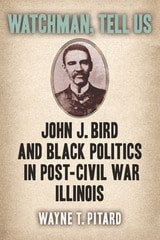
Watchman, Tell Us
John J. Bird and Black Politics in Post-Civil War IllinoisWayne T. Pitard
Southern Illinois University Press, 2024
The most influential Black leader in 19th century southern Illinois
This key biography of John J. Bird unveils the forgotten story of a remarkable Black political figure in post-Civil War Illinois. Emerging as a leader in Cairo, the city with Illinois’ second-largest Black community, Bird played a pivotal role in advancing civil rights within the state, also becoming Illinois’ first Black elected judge and first Black trustee of the University of Illinois. Watchman, Tell Us deftly examines Bird’s lifetime of service and advocacy for a vulnerable community and the ways in which he successfully advocated for and protected voting rights, educational opportunity, and public access for the Black residents of southern Illinois.
Bird arrived in Cairo at age twenty during the Civil War to aid the 2,000 Black refugees from the South living there. By 1870, he had established the city’s substantial Black Republican wing, providing the Black community with unprecedented political influence in this hostile, majority white, Democratic town. Under Bird’s leadership, the Black Republicans pressed for policies that improved the well-being of the African American population, including the early establishment of a Black public school, the rise of an integrated judicial system, and the ability to access public and private businesses. Bird became influential across Illinois as a judge and university trustee, a leader in the Black convention movement, and a significant newspaper editor in Cairo and Springfield. When Bird died in 1912, the nation he loved had once again betrayed its Black citizens, and it appeared that most of the achievements he had fought for had collapsed. But the work of Bird and the other civil rights workers of the nineteenth century created the foundation upon which the movements of the twentieth century could stand.
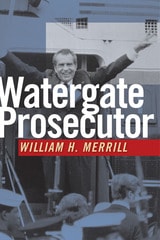
Watergate Prosecutor
William H. Merrill
Michigan State University Press, 2008
DC. Both of these crimes were eventually traced back to the "plumbers unit," which was directed by John Ehrlichman, President Nixon's top domestic aide. As he convincingly recounts, Merrill sought the job as Assistant Special Prosecutor for one reason: to bring these criminals to justice. In addition, as this revelatory account makes clear, he pursued that goal tenaciously.
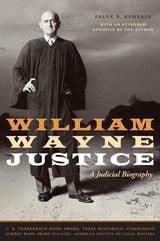
William Wayne Justice
A Judicial BiographyBy Frank Kemerer, with an extended epilogue by the author
University of Texas Press, 2008
In his forty years on the federal bench in Texas, William Wayne Justice has been a formidable force for change. His rulings have prompted significant institutional reforms in education, prisons, and racial relations, to name only a few areas of society in Texas and beyond that have been affected by Justice's work. For his labors, Judge Justice has received numerous awards, including the Outstanding Federal Trial Judge Award, the Thurgood Marshall Award from the Section on Individual Rights and Responsibilities of the American Bar Association, and the Morris Dees Justice Award from the University of Alabama School of Law.
This paperback reprint of William Wayne Justice chronicles his judicial career and the decisions he reached. It includes a new epilogue that describes Justice's move to Austin as a judge on senior status yet with a full caseload, tracks the long-running institutional reform cases to their conclusion, and examines the legacy of this remarkable and controversial jurist.