127 books match the query 'Leadership' and 6 start with w
cover of Walking the Gendered Tightrope: Theresa May and Nancy Pelosi as Legislative Leaders

Walking the Gendered Tightrope

Theresa May and Nancy Pelosi as Legislative Leaders

Melissa Haussman and Karen M. Kedrowski

University of Michigan Press, 2023
Walking the Gendered Tightrope analyzes the gendered expectations for women in high offices through the examples of British Prime Minister Theresa May and U.S. Speaker of the House Nancy Pelosi. Even at their highest positions, and while completing their greatest achievements, both May and Pelosi faced gendered critiques and intraparty challenges to their leadership. While other books have analyzed the barriers to higher office that women face, this book reveals how women in positions of power are still forced to balance feminine stereotypes with the perception of power as masculine in order to prove their legitimacy. By examining intraparty dynamics, this book offers a unique comparison between a majoritarian presidential and Westminster parliamentary system. While their parties promoted Pelosi and May to highlight their progressive values, both women faced continually gendered critiques about their abilities to lead their caucuses on difficult policy issues, such as the Affordable Care Act and two Trump impeachment votes for Nancy Pelosi, or finishing Brexit for Theresa May. Grounded in the legislative literature from the United States and Britain, as well as historical accounts and personal interviews, Walking the Gendered Tightrope contributes to the fields of gender and politics, legislative studies, American politics, and British politics. 
[more]
cover of What We Hold in Trust: Rediscovering the Purpose of Catholic Higher Education

What We Hold in Trust

Rediscovering the Purpose of Catholic Higher Education

Don Briel

Catholic University of America Press, 2021
The specific concern in What We Hold in Trust comes to this: the Catholic university that sees its principal purpose in terms of the active life, of career, and of changing the world, undermines the contemplative and more deep-rooted purpose of the university. If a university adopts the language of technical and social change as its main and exclusive purpose, it will weaken the deeper roots of the university’s liberal arts and Catholic mission. The language of the activist, of changing the world through social justice, equality and inclusion, or of the technician through market-oriented incentives, plays an important role in university life. We need to change the world for the better and universities play an important role, but both the activist and technician will be co-opted by our age of hyper-activity and technocratic organizations if there is not first a contemplative outlook on the world that receives reality rather than constructs it. To address this need for roots What We Hold in Trust unfolds in four chapters that will demonstrate how essential it is for the faculty, administrators, and trustees of Catholic universities to think philosophically and theologically (Chapter One), historically (Chapter Two) and institutionally (Chapters Three and Four). What we desperately need today are leaders in Catholic universities who understand the roots of the institutions they serve, who can wisely order the goods of the university, who know what is primary and what is secondary, and who can distinguish fads and slogans from authentic reform. We need leaders who are in touch with their history and have a love for tradition, and in particular for the Catholic tradition. Without this vision, our universities may grow in size, but shrink in purpose. They may be richer but not wiser.
[more]
cover of While Rome Burned: Fire, Leadership, and Urban Disaster in the Roman Cultural Imagination

While Rome Burned

Fire, Leadership, and Urban Disaster in the Roman Cultural Imagination

Virginia M. Closs

University of Michigan Press, 2020

While Rome Burned attends to the intersection of fire, city, and emperor in ancient Rome, tracing the critical role that urban conflagration played as both reality and metaphor in the politics and literature of the early imperial period. Urban fires presented a consistent problem for emperors from Augustus to Hadrian, especially given the expectation that the princeps be both a protector and provider for Rome’s population. The problem manifested itself differently for each leader, and each sought to address it in distinctive ways. This history can be traced most precisely in Roman literature, as authors addressed successive moments of political crisis through dialectical engagement with prior incendiary catastrophes in Rome’s historical past and cultural repertoire.

Working in the increasingly repressive environment of the early principate, Roman authors frequently employed “figured” speech and mythopoetic narratives to address politically risky topics. In response to shifting political and social realities, the literature of the early imperial period reimagines and reanimates not just historical fires, but also archetypal and mythic representations of conflagration. Throughout, the author engages critically with the growing subfield of disaster studies, as well as with theoretical approaches to language, allusion, and cultural memory.
[more]
cover of Wise Leadership

Wise Leadership

Linda A. McLyman

Michigan State University Press, 2005

Wise Leadership breaks from the formulas offered up in traditional self-help or management and leadership books. Rather than providing a set of quick-fix recipes for success, McLyman invites leaders instead to listen to the simple, poignant words she has garnered from working alongside some of her most successful and powerful clients during twenty-plus years of management consulting. These are the leaders everyone wants to have in their organizations.
     In a simple, practical, and insightful style, McLyman shows her readers to how grasp the values, beliefs, and truths that are commonly held by many of today’s wisest leaders. Discover what it really means to work not just as a smart and intelligent leader, but also as a very wise leader. The path to intelligence, we discover, is not necessarily the same path to wisdom. McLyman encourages us to listen to the thoughts and feelings behind the simple words. As we eavesdrop on conversations with clients, we are invited to ponder our own meaning of wise leadership. There are no quick solutions, no simple answers; instead, McLyman declares, we must learn to think for ourselves. This insightful book offers an opportunity for people from all walks of life to learn more about the concept of leadership and to gain an understanding of what it really means to be a wise leader in today’s complex and challenging world.
[more]
cover of Workplace Learning and Leadership

Workplace Learning and Leadership

Paul Signorelli

American Library Association, 2011

The best kind of learning is that which never ends—and a culture of training means that staff will be more flexible and responsive to new ideas and strategies, imperative in today's libraries. In this practical resource, leading workplace trainers Reed and Signorelli offer guidance on improving the effectiveness of training programs. Their book takes readers through the entire process of developing, implementing, and sustaining training programs and communities of learning, in order to

  • Empower individuals to become leaders and teachers by cultivating a culture of ongoing learning
  • Connect library staff and users to information resources so they can effectively use them to their benefit
  • Develop skills among both managers and workers for practicing continuous formal and informal training
[more]
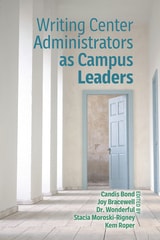
cover of Writing Center Administrators as Campus Leaders

Writing Center Administrators as Campus Leaders

Candis Bond

Utah State University Press, 2026

Writing Center Administrators as Campus Leaders challenges the current erasure of the WCA role within discourse on campus leadership by highlighting the various ways these leaders have had transformative impacts on their institutions, emphasizing the wide range of knowledge, skills, and added value that WCAs bring to the university ecosystem.

Contributors from diverse institutions, institutional contexts, identity formations, and career paths theorize different forms of leadership from within and beyond writing centers. The first section brings together perspectives on leadership theory and practice, focusing on the practical gains offered and challenges afforded via writing center professional pathways. The second section emphasizes partnerships and networks forged through intentional and creative leadership models. In the final section, contributors consider the emotional and affective dimensions of WCA labor, offering multiple roadmaps for WCAs to transition their experiences into more recognition, resources, and broader administrative roles while underscoring the potential of inclusive, community-focused leadership for current and aspiring WCAs.

Providing key insights and practical examples, Writing Center Administrators as Campus Leaders validates and inspires current and future WCAs and informs university administrators on the ways that WCAs can and do impact higher education as true campus leaders.

[more]