Results by title
320 books match the query 'Legal status, laws, etc' and 9 start with w
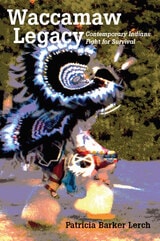
Waccamaw Legacy
Contemporary Indians Fight for SurvivalWritten by Patricia Lerch
University of Alabama Press, 2004
An insightful and informative look into the Waccamaw Siouan's quest for identity and survival
Waccamaw Legacy: Contemporary Indians Fight for Survival sheds light on North Carolina Indians by tracing the story of the now state-recognized Waccamaw Siouan tribe from its beginnings in the Southeastern United States, through their first contacts with Europeans, and into the 21st century, detailing the struggles these Indians have endured over time. We see how the Waccamaw took hold of popular theories about Indian tribes like the Croatan of the Lost Colony and the Cherokee as they struggled to preserve their heritage and to establish their identity.
Patricia Lerch was hired by the Waccamaw in 1981 to perform the research needed to file for recognition under the Bureau of Indian Affairs Federal Acknowledgement Program of 1978. The Waccamaw began to organize powwows in 1970 to represent publicly their Indian heritage and survival and to spread awareness of their fight for cultural preservation and independence. Lerch found herself understanding that the powwows, in addition to affirming identity, revealed important truths about the history of the Waccamaw and the ways they communicate and coexist.
Waccamaw Legacy outlines Lerch’s experience as she played a vital role in the Waccamaw Siouan's continuing fight for recognition and acceptance in contemporary society and culture.
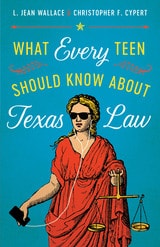
What Every Teen Should Know about Texas Law
By L. Jean Wallace and Christopher F. Cypert
University of Texas Press, 2018
From reviews of earlier editions:
“Young people get into legal trouble for two reasons: they do not know what the law is, and they do not stop to think about the consequences of their actions. This book would make a good text for a preparation for life class. . . . The book is written in plain language, unencumbered by a lot of legal citations, and with no expectation that the reader will have any working knowledge of the law.”
—Texas Bar Journal
“A book any parent should consider giving their child. . . . But before you do, take a look at it yourself. No matter the title, Wallace’s book . . . contains information everyone . . . should know.”
—Austin American-Statesman
What Every Teen Should Know about Texas Law is the only single-source guide for accurate, easy-to-understand information about most areas of civil law in Texas. L. Jean Wallace drew on years of experience as a students’ attorney at Texas Tech University to inform young adults about the areas of law that affect them most: driving and car ownership, pranks and crimes (including alcohol and drug offenses), personal relationships, employment and consumer concerns, and living on their own. She illustrated her points with true, sometimes humorous, stories of young adults’ encounters with the law.
For this new edition, municipal judge Christopher F. Cypert has completely updated the book to reflect the current state of the law. He covers specific topics that are now mandated to be taught in schools, including the proper way to interact with peace officers during traffic stops and other in-person encounters, as well as internet-era misbehaviors such as sexting and cyberbullying. Like Wallace, Cypert has helped many young people navigate the sometimes confusing processes of the legal world, often loaning earlier editions of this book to young offenders in his court. Both authors’ real-world experience and legal expertise ensure that What Every Teen Should Know about Texas Law is indeed a complete and practical guide for assuming the responsibilities of adulthood—as well as a good refresher course for all legal-age Texans.
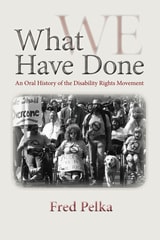
What We Have Done
An Oral History of the Disability Rights MovementFred Pelka
University of Massachusetts Press, 2012
“Nothing about us without us” has been a core principle of American disability rights activists for more than half a century. It represents a response by people with disabilities to being treated with scorn and abuse or as objects of pity, and to having the most fundamental decisions relating to their lives—where they would live; if and how they would be educated; if they would be allowed to marry or have families; indeed, if they would be permitted to live at all—made by those who were, in the parlance of the movement, “temporarily able-bodied.”
In What We Have Done: An Oral History of the Disability Rights Movement, Fred Pelka takes that slogan at face value. He presents the voices of disability rights activists who, in the period from 1950 to 1990, transformed how society views people with disabilities, and recounts how the various streams of the movement came together to push through the Americans with Disabilities Act of 1990, the most sweeping civil rights legislation since passage of the Civil Rights Act of 1964. Beginning with the stories of those who grew up with disabilities in the 1940s and '50s, the book traces how disability came to be seen as a political issue, and how people with disabilities—often isolated, institutionalized, and marginalized—forged a movement analogous to the civil rights, women's rights, and gay rights movements, and fought for full and equal participation in American society.
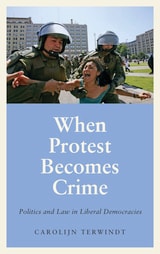
When Protest Becomes Crime
Politics and Law in Liberal DemocraciesCarolijn Terwindt
Pluto Press, 2019
Whispered Consolations
Law and Narrative in African American LifeJon-Christian Suggs
University of Michigan Press, 2000
Who Owns Culture?
Appropriation and Authenticity in American LawScafidi, Susan
Rutgers University Press, 2005
While claims of authenticity or quality may prompt some consumers to seek cultural products at their source, the communities of origin are generally unable to exclude copyists through legal action. Like other works of unincorporated group authorship, cultural products lack protection under our system of intellectual property law. But is this legal vacuum an injustice, the lifeblood of American culture, a historical oversight, a result of administrative incapacity, or all of the above?
Who Owns Culture? offers the first comprehensive analysis of cultural authorship and appropriation within American law. From indigenous art to Linux, Susan Scafidi takes the reader on a tour of the no-man's-land between law and culture, pausing to ask: What prompts us to offer legal protection to works of literature, but not folklore? What does it mean for a creation to belong to a community, especially a diffuse or fractured one? And is our national culture the product of Yankee ingenuity or cultural kleptomania?
Providing new insights to communal authorship, cultural appropriation, intellectual property law, and the formation of American culture, this innovative and accessible guide greatly enriches future legal understanding of cultural production.
Wife and Widow in Medieval England
Sue Sheridan Walker, Editor
University of Michigan Press, 1993

Women and the Law
Susan Atkins and Brenda Hoggett
University of London Press, 2018
Women, Gays, and the Constitution
The Grounds for Feminism and Gay Rights in Culture and LawDavid A. J. Richards
University of Chicago Press, 1998
Richards argues that both movements are extensions of rights-based dissent, rooted in antebellum abolitionist feminism that condemned both American racism and sexism. He sees the progressive role of such radical dissent as an emancipated moral voice in the American constitutional tradition. He examines the role of dissident African Americans, Jews, women, and homosexuals in forging alternative visions of rights-based democracy. He also draws special attention to Walt Whitman's visionary poetry, showing how it made space for the silenced and subjugated voices of homosexuals in public and private culture.
According to Richards, contemporary feminism rediscovers and elaborates this earlier tradition. And, similarly, the movement for gay rights builds upon an interpretation of abolitionist feminism developed by Whitman in his defense, both in poetry and prose, of love between men. Richards explores Whitman's impact on pro-gay advocates, including John Addington Symonds, Havelock Ellis, Edward Carpenter, Oscar Wilde, and André Gide. He also discusses other diverse writers and reformers such as Margaret Sanger, Franz Boas, Elizabeth Stanton, W. E. B. DuBois, and Adrienne Rich.
Richards addresses current controversies such as the exclusion of homosexuals from the military and from the right to marriage and concludes with a powerful defense of the struggle for such constitutional rights in terms of the principles of rights-based feminism.