Results by title
905 books match the query 'Literary' and 35 start with w
WOMEN DRINKING BENEDICTINE
Sharon Dilworth
The Ohio State University Press, 1998
Walking
A NovellaThomas Bernhard
University of Chicago Press, 2003
Thomas Bernhard is “one of the masters of contemporary European fiction” (George Steiner); “one of the century’s most gifted writers” (Newsday); “a virtuoso of rancor and rage” (Bookforum). And although he is favorably compared with Franz Kafka, Samuel Beckett, and Robert Musil, it is only in recent years that he has gained a devoted cult following in America.
A powerful, compact novella, Walking provides a perfect introduction to the absurd, dark, and uncommonly comic world of Bernhard, showing a preoccupation with themes—illness and madness, isolation, tragic friendships—that would obsess Bernhard throughout his career. Walking records the conversations of the unnamed narrator and his friend Oehler while they walk, discussing anything that comes to mind but always circling back to their mutual friend Karrer, who has gone irrevocably mad. Perhaps the most overtly philosophical work in Bernhard’s highly philosophical oeuvre, Walking provides a penetrating meditation on the impossibility of truly thinking.
War with the Newts
Karel Capek
Northwestern University Press, 1996
Waste of Timelessness and Other Early Stories
Anaïs Nin
Ohio University Press, 2017
Written when Anaïs Nin was in her twenties and living in France, the stories collected in Waste of Timelessness contain many elements familiar to those who know her later work as well as revelatory, early clues to themes developed in those more mature stories and novels. Seeded with details remembered from childhood and from life in Paris, the wistful tales portray artists, writers, strangers who meet in the night, and above all, women and their desires.
These experimental and deeply introspective missives lay out a central theme of Nin’s writing: the contrast between the public and private self. The stories are taut with unrealized sexual tension and articulate the ways that language and art can shape reality. Nin’s deft humor, ironic wit, and ecstatic prose display not only superb craftsmanship but also the author’s own constant balancing act between feeling and rationality, vulnerability and strength. Perhaps more than any other writer of the twentieth century, she mastered that act and wrote about it on her own terms, defying the literary and social norms of the time.
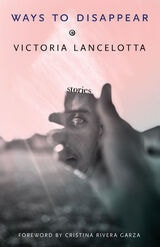
Ways to Disappear
StoriesVictoria Lancelotta, Foreword by Cristina Rivera Garza
University of Alabama Press, 2023
Winner of FC2’s Catherine Doctorow Prize in Innovative Fiction
Some disappearances are chosen. Others are survived.
The stories in Victoria Lancelotta’s Ways to Disappear excavate the unexamined places between dread and desire, promise and threat, where the body is both prison and salvation. Populated by the grieving and the exultant and those who see no difference between the two, by men and women who are only a little bit broken and boys and girls who can’t wait to be, by souls untethered, rootless, yet bound by blood and flesh, Lancelotta’s characters are driven by the irresistible need to be a bigger part of the worlds they each inhabit, by turns strange and commonplace. In language lush and jagged, never sentimental, these stories scrutinize the exhaustion and enchantment of the everyday: houses seething with resentment and devotion, cars dream-full and hurtling the children in them into a world they think they know but can’t imagine; front porches, back yards, luxury hotels, and truck stops. Lancelotta understands that sometimes people check their wounds not to see if they’ve healed, but to be sure they’re still there.
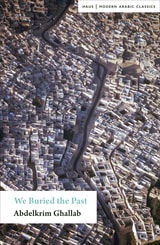
We Have Buried the Past
Abdelkrim Ghallab
Haus Publishing, 2018
Written after the country gained independence, the historical novel follows two generations of al-Tihamis, a well-to-do family residing in Fez’s ancient medina. The family members’ lives reflect the profound social changes taking place in Morocco during that time. Bridging two worlds, We Buried the Past begins during the quieter days of the late colonial period, a world of seemingly timeless tradition, in which the patriarch, al-Haj Muhammad, proudly presides over the family. Here, religion is unquestioned and permeates all aspects of daily life. But the coming upheaval and imminent social transition are reflected in al-Haj’s three sons, particularly his second son, Abderrahman, who eventually defies his father and comes to symbolize the break between the old ways and the new.
Noted for marrying classical Arabic style and European literary form, this book also offers insight into the life of Ghallab himself, who was deeply involved in the nationalist movement that led to Moroccan independence. A pioneering work, We Buried the Past beautifully characterizes an influential period in the history of Morocco.
We Were Lucky with the Rain (stories)
Susan Buttenwieser
Four Way Books, 2020
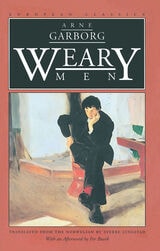
Weary Men
Arne Garborg, translated by Sverre Lyngstad, and afterword by Per Buvik
Northwestern University Press, 1999
Originally published in 1891, Weary Men introduces a bachelor nearly middle age named Gabriel Gram, who suffers an existential crisis, considers suicide, but finally finds solace in a religious conversion of questionnable sincerity. Garborg depicts Gram's Kristiania (present day Oslo) in fascinating detail as Gram divides his time between male friends and "new women," a new generation of Norwegian women embolded to walk freely with men in public but who continue to rebuff Gram's sexual advances.
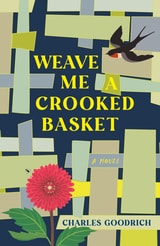
Weave Me a Crooked Basket
A NovelCharles Goodrich
University of Nevada Press, 2023
It’s the summer of 2008, and thirty-five-year-old Ursula Tunder, reeling from the breakup of a bad marriage, has abandoned her career as a botanist and moved home to the family farm to start a wholesale garden-plant greenhouse, and, perhaps more importantly, to care for her ailing father, Joe. Her younger brother, Bodie, now that a shoulder injury has ended his NFL career, comes home as well, to try his hand at organic farming. Their land at the edge of a prosperous college town is coveted by developers. Ursula wants to sell the farm to Camas Valley State University, which has promised to create a research facility on the land, but Bodie and his idealistic wife, Fleece, are committed to farming.
Enter Nu, Ursula and Bodie’s Vietnamese-American cousin by adoption, and an up-and-coming visual artist. When Nu gets arrested after a fight with a pair of dirt bikers, Joe persuades him to take refuge at the Tunder farm. Nu gets pressed into service helping Bodie with farm chores and taking care of Joe, so Ursula seizes the opportunity to get away from the farm, accepting a temporary job surveying native plants in the Cascades. But when Joe’s health plummets and Bodie’s finances crash, Ursula abandons her summer job to return home once again.
Facing bankruptcy, Ursula, Bodie, and Nu enlist a ragtag troupe of land-defenders in a festival of resistance in a last-ditch effort to save a way of life that may disappear forever.
Weedeater
An Illustrated NovelRobert Gipe
Ohio University Press, 2018
What Darkness Was
Inka Parei
Seagull Books, 2013
Combining tight prose with a compulsive delight in detail, Parei’s second novel in English presents a dynamic portrait of the West German soul from World War II through the German Autumn of 1977.
What Diantha Did
Charlotte Perkins Gilman
Duke University Press, 2005
In her introduction to the novel, Charlotte J. Rich highlights Gilman’s engagement with such hotly debated Progressive Era issues as the “servant question,” the rise of domestic science, and middle-class efforts to protect and aid the working girl. She illuminates the novel’s connections to Gilman’s other feminist works, including “The Yellow Wall-Paper” and Herland; to her personal life; and to her commitment to women’s social and economic freedom. Rich contends that the novel’s engagement with class and race makes it particularly significant to the newly complex understanding of Gilman that has emerged in recent scholarship. What Diantha Did provides essential insight into Charlotte Perkins Gilman’s important legacy of social thought.
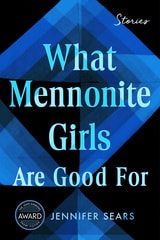
What Mennonite Girls Are Good For
Jennifer Sears
University of Iowa Press, 2025
A Debutiful Best Debut Short Story Collection of 2025
In these eleven stories, a Mennonite minister’s daughter moves from a youthful, exuberant understanding of her family’s faith toward religious doubt. Stumbling comically at times, Ruthie navigates life with and without the rules in which she’s been raised. Always physical, often sexual, Ruthie’s search for personal truth leads her from missionary outposts in Paraguay and Brazil to Mennonite towns in northern Indiana and central Kansas, a vandalized Native American site, women’s healthcare clinics, and lingerie shops on the secular, melancholy East Coast. Ultimately, these stories consider how faith and identity intertwine, the cost of abandoning one’s cultural heritage, and the complicated longing for return.
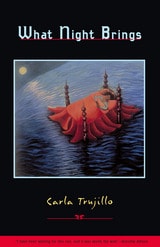
What Night Brings
Carla Trujillo
Northwestern University Press, 2003
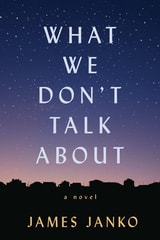
What We Don't Talk About
James Janko
University of Wisconsin Press, 2022
The town’s most adventurous woman, Cassie Zeul, is an outcast because she has no husband and takes an occasional lover. Her son, Gus, guided by Sister Damien, aspires to be a priest, but he is increasingly overwhelmed by his infatuation with Pat Lemkey—who is herself drawn to Jenny Biel, considered by many to be the most beautiful girl in town. Gus’s best friend, Fenza Ryzchik Jr., a somewhat notorious bully desperate for his father’s attention, hates “colored people,” doesn’t think he knows any, and is certain he can convince Jenny to marry him one day—without realizing that her devout mother has been passing for white her entire life. Events come to a head when a visiting nun from the South brings an African American friend with her to Midnight Mass one Christmas Eve.
The dreams and desires of these characters collide and intersect as they navigate life and coming of age in the rural Midwest. In Janko’s masterful hands, the darkness—of prejudice, privilege, and power—that they don’t even recognize threatens to overwhelm their lives and their plans for the future. This novel forces us, as well as its characters, to acknowledge the cost of hiding our true selves, and of judging others based on the color of their skin or the longing of their hearts.
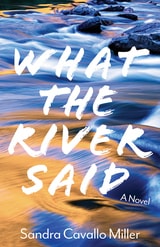
What the River Said
A Novelsandra cavallo miller
University of Nevada Press, 2021
In this riveting third book of the Dr. Abby Wilmore series, Dr. Abby returns to her medical clinic in Grand Canyon National Park. Happy to be reunited with her staff and her partner, Dr. John Pepper, Abby is back treating park visitors and personnel as well as local residents. However, a wave of heart attacks among apparently healthy hikers creates a new puzzle, and soon there are rumors of people using performance-enhancing drugs. Abby’s situation deteriorates when a new female friend suddenly disappears, and Abby berates herself for missing the woman’s depression.
As Abby struggles with the disappearance of her friend, Dr. Pepper is preoccupied by a mysterious threat from his past and becomes badly
injured in an apparent fall. While he recuperates, Abby takes over much of the clinic work while they provide a home for Pepper’s troubled teenage niece and an adopted stray dog.
Abby soon discovers that there is something more sinister behind the recent troubling events. In this exhilarating follow-up to The Color of Rock and Where Light Comes and Goes, Abby must learn to confront her past in order to stand up for the ones she loves.
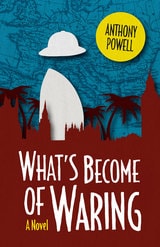
What's Become of Waring
A NovelAnthony Powell
University of Chicago Press, 2014
In What’s Become of Waring, Powell lampoons a world with which he was intimately acquainted: the inner workings of a small London publisher. But even as Powell eviscerates the publishers’ less than scrupulous plotting in his tale of wild coincidences, mistaken identity, and romance, he never strays to the far side of farce.
Written from a vantage point both high and necessarily narrow, Powell’s early novels nevertheless deal in the universal themes that would become a substantial part of his oeuvre: pride, greed, and what makes people behave as they do. Filled with eccentric characters and piercing insights, Powell’s work is achingly hilarious, human, and true.
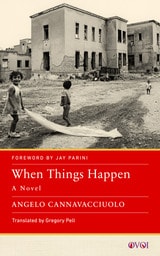
When Things Happen
A NovelAngelo Cannavacciuolo
Rutgers University Press, 2024
Michele Campo is living the bourgeois Italian dream. Now a speech pathologist in his forties, he resides in an expensive Naples home with his partner, Costanza, daughter of an upper-class family. Michele’s own family origins, however, are murkier. When he is assigned to work with five-year-old foster child Martina, he grows increasingly engrossed by her case, as his own buried family history slowly claws its way back to the surface. The first novel by acclaimed Italian writer Angelo Cannavacciuolo to be translated into English, When Things Happen tells a powerful and intriguing story of what we lose when we leave our origins behind. It presents a panoramic view of Neapolitan society unlike any in literature, revealing a city of extreme contrasts, with a glamorous center ringed by suburban squalor. Above all, it is a psychologically nuanced portrait of a man struggling to locate what he values in life and the poor vulnerable child who helps him find it.
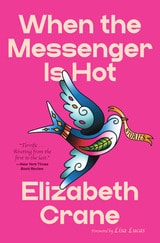
When the Messenger Is Hot
StoriesElizabeth Crane, foreword by Lisa Lucas
Northwestern University Press, 2026
A beloved, smart, and bold story collection surges back to life in a new print edition
Hailed as “revolutionary fiction,” When the Messenger Is Hot gleefully upends the short-story form, rendering the absurdities and possibilities of modern urban life with disarming humor and keen perception as Crane weaves through grief and womanhood. The women in Elizabeth Crane’s world are fierce and kind, damaged and optimistic. They are jilted lovers, absent daughters, twelve-steppers, and smart-asses, recovering from loss, addiction, or betrayal. From a woman who decides to live on the rooftop of her friend’s apartment (why not?), to a writer whose identity is compromised by the actress who portrays her, to a daughter who believes her deceased mother is still alive and living at the bus depot, these characters experience love and loss in a way that is both profoundly universal and uniquely theirs.
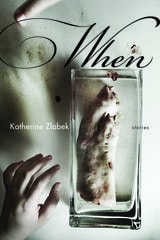
When
StoriesKatherine Zlabek
The Ohio State University Press, 2019
The atmospheric stories in When illuminate the customs of rural America, a part of this country that’s been asked to risk the best of itself in order to survive, revealing with humor and weight fears about wealth, worth, and the dignity of home.
Where Bones Dance
An English Girlhood, An African WarNina Newington
University of Wisconsin Press, 2007
Stories are layered upon stories: Anna's grandmother tells stories about life as a white woman on the Gold Coast; the clairvoyant and closeted "Aunt" Elsie gives Anna a story of transformation to hold onto in the coming tumult of adolescence. Yet Where Bones Dance also spirals down to the stories that are not told—sexual abuse, the myth of benign colonialism, the chaos of postcolonial Africa. Sensual and fantastical by turns, this moving, funny, immensely readable book delivers an understanding of the interplay of sexuality, gender, race, and war that is sophisticated beyond the years of its intrepid narrator.
Best Books for General Audiences, selected by the American Association of School Librarians and the Public Library Association
Where Light Comes and Goes
A NovelSandra Cavallo Miller
University of Nevada Press, 2020
Book 2 in the Dr. Abby Wilmore Series
Where Light Comes and Goes brings back Dr. Abby Wilmore, the young family physician who was the protagonist of Miller’s first novel, The Color of Rock. Abby has accepted the directorship of a summer clinic in Yellowstone National Park where she hopes to expand her medical skills. She arrives to find herself working above the increasingly restless Yellowstone supervolcano, treating visitors, staff, and locals, all while evading the advances of a lecherous concession manager and maintaining a long-distance relationship with her partner who stays at the Grand Canyon Clinic. As tremors in the park escalate and the lakes seethe with bubbling gases, Abby learns that some-one is mysteriously killing the bison.
What follows is an engrossing mystery unfolding in a spectacular setting with rich, quirky, and endearing characters and unexpected plot turns. While an overworked Abby makes new friends among her clinic staff and patients, tension builds as the volcano seems to be moving closer to a major eruption and the bison killings become more frequent. Soon, Abby finds herself in mortal danger as the story races to a thrilling and unexpected conclusion.
Sandra Cavallo Miller demonstrated in The Color of Rock that she is a gifted storyteller. Where Light Comes and Goes deftly combines a gripping mystery set in the accurately depicted routine of a busy medical practice amid the wonders of Yellowstone’s magnificent scenery and wildlife. This is entertaining reading at its best.
Where No One Should Live
A NovelSandra Cavallo Miller
University of Nevada Press, 2021
Where the Bird Disappeared
Ghassan Zaqtan
Seagull Books, 2018
White Dove, Tell Me
A NovelMartin Etchart
University of Nevada Press, 2024
In the wake of this tragedy, Xabier learns that not only is the family ranch in jeopardy of foreclosure but his father’s death may not have been the accident it first appeared to be. Now, he must find a way to save his family’s ranch while unraveling the mysteries leading to his father’s death. Along the way, Xabier strives to adhere to his father’s memory and words—the invitation to stay true to who he is without losing his arima (soul).
In lyrical language that evokes the mythologies that have shaped the Etxeas’s worldview, White Dove, Tell Me speaks to the divided self that seeks to honor the family’s Basque heritage, while they strive for understanding in a new land.
White Wedding
Kathleen J. Woods
University of Alabama Press, 2022
An enigmatic woman wanders from a pleasure mansion to a backyard wedding, upending the lives of everyone present
No one knows the woman at the wedding. Not the caterer, an easy target, succumbing to her advances. Not the pregnant bride or her tangled family, trying to spin a fairytale wedding under a melting hot summer sun. Not even the bride’s stepsister, Charlotte, who, in the middle of the night and despite her better judgment, allows this wandering wedding crasher into her car.
Crusted in dried blood and other bodily fluids, the woman exists in layers of sense and story, a nesting doll of pornographic tales in which fantasy and banality collide and blur. In this novel that is at once visceral, vivid, and spare, the uninvited guest gives each of those she meets what they want, whether they like it or not.
Here writhe distinct bodies in distinct ecstasies, echoing and defying inherited American narratives about gender, shame, and pleasure. With an edge of humor and horror, Woods explores if —and how—we consent to our own desires.
Whitehorn's Windmill
Kazys Boruta
Central European University Press, 2009
Who Killed Bambi?
Monika Fagerholm, translated by Bradley Harmon
University of Wisconsin Press, 2026
Set in a fictional, affluent suburb of Helsinki, the main narrative follows Gusten Grippe, a successful realtor haunted by his role as one of the four teenage rapists—the only one to report the crime and admit his guilt. When, a decade afterward, an acquaintance plans to make a movie about what happened, Gusten attempts to atone for his past in the face of the community’s stoic silence and misguided consideration for reputation. Released at the height of the #MeToo movement and translated into a dozen languages, Who Killed Bambi? remains highly relevant in a world grappling with the ubiquity of sexual violence, toxic masculinity, and gender discrimination.
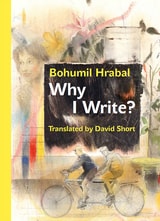
Why I Write?
And Other Early Prose PiecesBohumil Hrabal
Karolinum Press, 2019
—New Yorker
“A collection of formative fiction from a writer whose work has earned comparison with Joyce and Beckett. . . . Early work from a writer who merits a larger readership.”
—Kirkus Reviews
This collection of the earliest prose by one of literature’s greatest stylists captures, as scholar Arnault Maréchal put it, “the moment when Hrabal discovered the magic of writing.” Taken from the period when Bohumil Hrabal shifted his focus from poetry to prose, these stories—many written in school notebooks, typed and read aloud to friends, or published in samizdat—often showcase raw experiments in style that would define his later works. Others intriguingly utilize forms the author would never pursue again. Featuring the first appearance of key figures from Hrabal’s later writings, such as his real-life Uncle Pepin, who would become a character in his later fiction and is credited here as a coauthor of one piece, the book also contains stories that Hrabal would go on to cannibalize for some of his most famous novels. All together, Why I Write? offers readers the chance to explore this important nascent phase of Hrabal’s writing.
Expertly interpreted by award-winning Hrabal translator David Short, this collection comprises some of the last remaining prose works by Hrabal to be translated into English. A treasure trove for Hrabal devotees, Why I Write? allows us to see clearly why this great prose master was, as described by Czech writer and publisher Josef Škvorecký, “fundamentally a lyrical poet.”

Windy McPherson's Son
Sherwood Anderson
University of Illinois Press, 1993
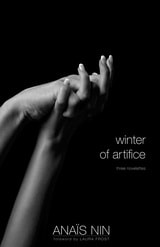
Winter of Artifice
Three NovelettesAnaïs Nin
Ohio University Press, 2016
Swallow Press first published Winter of Artifice in 1945, following two vastly different versions from other presses. The book opens with a film star, Stella, studying her own, but alien, image on the screen. It ends in the Manhattan office of a psychoanalyst—the Voice—who, as he counsels patients suffering from the maladies of modern life, reveals himself as equally susceptible to them. The middle, title story explores one of Nin’s most controversial themes, that of a woman’s sexual relationship with her father. Elliptical, fragmented prose; unconventional structure; surrealistic psychic landscapes—Nin forged these elements into a style that engaged with the artistic concerns of her time but still registers as strikingly contemporary.
This reissue, accompanied by a new introduction by Laura Frost and the original engravings by Nin’s husband Ian Hugo, presents an important opportunity to consider anew the work of an author who laid the groundwork for later writers. Swallow Press’s Winter of Artifice represents a literary artist coming into her own, with the formal experimentation, thematic daring, and psychological intrigue that became her hallmarks.
Without a Stitch in Time
A Selection of the Best Humorous Short PiecesPeter De Vries
University of Chicago Press, 1972
Words Are Something Else
David Albahari
Northwestern University Press, 1996
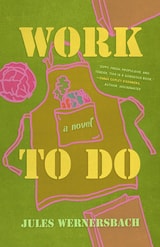
Work to Do
Jules Wernersbach
University of Iowa Press, 2026
When Eleanor founded Guadalupe Street Co-op in the early 1980s, she was in her mid-twenties and madly in love with her girlfriend, Meg. Together, they envisioned an idyllic grocery store owned by its workers and customers.
Forty years later, Guadalupe Street Co-op is an iconic Austin business with a loyal customer base, an antiquated business model, and a disgruntled staff. Roz, one of the store’s senior managers, is too caught up stalking her ex-wife online to notice that her girlfriend, Molly, is plotting with her coworkers to unionize. Roz also doesn’t see that Molly is not-so-secretly in a situationship with Randy, the dairy manager leading their collective.
Unfolding over the course of a single week during Texas hurricane season, Work to Do pings between the co-op’s first year and present day, as the unionization bid reaches fever pitch. The wind howls, the power goes out, and water creeps through the front door as questions of who owns the grocery store and who has a right to its future are posed. And will the workers ever be paid enough to buy the organic groceries they shelve?
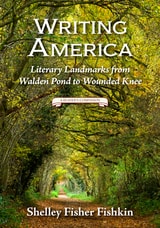
Writing America
Literary Landmarks from Walden Pond to Wounded Knee (A Reader's Companion)Fishkin, Shelley Fisher
Rutgers University Press, 2015
American novelist E.L. Doctorow once observed that literature “endows places with meaning.” Yet, as this wide-ranging new book vividly illustrates, understanding the places that shaped American writers’ lives and their art can provide deep insight into what makes their literature truly meaningful.
Published on the eve of the 50th anniversary of the Historic Preservation Act, Writing America is a unique, passionate, and eclectic series of meditations on literature and history, covering over 150 important National Register historic sites, all pivotal to the stories that make up America, from chapels to battlefields; from plantations to immigration stations; and from theaters to internment camps. The book considers not only the traditional sites for literary tourism, such as Mark Twain’s sumptuous Connecticut home and the peaceful woods surrounding Walden Pond, but also locations that highlight the diversity of American literature, from the New York tenements that spawned Abraham Cahan’s fiction to the Texas pump house that irrigated the fields in which the farm workers central to Gloria Anzaldúa’s poetry picked produce. Rather than just providing a cursory overview of these authors’ achievements, acclaimed literary scholar and cultural historian Shelley Fisher Fishkin offers a deep and personal reflection on how key sites bore witness to the struggles of American writers and inspired their dreams. She probes the global impact of American writers’ innovative art and also examines the distinctive contributions to American culture by American writers who wrote in languages other than English, including Yiddish, Chinese, and Spanish.
Only a scholar with as wide-ranging interests as Shelley Fisher Fishkin would dare to bring together in one book writers as diverse as Gloria Anzaldúa, Nicholas Black Elk, David Bradley, Abraham Cahan, S. Alice Callahan, Raymond Chandler, Frank Chin, Elizabeth Cook-Lynn, Countee Cullen, Frederick Douglass, Paul Laurence Dunbar, Jessie Fauset, William Faulkner, F. Scott Fitzgerald, Allen Ginsberg, Jovita González, Rolando Hinojosa, Langston Hughes, Zora Neale Hurston, Lawson Fusao Inada, James Weldon Johnson, Erica Jong, Maxine Hong Kingston, Irena Klepfisz, Nella Larsen, Emma Lazarus, Sinclair Lewis, Genny Lim, Claude McKay, Herman Melville, N. Scott Momaday, William Northup, John Okada, Miné Okubo, Simon Ortiz, Américo Paredes, John P. Parker, Ann Petry, Tomás Rivera, Wendy Rose, Morris Rosenfeld, John Steinbeck, Harriet Beecher Stowe, Henry David Thoreau, Mark Twain, Yoshiko Uchida, Tino Villanueva, Nathanael West, Walt Whitman, Richard Wright, Hisaye Yamamoto, Anzia Yezierska, and Zitkala-Ša.
Leading readers on an enticing journey across the borders of physical places and imaginative terrains, the book includes over 60 images, and extended excerpts from a variety of literary works. Each chapter ends with resources for further exploration. Writing America reveals the alchemy though which American writers have transformed the world around them into art, changing their world and ours in the process.