Results by title
8113 books match the query 'Literary Criticism' and 363 start with w
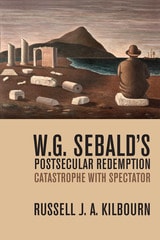
W. G. Sebald’s Postsecular Redemption
Catastrophe with SpectatorRussell J. A. Kilbourn
Northwestern University Press, 2018
Alongside Sebald studies' traditional subjects, which include memory, historiography, Sebald's critique of an image-based culture, and his highly intermedial poetics, W. G. Sebald's Postsecular Redemption demonstrates Sebald's relevance for affect theory, new materialism, and the posthuman turn. It critiques the possibility of metaphysical or eroto-salvific models of redemption, arguing against the temptation of psychoanalytic interpretations, as Sebald's work of memory rejects the discourse of redemption in favor of restitution.
In its consideration of Sebald's place in twentieth-century literature and after, Kilbourn's book engages with such predecessors as Nabokov, Kafka, Conrad, and Beckett, concluding with comparisons with contemporaries Claudio Magris and Alice Munro.

WEB OF FANTASIES
Gaze, Image, & Gender in Ovid’s MetamorphosesPatricia B Salzman-Mitchell
The Ohio State University Press, 2005
The book observes that while feminist models of the gaze can create productive readings of the poem, these models are too limited and reductive for such a protean and complex text as Metamorphoses. This work brings forth the pervasive importance of the act of looking in the poem which will affect future readings of Ovid’s epic.
WHY WE READ FICTION
Theory of Mind and the NovelLisa Zunshine
The Ohio State University Press, 2006
WORKS OF APHRA BEHN
VOLUME I, POEMSAphra Behn
The Ohio State University Press, 1992
WORKS OF APHRA BEHN
VOLUME II, LETTERS BETWEEN A NOBLEMAN ANAPHRA BEHN
The Ohio State University Press, 1993
WORKS OF APHRA BEHN
VOLUME IV, SENECA UNMASQUEDAphra Behn
The Ohio State University Press, 1994
WORKS OF APHRA BEHN
Volume V, the Plays, 1671–1677Aphra Behn
The Ohio State University Press, 1996
Wages of Evil
Dostoevsky and PunishmentAnna Schur
Northwestern University Press, 2012
As Dostoevsky attempts to balance the various ethical and cultural imperatives, he displays ambivalence both about punishment and about mercy. This ambivalence, Schur argues, is further complicated by what Dostoevsky sees as the unfathomable quality of the self, which hinders every attempt to match crimes with punishments. The one certainty he holds is that a proper response to wrongdoing must include a concern for the wrongdoer’s moral improvement.
Waging War on War
Peacefighting in American LiteratureGiorgio Mariana
University of Illinois Press, 2015
Giorgio Mariani rigorously engages with the essential question of what makes a text explicitly anti-war. Ranging from Emerson and Joel Barlow to Maxine Hong Kingston and Tim O'Brien, Waging War on War explores why sustained attempts at identifying the anti-war text's formal and philosophical features seem to always end at an impasse. Mariani moves a step beyond to construct a theoretical model that invites new inquiries into America's nonviolent, nonconformist tradition even as it challenges the ways we study U.S. warmaking and the cultural reactions to it. In the process, he shows how the ideal of nonviolence and a dislike of war have been significant, if nonhegemonic, features of American culture since the nation's early days.
Ambitious and nuanced, Waging War on War at last defines anti-war literature while exploring the genre's role in an assertive peacefighting project that offered--and still offers--alternatives to violence.
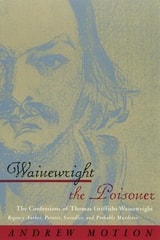
Wainewright the Poisoner
The Confessions of Thomas Griffiths WainewrightAndrew Motion
University of Chicago Press, 2001
"Thomas Griffiths Wainewright is a dream subject for either novelist or biographer. . . . Andrew Motion, Britain's poet laureate, clearly felt that neither straight biography nor pure fiction would do Wainewright's complexities justice, and so he combined the two genres. The result is stunning. The central voice is that of Wainewright himself, reflecting back on his life. After each chapter Mr. Motion has added detailed notes that inform and flesh out the narrative, giving not only his own informed opinion of Wainewright's actions but also those of Wainewright's contemporaries and the scholars and writers who have studied him over the past two centuries."—Lucy Moore, Washington Times
"Brilliantly innovative, gripping, intricately researched, Motion's biography does justice to its subject at last."—John Carey, The Sunday Times
"Engaging and convincing. . . . The trajectory of this character-from neglected and resentful child to arrogant and envious London dandy to sociopathic murderer on to an enfeebled, frightened prisoner-is indelibly imagined and drawn."—Edmund White, Financial Times
"[A] fascinating look at an evil artist, a charmer still having his way with us. We can hear him being economical with the truth, telling us and himself just what he wants to hear."—Michael Olmert, New Jersey Star Ledger
"Motion crafts a fascinating tale as complex and compelling as if Wainewright himself had written it."—Michael Spinella, Booklist
"Did he kill his servant, and possibly others as well? . . . The footnotes seem to say yes, but Wainewright adamantly argues his own case. Motion's prose is flawless, and Wainewright's voice is convincing. But in the long run, it's this ambiguity that makes Wainewright the Poisoner a fascinating and memorable read."—R.V. Schelde, Sacramento News and Review
"Who could as for a better Romantic villain than Thomas Griffiths Wainewright? . . . [The book] succeeds on many levels: as an act of ventriloquism, a work of scholarship, a psychological study, as a set of sharp portraits of famous men and an engrossing read. . . ."—Polly Shulman, Newsday
"Instead of a straightforward biography, Andrew Motion gives us Wainewright's first person, fictionalized "confession."—a document as circumspect, slyly reticent, and oeaginously smooth as the man himself. Splendid."—John Banville, Literary Review
"A genuine tour de force, and on a non-fictional level, a telling portrait of a strange, intriguing and repellant man."—Brian Fallon, Irish Times
"A marvelous literary hybrid that totters with one foot in the world of nonfiction, the other in the land of make-believe. One is alternatively swept up in Motion's dizzy imaginative pastiche, or sent crashing into a dusty stack of scholarly cogitations. . . ."—Philadelphia Inquirer
"As true a portrait of a liar as its subject could wish. Rich and strange. . . ."—Glasgow Herald

Waiting for Cancer to Come
Women’s Experiences with Genetic Testing and Medical Decision Making for Breast and Ovarian CancerSharlene Hesse-Biber
University of Michigan Press, 2014
Waiting for Cancer to Come tells the stories of women who are struggling with their high risk for cancer. Based on interviews and surveys of dozens of women, this book pieces together the diverse yet interlocking experiences of women who have tested positive for the BRCA 1/2 gene mutations, which indicate a higher risk of developing breast and ovarian cancer. Sharlene Hesse-Biber brings these narratives to light and follows women’s journeys from deciding to get screened for BRCA, to learning the test has come back positive, to dealing with their risk. Many women already know the challenges of a family history riddled with cancer and now find themselves with the devastating knowledge of their own genetic risk. Using the voices of the women themselves to describe the under-explored BRCA experience, Waiting for Cancer to Come looks at the varied emotional, social, economic, and psychological factors at play in women’s decisions about testing and cancer prevention.
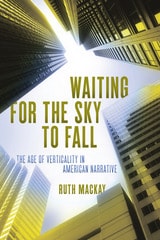
Waiting for the Sky to Fall
The Age of Verticality in American NarrativeRuth Mackay
The Ohio State University Press, 2016
With this study, Mackay asks: In what oblique ways has verticality leaked into American narrative? Why do metaphors of up and down recur across the twentieth century? With close readings of Jonathan Safran Foer’s Extremely Loud and Incredibly Close, Winsor McCay’s comic strip Little Nemo in Slumberland, Upton Sinclair’s Oil! and its film rendering There Will Be Blood, Allen Ginsberg’s poetic dissections of the nuclear bomb, and Leslie Marmon Silko’s imagining of flight in Almanac of the Dead, this interdisciplinary study culminates with a discussion of Philippe Petit’s tightrope walk between the Twin Towers. Waiting for the Sky to Fall examines how vertical representation cleaves to, and often transforms the associations of, specific events that are physically and visually disorienting, disquieting, or even traumatic.
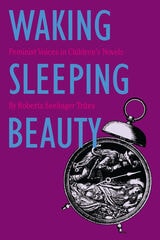
Waking Sleeping Beauty
Feminist Voices in Children's NovelsRoberta S. Trites
University of Iowa Press, 1997
The Sleeping Beauty in Roberta Seelinger Trites' intriguing text is no silent snoozer passively waiting for Prince Charming to energize her life. Instead she wakes up all by herself and sets out to redefine the meaning of “happily ever after.” Trites investigates the many ways that Sleeping Beauty's newfound voice has joined other strong female voices in feminist children's novels to generate equal potentials for all children.
Waking Sleeping Beauty explores issues of voice in a wide range of children's novels, including books by Virginia Hamilton, Patricia MacLachlan, and Cynthia Voight as well as many multicultural and international books. Far from being a limiting genre that praises females at the expense of males, the feminist children's novel seeks to communicate an inclusive vision of politics, gender, age, race, and class. By revising former stereotypes of children's literature and replacing them with more complete images of females in children's books, Trites encourages those involved with children's literature—teachers, students, writers, publishers, critics, librarian, booksellers, and parents—to be aware of the myriad possibilities of feminist expression.
Roberta Trites focuses on the positive aspects of feminism: on the ways females interact through family and community relationships, on the ways females have revised patriarchal images, and on the ways female writers use fictional constructs to transmit their ideologies to readers. She thus provides a framework that allows everyone who enters a classroom with a children's book in hand to recognize and communicate—with an optimistic, reality-based sense of “happily ever after”—the politics and the potential of that book.
Walker Percy, Fyodor Dostoevsky, and the Search for Influence
Jessica Hooten Wilson
The Ohio State University Press, 2017
From Dostoevsky, Percy learned how to captivate his non-Christian readership with fiction saturated by a Christian vision of reality. Not only was his method of imitation in line with this Christian faith but also the aesthetic mode and very content of his narratives centered on his knowledge of Christ. The influence of Dostoevsky on Percy, then, becomes significant as a modern case study for showing the illusion of artistic autonomy and long-held, Romantic assumptions about artistic originality. Ultimately, Wilson suggests, only by studying the good that came before can one translate it in a new voice for the here and now.
Walking Blues
Making Americans from Emerson to ElvisTimothy Parrish
University of Massachusetts Press, 2009
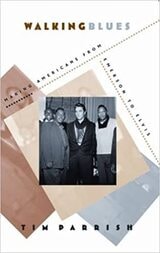
This is the central question addressed by Tim Parrish in this imaginative interdisciplinary study. Working in the tradition of the blues, an art form based on the adaptation of cultural past to present, Parrish seeks to show what happens when we think of American identity not as some transcendental entity or essence, but as an ongoing process. At the core of his analysis is an appreciation of the rich legacy of pragmatism, a distinctly American frame of mind that sees truth as an act rather than an object, as a matter of doing rather than being. While the philosophical roots of pragmatism can be found in the writings of Ralph Waldo Emerson, William and Henry James, and Horace Kallen, the same intellectual approach informs the work of writers such as Ralph Ellison, Mary Antin, and Philip Roth as well as creative artists such as Son House, Elvis Presley, and James Brown. What all of these figures share, according to Parrish, is a recognition of the intrinsic connection between thought and action that has allowed Americans to define who they are through what they do.
Walking Blues accounts for our cultural diversity without either insisting that we are all the same or denying that we have anything in common. Far from glossing over difference, Parrish shows how our American social, racial, and ethnic conflicts often mark the starting point for the various acts of creation through which we make—and remake—ourselves as Americans.
Walking Harlem
The Ultimate Guide to the Cultural Capital of Black AmericaTaborn, Karen
Rutgers University Press, 2018
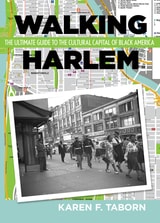
This illustrated guide takes readers on five separate walking tours of Harlem, covering ninety-one different historical sites. Alongside major tourist destinations like the Apollo Theater and the Abyssinian Baptist Church, longtime Harlem resident Karen Taborn includes little-known local secrets like Jazz Age speakeasies, literati, political and arts community locales. Drawing from rare historical archives, she also provides plenty of interesting background information on each location.
This guide was designed with the needs of walkers in mind. Each tour consists of eight to twenty-nine nearby sites, and at the start of each section, readers will find detailed maps of the tour sites, as well as an estimated time for each walk. In case individuals would like to take a more leisurely tour, it provides recommendations for restaurants and cafes where they can stop along the way.
Walking Harlem gives readers all the tools they need to thoroughly explore over a century’s worth of this vital neighborhood’s cultural, political, religious, and artistic heritage. With its informative text and nearly seventy stunning photographs, this is the most comprehensive, engaging, and educational walking tour guidebook on one of New York’s historic neighborhoods.
Walking Towards Walden
A Pilgrimage in Search of PlaceJohn Hanson Mitchell
University Press of New England, 2015
Wallace Stevens And The Apocalyptic Mode
Woodland, Malcolm
University of Iowa Press, 2005
This study begins with an examination of the textual and generic issues surrounding apocalypse, culminating in the idea of apocalyptic language as a form of “discursive mastery” over the mayhem of events. Woodland provides an informative religious/historical discussion of apocalypse and, engaging with such critics as Parker, Derrida, and Fowler, sets forth the paradoxes and complexities that eventually challenge any clear dualities between apocalyptic and antiapocalyptic thinking.
Woodland then examines some of Stevens’s wartime essays and poems and describes Stevens’s efforts to salvage a sense of self and poetic vitality in a time of war, as well as his resistance to the possibility of cultural collapse. Woodland discusses the major postwar poems “Credences of Summer” and “The Auroras of Autumn” in separate chapters, examining the interaction of (anti)apocalyptic modes with, respectively, pastoral and elegy.
The final chapter offers a perspective on Stevens’s place in literary history by examining the work of a contemporary poet, Jorie Graham, whose poetry quotes from Stevens’s oeuvre and shows other marks of his influence. Woodland focuses on Graham's 1997 collection The Errancy and shows that her antiapocalyptic poetry involves a very different attitude toward the possibility of a radical break with a particular cultural or aesthetic stance.
Wallace Stevens and the Apocalyptic Mode, offering a new understanding of Stevens’s position in literary history, will greatly interest literary scholars and students.
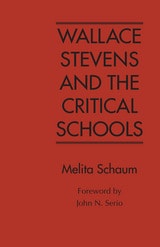
Wallace Stevens and the Critical Schools
Melita C. Schaum
University of Alabama Press, 1988
Wallace Stevens and the Critical Schools reveals a field marked by conflict and contradiction, both within and among critical works in their attempts to explicate and appropriate this major American poet. Stevens’ changing reception among the critical schools reveals much about the shifting nature of American literature and criticism in this century and illuminates the often polemical process of literary canon formation. Each chapter of this book examines a particular aspect of the 20th-century critical involvement with Wallace Stevens’ poetry, introduced by a discussion of the poet’s work as an arena for the convergence of modern critical tendencies and concerns.
First, the author examines the avant-garde milieu of early 20th-century modernism, which implicated Stevens in its melee of affiliations and enmities and which influenced critics’ ambivalent responses to his early work. She traces the critical controversies of the poet’s emergence before and during the 1920s, specifically the clash between New Humanism and aestheticism, and demonstrates how the quality of irony in Stevens’ work became a part of the critics’ general repertoire in their assessment of this poet.
The 1930s, 1940s, and 1950s were decades during which Stevens criticism became dominated by the New Critical ideology. The turn toward deconstruction in Stevens criticism stands in part as a response to the New Critical dilemma, seen in the manner in which such critics as J. Hillis Miller and Joseph Riddel appropriated the concept of “decreation” to explain the sense of rupture in Stevens’ late poetry yet brought that concept to its logical end in a deconstructive paradigm.
Finally, Schaum identifies four major theoretical approaches to Stevens in the past two decades that continue to inform and direct the field of critical dissent and exploration in the 1980s. Such theories as Bloomian misprision, versions of hermeneutic criticism, redefinitions of the deconstructive enterprise, and the contemporary call for a new historicism continue the battle to appropriate Stevens as the “hard prize” of critical aims and investigations.
Wallace Stevens and the Limits of Reading and Writing
Bart Eeckhout
University of Missouri Press, 2002
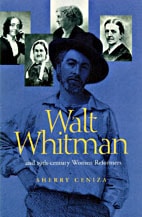
Walt Whitman and Nineteenth-Century Women Reformers
Sherry Ceniza
University of Alabama Press, 1999
WINNER OF THE ELIZABETH AGEE PRIZE IN AMERICAN LITERATURE
Examining Whitman’s poetic development through the documented influence of nineteenth‑century women reformers.
Walt Whitman and 19th-Century Women Reformers documents Whitman's friendships with women during the 1850s, the decade of Whitman's most creative period. The book reveals startling connections between the first three editions of Leaves of Grass and the texts generated by the women he knew during this period, many of whom were radical activists in the women's rights movement.
Sherry Ceniza argues that Whitman's editions of Leaves became progressively more radically 'feminist' as he followed the women's rights movement during the 1850s and that he was influenced by what he called the 'true woman of the new aggressive type . . . woman under the new dispensation.' Ceniza documents the progression of the National Woman's Rights movement through the lives and writings of three of its leaders- Abby Hills Price, Paulina Wright Davis, and Ernestine L. Rose. By juxtaposing the texts written by these women with Leaves, Ceniza shows that Whitman used many of the same arguments and rhetorical gestures as his female activist friends.
The book also discusses the influence of women engaged in women's rights outside the National Woman's Rights organization. And Ceniza's opening chapter is devoted to a fresh interpretation of the life and thought of another strong-minded woman who influenced the poet's writing-Louisa Van Velsor Whitman, Walt Whitman's mother.
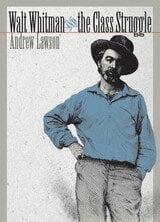
Walt Whitman and the Class Struggle
Andrew Lawson
University of Iowa Press, 2006
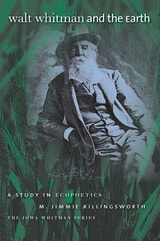
Walt Whitman and the Earth
A Study of EcopoeticsM. Jimmie Killingsworth
University of Iowa Press, 2005
It grows such sweet things out of such corruptions,
It turns harmless and stainless on its axis, with such endless successions of diseas’d corpses,
It distills such exquisite winds out of such infused fetor,
It renews with such unwitting looks its prodigal, annual, sumptuous crops,
It gives such divine materials to men, and accepts such leavings from them at last.
—Walt Whitman, from “This Compost”
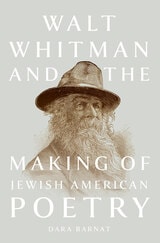
Walt Whitman and the Making of Jewish American Poetry
Dara Barnat
University of Iowa Press, 2023
Dara Barnat presents a genealogy of Jewish American poets in dialogue with Whitman, and with each other, and reveals how the lineage of Jewish American poets responding to Whitman extends far beyond the likes of Allen Ginsberg. From Emma Lazarus and Adah Isaacs Menken, through twentieth-century poets such as Charles Reznikoff, Karl Shapiro, Kenneth Koch, Muriel Rukeyser, Adrienne Rich, Marge Piercy, Alicia Suskin Ostriker, and Gerald Stern, this book demonstrates that Whitman has been adopted by Jewish American poets as a liberal symbol against exclusionary and anti-Semitic elements in high modernist literary culture. The turn to Whitman serves as a mode of exploring Jewish and American identity.
Walt Whitman and the World
Gay Wilson Allen
University of Iowa Press, 1995
Walt Whitman's "Song of Myself"
A Mosaic of InterpretationsEdwin Haviland Miller
University of Iowa Press, 1991
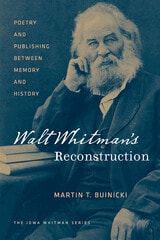
Walt Whitman's Reconstruction
Poetry and Publishing between Memory and HistoryMartin T. Buinicki
University of Iowa Press, 2012
For Walt Whitman, living and working in Washington, D.C., after the Civil War, Reconstruction meant not only navigating these tumultuous years alongside his fellow citizens but also coming to terms with his own memories of the war. Just as the work of national reconstruction would continue long past its official end in 1877, Whitman’s own reconstruction would continue throughout the remainder of his life as he worked to revise his poetic project—and his public image—to incorporate the disasters that had befallen the Union. In this innovative and insightful analysis of the considerable poetic and personal reimagining that is the hallmark of these postwar years, Martin Buinicki reveals the ways that Whitman reconstructed and read the war.
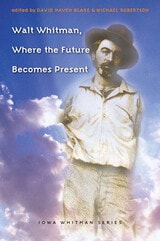
Walt Whitman, Where the Future Becomes Present
David Haven Blake
University of Iowa Press, 2008
Walt Whitman, Where the Future Becomes Present invigorates Whitman studies by garnering insights from a diverse group of writers and intellectuals. Writing from the perspectives of art history, political theory, creative writing, and literary criticism, the contributors place Whitman in the center of both world literature and American public life. The volume is especially notable for being the best example yet published of what the editors call the New Textuality in Whitman studies, an emergent mode of criticism that focuses on the different editions of Whitman’s poems as independent works of art.
Written one hundred fifty years after the book’s publication, these timely, innovative responses to Leaves of Grass confirm that the future of Whitman’s poems is vital to our present.
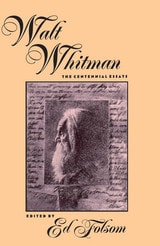
Walt Whitman
The Centennial EssaysEd Folsom
University of Iowa Press, 1994
In 1992, the year of the hundredth anniversary of Walt Whitman's death, a major gathering of international scholars took place at the University of Iowa. Over 150 participants heard papers by 20 of the world's most eminent critics of Whitman. Three generations of scholars offered new essays that brilliantly tracked the course of past and present Whitman scholarship. So significant was this historic celebration of the great American poet that the opening session was covered by CBS “Sunday Morning,” National Public Radio's “Morning Edition,” the New York Times, and other newspapers across the country. Musical and theatrical performances, art exhibitions, slide shows, readings, songs, and even a recently discovered recording of Whitman's voice were presented during the three days of the conference.
But the heart of the conference was this series of original essays by some of the most innovative scholars working in the field of American literature. There has ever been a more important collection of Whitman criticism. In these essays, readers will find the most suggestive recent approaches to Whitman alongside the most reliable traditional approaches. Walt Whitman: The Centennial Essays captures Whitman's energy and vitality, which have only increased in the century after his death.
Walt Whitman
The Correspondence, Volume VIITed Genoways
University of Iowa Press, 2005
Now, more than forty years after the inaugural volume’s original publication, Ted Genoways brings scholars the latest volume in Walt Whitman: The Correspondence. Incorporating all of the letters Miller had collected before his death in 2001 and combining them with more than a hundred previously unknown letters he himself gathered, Genoways’s volume is a perfect accompaniment to Miller’s original work.
Among the more than one hundred fifty letters collected in this volume are numerous correspondences concerning Whitman’s Civil War years, including a letter sending John Hay, the personal secretary to Abraham Lincoln, a manuscript copy of “O Captain, My Captain!” Additional letters address various aspects of the production of Leaves of Grass, the most notable being an extensive correspondence surrounding the Deathbed Edition, gathered by Whitman’s friend Horace Traubel, and reproduced here for the first time. Most significantly, this volume at last incorporates Whitman’s early letters to Abraham Paul Leech, first published by Arthur Golden in American Literature in 1986. The revelations contained in these letters must be considered among the most important discoveries about Whitman’s life made during the last half of the twentieth century.
Regardless of whether their significance is great or small, immediate or long-term, each new piece of Whitman’s correspondence returns us to a particular moment in his life and suggests the limitless directions that remain for Whitman scholarship.
Walter Benjamin for Children
An Essay on His Radio YearsJeffrey Mehlman
University of Chicago Press, 1993
Now in paperback, an insightful analysis of the great theorist's most unusual work: a diverse collection of radio broadcasts for children.
In light of the legendary difficulty of Walter Benjamin's works, it is a strange and intriguing fact that from 1929 to 1933, the great critic and cultural theorist wrote—and broadcast—numerous scripts, on the order of fireside chats, for children. Invited to speak on whatever subject he considered appropriate, Benjamin talked to the children of Frankfurt and Berlin about the destruction of Pompeii, an earthquake in Lisbon, and a railroad disaster at the Firth of Tay. He spoke about bootlegging and swindling, cataclysm and suicide, Faust and Cagliostro. In this first sustained analysis of the thirty surviving scripts, Jeffrey Mehlman demonstrates how Benjamin used the unlikely forum of children's radio to pursue some of his central philosophical and theological concerns.
In Walter Benjamin for Children, readers will encounter a host of intertextual surprises: an evocation of the flooding of the Mississippi informed by the argument of "The Task of the Translator;" a discussion of scams in stamp-collecting that turns into "The Work of Art in the Age of Mechanical Reproduction;" a tale of bootlegging in the American South that converges with the best of Benjamin's essays on fiction. Mehlman superimposes a dual series of texts dealing with catastrophe, on the one hand, and fraud, on the other, that resonate with the false-messianic theology of Sabbatianism as it came to focus the attention and enthusiasm of Benjamin's friend Gershom Scholem during the same years. The radio scripts for children, that is, offer an unexpected byway, on the eve of the apocalypse, into Benjamin's messianic preoccupations.
A child's garden of deconstruction, these twenty-minute talks—from the perspective of childhood, before an invisible audience, on whatever happened to cross the critic's mind—are also by their very nature the closest we may ever come to a transcript of a psychoanalysis of Walter Benjamin. Particularly alive to that circumstance, Mehlman explores the themes of the radio broadcasts and brilliantly illuminates their hidden connections to Benjamin's life and work.
This lucid analysis brings to light some of the least researched and understood aspects of Walter Benjamin's thought. It will interest and provoke literary theorists and philosophers of culture, as well as anyone who hopes to understand one of this century's most suggestive and perplexing critics.
Walter Benjamin's Grave
Michael Taussig
University of Chicago Press, 2006
“Looking over these essays written over the past decade,” writes Taussig, “I think what they share is a love of muted and defective storytelling as a form of analysis. Strange love indeed; love of the wound, love of the last gasp.” Although thematically these essays run the gamut—covering the monument and graveyard at Port Bou, discussions of peasant poetry in Colombia, a pact with the devil, the peculiarities of a shaman’s body, transgression, the disappearance of the sea, New York City cops, and the relationship between flowers and violence—each shares Taussig’s highly individual brand of storytelling, one that depends on a deep appreciation of objects and things as a way to retrieve even deeper philosophical and anthropological meanings. Whether he finds himself in Australia, Colombia, Manhattan, or Spain, in the midst of a book or a beach, whether talking to friends or staring at a monument, Taussig makes clear through these marvelous essays that materialist knowledge offers a crucial alternative to the increasingly abstract, globalized, homogenized, and digitized world we inhabit.
Pursuing an adventure that is part ethnography, part autobiography, and part cultural criticism refracted through the object that is Walter Benjamin’s grave, Taussig, with this collection, provides his own literary memorial to the twentieth century’s greatest cultural critic.
Walter Benjamin
An Introduction to His Work and ThoughtUwe Steiner
University of Chicago Press, 2010
Acknowledged only by a small circle of intellectuals during his lifetime, Benjamin is now a major figure whose work is essential to an understanding of modernity. Steiner traces the development of Benjamin’s thought chronologically through his writings on philosophy, literature, history, politics, the media, art, photography, cinema, technology, and theology. Walter Benjamin reveals the essential coherence of its subject’s thinking while also analyzing the controversial or puzzling facets of Benjamin’s work. That coherence, Steiner contends, can best be appreciated by placing Benjamin in his proper context as a member of the German philosophical tradition and a participant in contemporary intellectual debates.
As Benjamin’s writing attracts more and more readers in the English-speaking world, Walter Benjamin will be a valuable guide to this fascinating body of work.
Walter Benjamin’s Ark
A Departure in BiographyJohn Schad
University College London, 2025
Walter Benjamin’s Ark rereads the life and work of the German philosopher and critic through the life of his estranged son. With this innovative biography, John Schad not only brings to light the intriguing figure that is Stefan Rafael Benjamin, but also identifies him as that most crucial of Benjaminian specters, namely, the secret “you” or addressee of his father’s writings. In the process, he brings Walter Benjamin into a series of unlikely dramatic dialogues with Virginia Woolf, Rosa Luxemburg, Ludwig Wittgenstein, Gertrud Kolmar, Oscar Wilde, Franz Kafka, and Hamlet.
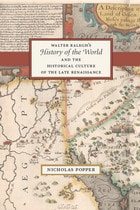
Walter Ralegh's "History of the World" and the Historical Culture of the Late Renaissance
Nicholas Popper
University of Chicago Press, 2012
Nicholas Popper uses Ralegh’s History as a touchstone in this lively exploration of the culture of history writing and historical thinking in the late Renaissance. From Popper we learn why early modern Europeans ascribed heightened value to the study of the past and how scholars and statesmen began to see historical expertise as not just a foundation for political practice and theory, but as a means of advancing their power in the courts and councils of contemporary Europe. The rise of historical scholarship during this period encouraged the circulation of its methods to other disciplines, transforming Europe’s intellectual—and political—regimes. More than a mere study of Ralegh’s History of the World, Popper’s book reveals how the methods that historians devised to illuminate the past structured the dynamics of early modernity in Europe and England.
Walter Van Tilburg Clark
CritiquesCharlton Laird
University of Nevada Press, 1983
Beginning in 1849, Alfred Doten recorded his life in minute detail for more than 54 years. His revealing daily accounts of the West's lusty mining frontier included tales of lynching, vigilante justice, shootings in the street, grand opera and theatre, stock manipulations, seances, musical soirees, and general "jollifications." Clark selected and edited the most valuable portions of Doten's massive diaries. He said he knew of no other account, fact or fiction, that so graphically presented the tragic course of a single representative life through the violent transformations brought about by the California Gold Rush and the Nevada Silver Boom.
Wanasema
Conversations with African WritersDon Burness
Ohio University Press, 1985
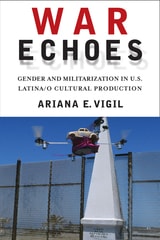
War Echoes
Gender and Militarization in U.S. Latina/o Cultural ProductionVigil, Ariana E
Rutgers University Press, 2014
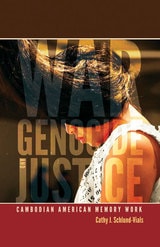
War, Genocide, and Justice
Cambodian American Memory WorkCathy J. Schlund-Vials
University of Minnesota Press, 2012
In the three years, eight months, and twenty days of the Khmer Rouge’s deadly reign over Cambodia, an estimated 1.7 million Cambodians perished as a result of forced labor, execution, starvation, and disease. Despite the passage of more than thirty years, two regime shifts, and a contested U.N. intervention, only one former Khmer Rouge official has been successfully tried and sentenced for crimes against humanity in an international court of law to date. It is against this background of war, genocide, and denied justice that Cathy J. Schlund-Vials explores the work of 1.5-generation Cambodian American artists and writers.
Drawing on what James Young labels “memory work”—the collected articulation of large-scale human loss—War, Genocide, and Justice investigates the remembrance work of Cambodian American cultural producers through film, memoir, and music. Schlund-Vials includes interviews with artists such as Anida Yoeu Ali, praCh Ly, Sambath Hy, and Socheata Poeuv. Alongside the enduring legacy of the Killing Fields and post-9/11 deportations of Cambodian American youth, artists potently reimagine alternative sites for memorialization, reclamation, and justice. Traversing borders, these artists generate forms of genocidal remembrance that combat amnesic politics and revise citizenship practices in the United States and Cambodia.
Engaged in politicized acts of resistance, individually produced and communally consumed, Cambodian American memory work represents a significant and previously unexamined site of Asian American critique.
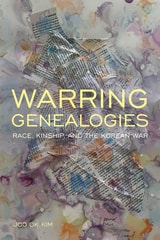
Warring Genealogies
Race, Kinship, and the Korean WarJoo Ok Kim
Temple University Press, 2022
Warring Genealogies examines the elaboration of kinships between Chicano/a and Asian American cultural production, such as the 1954 proxy adoption of a Korean boy by Leavenworth prisoners. Joo Ok Kim considers white supremacist expressions of kinship—in prison magazines, memorials, U.S. military songbooks—as well as critiques of such expressions in Chicana/o and Korean diasporic works to conceptualize racialized formations of kinship emerging from the Korean War.
Warring Genealogies unpacks writings by Rolando Hinojosa (Korean Love Songs, The Useless Servants) and Luis Valdez (I Don’t Have to Show You No Stinking Badges, Zoot Suit) to show the counter-representations of the Korean War and the problematic depiction of the United States as a benevolent savior. Kim also analyzes Susan Choi’s The Foreign Student as a novel that proposes alternative temporalities to dominant Korean War narratives. In addition, she examines Chicano military police procedurals, white supremacist women’s organizations, and the politics of funding Korean War archives.
Kim’s comparative study Asian American and Latinx Studies makes insightful connections about race, politics, and citizenship to critique the Cold War conception of the “national family.”
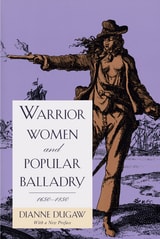
Warrior Women and Popular Balladry, 1650-1850
Dianne Dugaw
University of Chicago Press, 1995
Waste and Abundance
The Measure of Consumption: Special Issue of SubStance, Issue 116, 37:2 (2008)Susan Cahill
University of Wisconsin Press, 2008
This collection of articles relates to a research area currently developing in the Humanities, which calls for philosophical and historical approaches to questions of sustainable development and waste management. The title of the issue reflects the central questions raised by all contributors: how are waste and abundance represented, how may we conceptualize these representations, and what ethical problems do they raise?
Particular attention is paid to the cultural and moral factors that condition our attitudes to waste and the ways in which literature addresses the problematic relationship that binds production, consumption and waste to social and political systems.
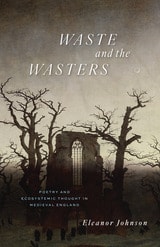
Waste and the Wasters
Poetry and Ecosystemic Thought in Medieval EnglandEleanor Johnson
University of Chicago Press, 2023
While the scale of today’s crisis is unprecedented, environmental catastrophe is nothing new. Waste and the Wasters studies the late Middle Ages, when a convergence of land contraction, soil depletion, climate change, pollution, and plague subsumed Western Europe. In a culture lacking formal scientific methods, the task of explaining and coming to grips with what was happening fell to medieval poets. The poems they wrote used the terms “waste” or “wasters” to anchor trenchant critiques of people’s unsustainable relationships with the world around them and with each other. In this book, Eleanor Johnson shows how poetry helped medieval people understand and navigate the ecosystemic crises—both material and spiritual—of their time.
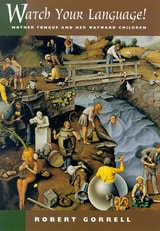
Watch Your Language
Mother Tongue And Her Wayward ChildrenRobert Gorrell
University of Nevada Press, 1994
In this lively, playful celebration of the joys and power of language, Gorrell points to all the signs that show English to be alive and well, and, like any other living thing, constantly evolving. Watch Your Language! covers a wide array of topics of interest to all aficionados of English, from political doublespeak to spelling, from etymology to puns and wordgames. Throughout, Gorrell invites readers to share his love for words.
Ways of Seeing After Dark
Kyle Parry
University of Minnesota Press, 2026
Rethinking darkness through the politics and possibilities of vision
Darkness is widely misunderstood, argues Kyle Parry. We take darkness as the enemy of sight, yet we can’t see without it. We call the worst parts of our lives dark, yet we wouldn’t be here without wombs, skulls, oceans, the moon, and other shadowed places. Ways of Seeing After Dark contends that darkness is not absence but presence, shaping how worlds are sensed, inhabited, and understood. Darkness brings peril, but it is also a fundamental, if increasingly threatened, condition of living together on this planet.
Tracing links between John Berger’s influential Ways of Seeing and his more poetic later writings, Parry recasts contemporary conditions defined by light pollution, digital mediation, and racialized regimes of seeing. In dialogue with artists, critics, and astronomers, Ways of Seeing After Dark examines how fear of darkness is built rather than universal and how such training intersects with broader social structures, including racism and capitalism. Showing how “felt darkness displaces physical darkness” and “brighter nights bring darker days,” Parry reveals the dark as a multifaceted phenomenon with political and perceptual significance, calling for new ways of seeing with and through the night.
Retail e-book files for this title are screen-reader friendly.
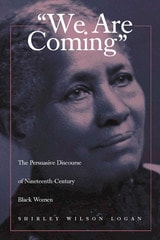
We Are Coming
The Persuasive Discourse of Nineteenth-Century Black WomenShirley Wilson Logan
Southern Illinois University Press, 1999
Shirley Wilson Logan analyzes the distinctive rhetorical features in the persuasive discourse of nineteenth-century black women, concentrating on the public discourse of club and church women from 1880 until 1900.
Logan develops each chapter in this illustrated study around a feature of public address as best exemplified in the oratory of a particular woman speaker of the era. She analyzes not only speeches but also editorials, essays, and letters.
Logan first focuses on the prophetic oratory of Maria Stewart, the first American-born black woman to speak publicly. Turning to Frances Harper, she considers speeches that argue for common interests between divergent communities. And she demonstrates that central to the antilynching rhetoric of Ida Wells is the concept of "presence," or the tactic of enhancing certain selected elements of the presentation.
In her discussion of Fannie Barrier Williams and Anna Cooper, Logan shows that when speaking to white club women and black clergymen, both Williams and Cooper employ what Kenneth Burke called identification. To analyze the rhetoric of Victoria Matthews, she applies Carolyn Miller's modification of Lloyd Bitzer's concept of the rhetorical situation.
Logan also examines the discourse of women associated with the black Baptist women's movement and those participating in college-affiliated conferences.
The book includes an appendix with little-known speeches and essays by Anna Julia Cooper, Selena Sloan Butler, Lucy Wilmot Smith, Mary V. Cook, Adella Hunt Logan, Victoria Earle Matthews, Lucy C. Laney, and Georgia Swift King.

We Are Three Sisters
Self and Family in the Writing of the BrontësDrew Lamonica
University of Missouri Press, 2003
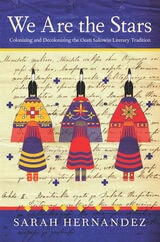
We Are the Stars
Colonizing and Decolonizing the Oceti Sakowin Literary TraditionSarah Hernandez
University of Arizona Press, 2023
Women and land form the core themes of the book, which brings tribal and settler colonial narratives into comparative analysis. Divided into two parts, the first section of the work explores how settler colonizers used the printing press and boarding schools to displace Oceti Sakowin women as traditional culture keepers and culture bearers with the goal of internally and externally colonizing the Dakota, Nakota, and Lakota nations. The second section focuses on decolonization and explores how contemporary Oceti Sakowin writers and scholars have started to reclaim Dakota, Nakota, and Lakota literatures to decolonize and heal their families, communities, and nations.
We Saw the Light
Conversations between New American Cinema and PoetryDaniel Kane
University of Iowa Press, 2009
Drawing on unpublished correspondences and personal interviews with key figures in the innovative poetry and film communities, Daniel Kane’s stunningly erudite and accessible work not only provides a fresh look at avant-garde poetry and film but also encourages readers to rethink the artistic scenes of the 1960s and today. We Saw the Light will reframe the very way we talk about how film influences poetry and force us to think anew about the radical ways in which art is created and in turn influences subsequent work.
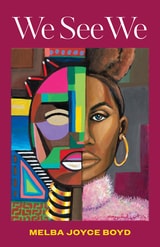
We See We
Melba Joyce Boyd
University of Michigan Press, 2027
Michigan poet laureate Melba Joyce Boyd’s tenth poetry collection, We See We, is a deeply emplaced volume, grounded in Boyd’s hometown of Detroit. The book takes its title from a poem in the collection dedicated to the late photographer, photojournalist, and filmmaker Hugh Grannum, who trained his camera on Black Detroit. Boyd takes a similar approach in this volume, collecting poems “about seeing our collective selves within our interconnected individual lives.” Divided into two sections—Inflexions and Elegies—the poems evoke Detroit’s past and present through works about Romare Bearden at the Detroit Institute of Arts, Idlewild, the 1967 Detroit Rebellion, Aretha Franklin, John Sinclair, and the varied lives of people Boyd knew and loved who demonstrate that you do not have to be famous to have historical impact. As former Michigan poet laureate Nandi Comer writes in the interview that concludes the volume, the poems in this collection are “filled with artists, friends, elders, and collaborators,” making the poems in the collection into “an education in Detroit’s artistic life.”