Results by title
279 books match the query 'Management' and 15 start with w
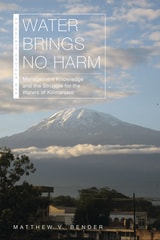
Water Brings No Harm
Management Knowledge and the Struggle for the Waters of KilimanjaroMatthew V. Bender
Ohio University Press, 2019
In Water Brings No Harm, Matthew V. Bender explores the history of community water management on Mount Kilimanjaro in Tanzania. Kilimanjaro’s Chagga-speaking peoples have long managed water by employing diverse knowledge: hydrological, technological, social, cultural, and political. Since the 1850s, they have encountered groups from beyond the mountain—colonial officials, missionaries, settlers, the independent Tanzanian state, development agencies, and climate scientists—who have understood water differently. Drawing on the concept of waterscapes—a term that describes how people “see” water, and how physical water resources intersect with their own beliefs, needs, and expectations—Bender argues that water conflicts should be understood as struggles between competing forms of knowledge.
Water Brings No Harm encourages readers to think about the origins and interpretation of knowledge and development in Africa and the global south. It also speaks to the current global water crisis, proposing a new model for approaching sustainable water development worldwide.
Water Resources
Efficient, Sustainable and Equitable UseWolfram Mauser
Haus Publishing, 2008

Waters of Oregon
A Source Book on Oregon's Water and Water ManagementRick Bastasch
Oregon State University Press, 1998
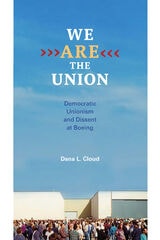
We Are the Union
Democratic Unionism and Dissent at BoeingDana L. Cloud
University of Illinois Press, 2011
We Are the Union is grounded in on-site research and interviews and focuses on the efforts by Unionists for Democratic Change to reform unions from within. Incorporating theory and methods from the fields of organizational communication as well as labor studies, Cloud methodically uncovers and analyzes the goals, strategies, and dilemmas of the dissidents who, while wanting to uphold the ideas and ideals of the union, took up the gauntlet to make it more responsive to workers and less conciliatory toward management, especially in times of economic stress or crisis. Cloud calls for a revival of militant unionism as a response to union leaders' embracing of management and training programs that put workers in the same camp as management, arguing that reform groups should look to the emergence of powerful industrial unions in the United States for guidance on revolutionizing existing institutions and building new ones that truly accommodate workers' needs.

Web Analytics Strategies for Information Professionals
A LITA GuideTabatha American Library Association
American Library Association, 2013
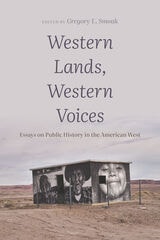
Western Lands, Western Voices
Essays on Public History in the American WestEdited by Gregory E. Smoak
University of Utah Press, 2021
Inspired by the fiftieth anniversary of the University of Utah’s American West Center, the oldest regional studies center in the United States, Western Lands, Western Voices explores the many dimensions of public history. This collection of thirteen essays is rooted in the real-world experiences of the authors and is the first volume to focus specifically on regional public history.
Contributors include tribal government officials, state and federal historians, independent scholars and historical consultants, and academics. Some are distinguished historians of the American West and others are emerging voices that will shape publicly engaged scholarship in the years to come. Among the issues they address are community history and public interpretation, tribal sovereignty, and the importance of historical research for land management. The volume will be indispensable to researchers and general readers interested in museum studies, Native American studies, and public lands history and policy.
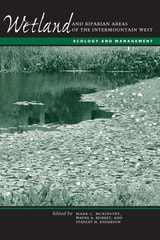
Wetland and Riparian Areas of the Intermountain West
Ecology and ManagementEdited by Mark C. McKinstry, Wayne A. Hubert, and Stanley H. Anderson
University of Texas Press, 2004
Wetlands and riparian areas between the Rocky Mountains and the Sierra Nevada are incredibly diverse and valuable habitats. More than 80 percent of the wildlife species in this intermountain region depend on these wetlands—which account for less than 2 percent of the land area—for their survival. At the same time, the wetlands also serve the water needs of ranchers and farmers, recreationists, vacation communities, and cities. It is no exaggeration to call water the "liquid gold" of the West, and the burgeoning human demands on this scarce resource make it imperative to understand and properly manage the wetlands and riverine areas of the Intermountain West.
This book offers land managers, biologists, and research scientists a state-of-the-art survey of the ecology and management practices of wetland and riparian areas in the Intermountain West. Twelve articles examine such diverse issues as laws and regulations affecting these habitats, the unique physiographic features of the region, the importance of wetlands and riparian areas to fish, wildlife, and livestock, the ecological function of these areas, their value to humans, and the methods to evaluate these habitats. The authors also address the human impacts on the land from urban and suburban development, mining, grazing, energy extraction, recreation, water diversions, and timber harvesting and suggest ways to mitigate such impacts.
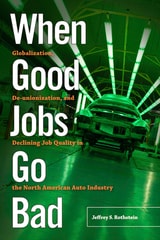
When Good Jobs Go Bad
Globalization, De-unionization, and Declining Job Quality in the North American Auto IndustryRothstein, Jeffrey S
Rutgers University Press, 2016
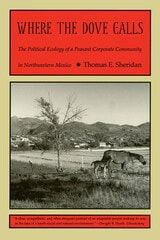
Where the Dove Calls
The Political Ecology of a Peasant Corporate Community in Northwestern MexicoThomas E. Sheridan
University of Arizona Press, 1988
Sheridan has written an ethnography of resource control, one that weds the approaches of political economy and cultural ecology in order to focus upon both the external linkages and internal adaptations that shape three peasant corporate communities. He examines the ecological and economic constraints which scarce and necessary resources place upon households in Cucurpe, and then investigates why many such households have formed corporate communities to insure their access to resources beyond their control. Finally, he identifies the class differences that exist within the corporate communities as well as between members of those organizations and the private ranchers who surround them.
Where the Dove Calls (the meaning of "Cucurpe" in the language of the Opata Indians), an important contribution to peasant studies, reveals the household as the basic unit of Cucurpe society. By viewing Cucurpe's corporate communities as organizations of fiercely independent domestic units rather than as expressions of communal solidarity, Sheridan shows that peasants are among the exploiters as well as the exploited. Cucurpe¤os struggle to maintain the autonomy of their households even as they join together to protect corporate grazing lands and irrigation water. Any attempt to weaken or destroy that independence is met with opposition that ranges from passive resistance to violence.

Whither College Sports
Amateurism, Athlete Safety, and Academic IntegrityAndrew Zimbalist
Rutgers University Press, 2022

Who Owns America?
Social Conflict over Property RightsEdited by Harvey M. Jacobs
University of Wisconsin Press, 1998
Land ownership by individual citizens is a cornerstone of American heritage and a centerpiece of the American dream. Thomas Jefferson called it the key to our success as a democracy. Yet the question of who owns America not only remains unanswered but is central to a fundamental conflict that can pit private property rights advocates against government policymakers and environmentalists.
Land use authority Harvey M. Jacobs has gathered a provocative collection of perspectives from eighteen contributors in the fields of law, history, anthropology, economics, sociology, forestry, and environmental studies. Who Owns America? begins with the popular view of land ownership as seen though the television show Bonanza! It examines public regulation of private land; public land management; the roles culture and ethnic values play in land use; and concludes with Jacobs’ title essay.
Who Owns America? is a powerful and illuminating exploration of the very terrain that makes us Americans. Its broad set of theoretical and historical perspectives will fascinate historians, environmental activists, policy makers, and all who care deeply about the land we share.

Why Are You Here and Not Somewhere Else
Selected EssaysHarry L. Davis
University of Chicago Press, 2013
On the occasion of the fiftieth anniversary of Davis’s arrival at the Booth School, Why Are You Here and Not Somewhere Else offers seven essays by Davis that offer new perspectives and contribute to a more well-rounded understanding of business education. Adapted from convocation addresses given by Davis at different points during his five-decade career, the essays encapsulate the spirit of business education at the Booth School, while at the same time providing encouraging, invaluable wisdom for those about to embark on business careers or take on leadership positions. Topics addressed range from the role of the university in the business world to the crucial role of intangible values in shaping one’s career.
Davis has been a formative influence on more executives and leaders than perhaps any other business educator living today, and Why Are You Here and Not Somewhere Else provides a unique and valuable perspective on how leaders in business and elsewhere can shape and define their careers in new ways.
Without Masters
Autogestión, Anarchist Ethics, and Mexico City PunkLivia K. Stone
Duke University Press, 2026
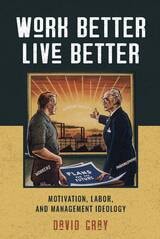
Work Better, Live Better
Motivation, Labor, and Management IdeologyDavid A. Gray
University of Massachusetts Press, 2020
In the United States, a strong work ethic has long been upheld as a necessity, and tributes to motivation abound—from the motivational posters that line the walls of the workplace to the self-help gurus who draw in millions of viewers online. Americans are repeatedly told they can achieve financial success and personal well-being by adopting a motivated attitude toward work. But where did this obsession come from? And whose interests does it serve?
Work Better, Live Better traces the rise of motivational rhetoric in the workplace across the expanse of two world wars, the Great Depression, and the Cold War. Beginning in the early twentieth century, managers recognized that force and coercion—the traditional tools of workplace discipline—inflamed industrial tensions, so they sought more subtle means of enlisting workers' cooperation. David Gray demonstrates how this “motivational project” became a highly orchestrated affair as managers and their allies deployed films, posters, and other media, and drew on the ideas of industrial psychologists and advertising specialists to advance their quests for power at the expense of worker and union interests.
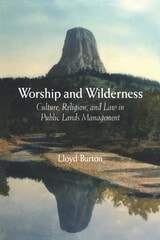
Worship and Wilderness
Culture, Religion, and Law in Public Lands ManagementLloyd Burton
University of Wisconsin Press, 2002
Questions about land use, conservation, and preservation—already so perplexing and contentious—take on a new complexity and greater urgency when the land in question is understood as sacred. This is a view increasingly held, as adherents of mainstream religions come to recognize what indigenous peoples knew centuries ago—that the sacred inheres in nature itself. What such a trend means and how it involves the forces of culture, religion, and constitutional law (especially First Amendment clauses concerning the free exercise of religion) are considered with a remarkable breadth and depth of understanding in this important new work.
Drawing on case studies of national parks and monuments, national forests, and other public lands and resources, Lloyd Burton gives a clear and comprehensive account of how the intertwining influences of culture, religion, and law have affected the management of public lands and resources in the recent past and how they may do so in the future. In a unique and unprecedented way, his book weaves together teachings on nature and the sacred among indigenous and immigrant culture groups in the United States; the relevant constitutional history of religion and government action; and analysis of contemporary conflicts over culture, religion, and public lands management. As such, Worship and Wilderness is essential reading not only for public land managers and environmental policy makers but also for anyone interested in the growing significance of religious interests in the use of resources that constitute our national commons and our common natural heritage.