Results by title
50 books match the query 'Marine Biology' and 4 start with w
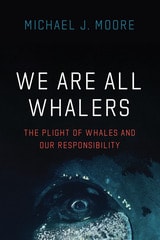
We Are All Whalers
The Plight of Whales and Our ResponsibilityMichael J. Moore
University of Chicago Press, 2021
Relating his experiences caring for endangered whales, a veterinarian and marine scientist shows we can all share in the salvation of these imperiled animals.
The image most of us have of whalers includes harpoons and intentional trauma. Yet eating commercially caught seafood leads to whales’ entanglement and slow death in rope and nets, and the global shipping routes that bring us readily available goods often lead to death by collision. We—all of us—are whalers, marine scientist and veterinarian Michael J. Moore contends. But we do not have to be.
Drawing on over forty years of fieldwork with humpback, pilot, fin, and, in particular, North Atlantic right whales—a species whose population has declined more than 20 percent since 2017—Moore takes us with him as he performs whale necropsies on animals stranded on beaches, in his independent research alongside whalers using explosive harpoons, and as he tracks injured whales to deliver sedatives. The whales’ plight is a complex, confounding, and disturbing one. We learn of existing but poorly enforced conservation laws and of perennial (and often failed) efforts to balance the push for fisheries profit versus the protection of endangered species caught by accident.
But despite these challenges, Moore’s tale is an optimistic one. He shows us how technologies for ropeless fishing and the acoustic tracking of whale migrations make a dramatic difference. And he looks ahead with hope as our growing understanding of these extraordinary creatures fuels an ever-stronger drive for change.
For more information on Moore’s book and research, please visit his webpage at the Woods Hole Oceanographic Institution.
We Are All Whalers
The Plight of Whales and Our ResponsibilityMichael J. Moore
University of Chicago Press, 2021
Relating his experiences caring for endangered whales, a veterinarian and marine scientist shows we can all share in the salvation of these imperiled animals.
The image most of us have of whalers includes harpoons and intentional trauma. Yet eating commercially caught seafood leads to whales’ entanglement and slow death in rope and nets, and the global shipping routes that bring us readily available goods often lead to death by collision. We—all of us—are whalers, marine scientist and veterinarian Michael J. Moore contends. But we do not have to be.
Drawing on over forty years of fieldwork with humpback, pilot, fin, and, in particular, North Atlantic right whales—a species whose population has declined more than 20 percent since 2017—Moore takes us with him as he performs whale necropsies on animals stranded on beaches, in his independent research alongside whalers using explosive harpoons, and as he tracks injured whales to deliver sedatives. The whales’ plight is a complex, confounding, and disturbing one. We learn of existing but poorly enforced conservation laws and of perennial (and often failed) efforts to balance the push for fisheries profit versus the protection of endangered species caught by accident.
But despite these challenges, Moore’s tale is an optimistic one. He shows us how technologies for ropeless fishing and the acoustic tracking of whale migrations make a dramatic difference. And he looks ahead with hope as our growing understanding of these extraordinary creatures fuels an ever-stronger drive for change.
For more information on Moore’s book and research, please visit his webpage at the Woods Hole Oceanographic Institution.
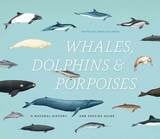
Whales, Dolphins, and Porpoises
A Natural History and Species GuideEdited by Annalisa Berta
University of Chicago Press, 2015
Opening with an accessible rundown of cetacean biology—including the most recent science on feeding, mating, and communication—Whales, Dolphins, and Porpoises then presents species-specific natural history on a range of topics, from anatomy and diet to distribution and conservation status. Each entry also includes original drawings of the species and its key identifiers, such as fin shape and color, tooth shape, and characteristic markings as they would appear both above and below water—a feature unique to this book.
Figures of myth and—as the debate over hunting rages on—figures of conflict since long before the days of Moby-Dick, whales, dolphins, and porpoises are also ecologically important and, in many cases, threatened. Written for general enthusiasts, emergent cetacean fans, and biologists alike, this stunning, urgently needed book will serve as the definitive guide for years to come.
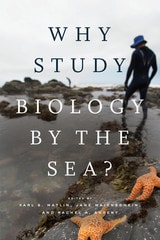
Why Study Biology by the Sea?
Edited by Karl S. Matlin, Jane Maienschein, and Rachel A. Ankeny
University of Chicago Press, 2020
From the Stazione Zoologica in Naples to the Marine Biological Laboratory in Woods Hole, the Amoy Station in China, or the Misaki Station in Japan, students and researchers at seaside research stations have long visited the ocean to investigate life at all stages of development and to convene discussions of biological discoveries. Exploring the history and current reasons for study by the sea, this book examines key people, institutions, research projects, organisms selected for study, and competing theories and interpretations of discoveries, and it considers different ways of understanding research, such as through research repertoires. A celebration of coastal marine research, Why Study Biology by the Sea? reveals why scientists have moved from the beach to the lab bench and back.