Results by title
161 books match the query 'Material culture' and 6 start with w
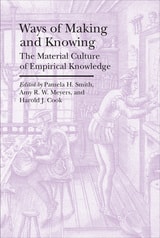
Ways of Making and Knowing
The Material Culture of Empirical KnowledgeEdited by Pamela H. Smith, Amy R. W. Meyers, and Harold J. Cook
Bard Graduate Center, 2017
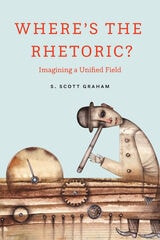
Where's the Rhetoric?
Imagining a Unified FieldS. Scott Graham
The Ohio State University Press, 2020
Building on this foundation, Graham then argues for a more unified approach to contemporary rhetorical inquiry—one that eschews disciplinary demarcations between rhetoric’s various subareas. Specifically, Graham uses his unified field theory to explore 1) the rise of the “tweetorial” as a parascientific genre, 2) inventional practices in new media design, 3) statistical approaches to understanding biomedical discourse, and 4) American electioneering rhetorics. The book overall demonstrates how seemingly disparate intellectual approaches within rhetoric can be made to speak productively to one another in the pursuit of shared scholarly goals around questions of genre, media, and political discourse—thereby providing a foundation for imagining a more unified field.
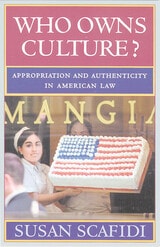
Who Owns Culture?
Appropriation and Authenticity in American LawScafidi, Susan
Rutgers University Press, 2005
While claims of authenticity or quality may prompt some consumers to seek cultural products at their source, the communities of origin are generally unable to exclude copyists through legal action. Like other works of unincorporated group authorship, cultural products lack protection under our system of intellectual property law. But is this legal vacuum an injustice, the lifeblood of American culture, a historical oversight, a result of administrative incapacity, or all of the above?
Who Owns Culture? offers the first comprehensive analysis of cultural authorship and appropriation within American law. From indigenous art to Linux, Susan Scafidi takes the reader on a tour of the no-man's-land between law and culture, pausing to ask: What prompts us to offer legal protection to works of literature, but not folklore? What does it mean for a creation to belong to a community, especially a diffuse or fractured one? And is our national culture the product of Yankee ingenuity or cultural kleptomania?
Providing new insights to communal authorship, cultural appropriation, intellectual property law, and the formation of American culture, this innovative and accessible guide greatly enriches future legal understanding of cultural production.
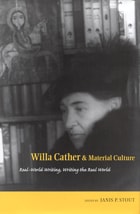
Willa Cather and Material Culture
Real-World Writing, Writing the Real WorldEdited by Janis P. Stout
University of Alabama Press, 2004
Willa Cather and Material Culture is a collection of 11 new essays that tap into a recent and resurgent interest among Cather scholars in addressing her work and her career through the lens of cultural studies. One of the volume's primary purposes is to demonstrate the extent to which Cather did participate in her culture and to correct the commonplace view of her as a literary connoisseur set apart from her times.
The contributors explore both the objects among which Cather lived and the objects that appear in her writings, as well as the commercial constraints of the publishing industry in which her art was made and marketed. Essays address her relationship to quilts both personally and as symbols in her work; her contributions to domestic magazines such as Home Monthly and Woman's Home Companion; the problematic nature of Hollywood productions of her work; and her efforts and successes as a businesswoman. By establishing the centrality of material matters to her writing, these essays contribute to the reclaiming of Cather as a modernist and highlight the significance of material culture, in general, to the study of American literature.
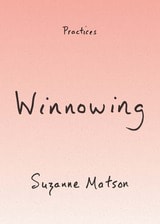
Winnowing
Suzanne Matson
Duke University Press, 2026
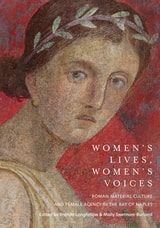
Women's Lives, Women's Voices
Roman Material Culture and Female Agency in the Bay of NaplesEdited by Brenda Longfellow and Molly Swetnam-Burland
University of Texas Press, 2021
Literary evidence is often silent about the lives of women in antiquity, particularly those from the buried cities of Pompeii and Herculaneum. Even when women are considered, they are often seen through the lens of their male counterparts. In this collection, Brenda Longfellow and Molly Swetnam-Burland have gathered an outstanding group of scholars to give voice to both the elite and ordinary women living on the Bay of Naples before the eruption of Vesuvius.
Using visual, architectural, archaeological, and epigraphic evidence, the authors consider how women in the region interacted with their communities through family relationships, businesses, and religious practices, in ways that could complement or complicate their primary social roles as mothers, daughters, and wives. They explore women-run businesses from weaving and innkeeping to prostitution, consider representations of women in portraits and graffiti, and examine how women expressed their identities in the funerary realm. Providing a new model for studying women in the ancient world, Women’s Lives, Women’s Voices brings to light the day-to-day activities of women of all classes in Pompeii and Herculaneum.