Results by title
1488 books match the query 'Media Studies' and 49 start with w
War Games
Jonna Eagle
Rutgers University Press, 2020
This Quick Take considers how various war games and simulations shape the ways we imagine war. Paradoxically, these games grant us a sense of mastery and control as we strategize and scrutinize the enemy, yet also allow us the thrilling sense of being immersed in the carnage and chaos of battle. But as simulations of war become more integrated into both popular culture and military practice, how do they shape our apprehension of the traumatic realities of warfare?
Covering everything from chess to football, from Saving Private Ryan to American Sniper, and from Call of Duty to drone interfaces, War Games is an essential guide for anyone seeking to understand the militarization of American culture, offering a compact yet comprehensive look at how we play with images of war.
War Stars
The Superweapon and the American ImaginationH. Bruce Franklin
University of Massachusetts Press, 2008
In this new and expanded edition of an already classic work, H. Bruce Franklin brings the epic story of the superweapon and the American imagination into the ominous twenty-first century, demonstrating its continuing importance both to comprehending our current predicament and to finding ways to escape from it.
Sweeping through two centuries of American culture and military history, Franklin traces the evolution of superweapons from Robert Fulton's eighteenth-century submarine through the strategic bomber, atomic bomb, and Star Wars to a twenty-first century dominated by “weapons of mass destruction,” real and imagined. Interweaving culture, science, technology, and history, he shows how and why the American pursuit of the ultimate defensive weapon—guaranteed to end all war and bring universal triumph to American ideals—has led our nation and the world into an epoch of terror and endless war.
War in Pieces
"War on Terror" Media and the Fracturing of American IdentityRenée Laurel Pastel
Rutgers University Press, 2027
War in Pieces considers media representations of the first phase of the “War on Terror,” set between 2001 and 2013. The book argues that the central figures around which narratives of the conflicts cohered—the war journalist, the active-duty service member, the veteran, and the military family—served to mask the loss of the myth of a unified American national identity and embodied the negotiation of cultural anxieties. Offering a theory of narrative figuration that draws into conversation repetitions and differences across media forms (fiction and nonfiction films, television shows, and online videos), this book breaks down how these figures contributed to a continued sense of unified national identity even as different audiences came away with divergent understandings. This book frames these questions in terms of how US media packaged the “War on Terror” for future cultural memory even as the conflicts continued.
War without Bodies
Framing Death from the Crimean to the Iraq WarMartin Danahay
Rutgers University Press, 2022
Analyzing poetry, photographs, video and video games the book illustrates the ways in which war was framed in these different historical contexts. It examines the cultural assumptions that influenced the reception of images of war and discusses how death and damage to bodies was made acceptable to the public. War Without Bodies aims to heighten awareness of how acceptance of war is coded into texts and how active resistance to such hidden messages can help prevent future unnecessary wars.
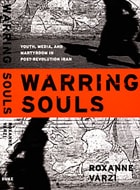
Warring Souls
Youth, Media, and Martyrdom in Post-Revolution IranRoxanne Varzi
Duke University Press, 2006
Highlighting trends that belie the government’s claim that Islamic values have taken hold—including rising rates of suicide, drug use, and sex outside of marriage—Varzi argues that by concentrating on images and the performance of proper behavior, the government’s campaign to produce model Islamic citizens has affected only the appearance of religious orthodoxy, and that the strictly religious public sphere is partly a mirage masking a profound crisis of faith among many Iranians. Warring Souls is a powerful account of contemporary Iran made more vivid by Varzi’s inclusion of excerpts from the diaries she maintained during her research and from journal entries written by Iranian university students with whom she formed a study group.

Warscapes
Mediating Militarized EnvironmentsCortland Rankin
Rutgers University Press, 2026
What do we see when we look at a battlefield? How do we come to understand environments as battlefields in the first place? What happens to our perception of war when we focus on the physical spaces of conflict? Warscapes is the first collection to pursue answers to such questions by considering the relationship between war, environment, and media along three lines: imagined geographies of control that prefigure environments as spaces of war; representations of resistance to occupation and ecocidal violence; and elemental reframings of archives and cultural memories of war. This book offers novel perspectives on historical conflict environments while also examining how hypothetical spaces of conflict are imagined. Deploying theoretical perspectives gleaned from film and media studies, ecocriticism, environmental history, urban studies, and postcolonial/decolonial studies, among others, authors highlight an international spectrum of 21st-century fiction films and television series, documentaries, and video installations that challenge how we look at war.
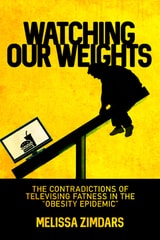
Watching Our Weights
The Contradictions of Televising Fatness in the “Obesity Epidemic”Zimdars, Melissa
Rutgers University Press, 2019
Watching Our Weights explores the competing and contradictory fat representations on television that are related to weight-loss and health, medicalization and disease, and body positivity and fat acceptance. While television—especially reality television—is typically understood to promote individual self-discipline and expert interventions as necessary for transforming fat bodies into thin bodies, fat representations and narratives on television also create space for alternative as well as resistant discourses of the body. Melissa Zimdars thus examines the resistance inherent within TV representations and narratives of fatness as a global health issue, the inherent and overt resistance found across stories of medicalized fatness, and programs that actively avoid dieting narratives in favor of less oppressive ways of thinking about the fat body. Watching Our Weights weaves together analyses of media industry lore and decisions, communication and health policies, medical research, activist projects, popular culture, and media texts to establish both how television shapes our knowledge of fatness and how fatness helps us better understand contemporary television.
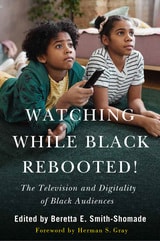
Watching While Black Rebooted!
The Television and Digitality of Black AudiencesBeretta E. Smith-Shomade
Rutgers University Press, 2024
Chapters rethink such historically significant programs as Roots and Underground, such seemingly innocuous programs as Soul Food, and such contemporary and culturally complicated programs as Being Mary Jane and Atlanta. The book makes a case for the centrality of these programs while always recognizing the racial dynamics that continue to shape Black representation on the small screen. Painting a decidedly introspective portrait across forty years of Black television, Watching While Black Rebooted sheds much-needed light on under examined demographics, broadens common audience considerations, and gives deference to the preferences of audiences and producers of Black-targeted programming.
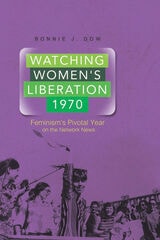
Watching Women's Liberation, 1970
Feminism's Pivotal Year on the Network NewsBonnie J. Dow
University of Illinois Press, 2014
In Watching Women's Liberation, 1970: Feminism's Pivotal Year on the Network News, Bonnie J. Dow uses case studies of key media events to delve into the ways national TV news mediated the emergence of feminism's second wave. First legitimized as a big story by print media, the feminist movement gained broadcast attention as the networks’ eagerness to get in on the action was accompanied by feminists’ efforts to use national media for their own purposes. Dow chronicles the conditions that precipitated feminism's new visibility and analyzes the verbal and visual strategies of broadcast news discourses that tried to make sense of the movement.
Groundbreaking and packed with detail, Watching Women's Liberation, 1970 shows how feminism went mainstream--and what it gained and lost on the way.
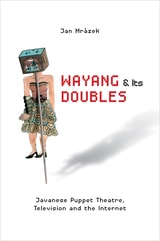
Wayang and Its Doubles
Javanese Puppet Theatre, Television and the InternetJan Mrázek
National University of Singapore Press, 2019
This book explores the ways two complex forms of media coexist and meet as well as haunt and invade each other. It looks at performance aesthetics and the technicalities of television production, as well as issues of time, space, light, place, and movement. It compares audience experiences of live and televised performances, and highlights the collaboration and struggle between performers and television producers. Interviews with performers from both sides are brought into a larger conversation on media and technology, one that includes ideas from Karl Marx, Martin Heidegger, Maurice Merleau-Ponty, Jacques Derrida, Paul Virilio, and James Siegel. The book also looks ahead to new formats that have the potential to disrupt in ways never imagined: the worlds of streaming and social media.
We Are Civic Media
Sangita Shresthova, Dan Sinker, Pratik Nyaupane, Sophie Madej, and Colin Maclay
Northwestern University Press, 2025
“Civic media” is the use of contemporary technologies to connect communities, inspire action, build civic capacity, and sustain social change efforts. Written by artists, creators, storytellers, organizers, and others working at the intersections of technology, social justice, and culture, this book summons civic media through the lived experiences of its contributors.
Latoya Peterson delves into the therapeutic power of gaming; Akilah Hughes discusses identity and community through the lens of her campaign to change her high school's racist mascot; and Tyree Boyd-Pates emphasizes the potential power of museum curation to challenge power dynamics and bridge digital and physical realms. Through the experiences of these grassroots practitioners and many others, We Are Civic Media offers accessible insights for those interested in understanding, respecting, and practicing civic media.
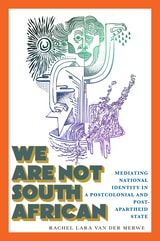
We Are Not South African
Mediating National Identity in a Postcolonial and Postapartheid StateRachel Lara van der Merwe
Rutgers University Press, 2026
We Are Not South African explores how national identity functions as a colonial tool of communication, control, and power. Author Rachel Lara van der Merwe examines how humans and the planet are integrally shaped by the idea of the nation and speculates on how different sociopolitical imaginaries, instead of the nation, could inform ways of being-together in the world.
Linking national identity to colonialism, the book broadens the idea of the nation to include its impact on all forms of life, human and more-than-human. Van der Merwe builds her argument on three central observations: that nations are made up of conflicting and fractured imaginaries, not unified, cohesive ones; the nation is divisive by nature, tracing back to its colonial origins; and the nation, along with the state, exploits both humans and more-than-humans. In order to build a more just and sustainable planetary society, she argues, liberation from such colonial formations is vital. In response, the book asks, How could we reimagine how we organize our societies through values of relationality and mutual care rather than rigid borders? What sociopolitical imaginaries do we need, or already possess, that might inform new configurations of community?
We Can Do Better
Feminist Manifestos for Media and CommunicationLinda Steiner
Rutgers University Press, 2025

We Gotta Get Out of This Place
The Soundtrack of the Vietnam WarDoug Bradley
University of Massachusetts Press, 2015
Rolling Stone's #1 Music Book of 2015
For a Kentucky rifleman who spent his tour trudging through Vietnam's Central Highlands, it was Nancy Sinatra's “These Boots Are Made for Walkin'.” For a “tunnel rat” who blew smoke into the Viet Cong's underground tunnels, it was Jimi Hendrix's “Purple Haze.” For a Black Marine distraught over the assassination of Martin Luther King Jr., it was Aretha Franklin's “Chain of Fools.” And for countless other Vietnam vets, it was “I Feel Like I'm Fixin' to Die,” “Who'll Stop the Rain,” or the song that gives this book its title.
In We Gotta Get Out of This Place, Doug Bradley and Craig Werner place popular music at the heart of the American experience in Vietnam. They explore how and why U.S. troops turned to music as a way of connecting to each other and the World back home and of coping with the complexities of the war they had been sent to fight. They also demonstrate that music was important for every group of Vietnam veterans—black and white, Latino and Native American, men and women, officers and “grunts”—whose personal reflections drive the book's narrative. Many of the voices are those of ordinary soldiers, airmen, seamen, and marines. But there are also “solo” pieces by veterans whose writings have shaped our understanding of the war—Karl Marlantes, Alfredo Vea, Yusef Komunyakaa, Bill Ehrhart, Arthur Flowers—as well as songwriters and performers whose music influenced soldiers' lives, including Eric Burdon, James Brown, Bruce Springsteen, Country Joe McDonald, and John Fogerty. Together their testimony taps into memories—individual and cultural—that capture a central if often overlooked component of the American war in Vietnam.

WeChat and the New Chinese American
Jingsi Christina Wu
Temple University Press, 2027
The social media platform WeChat has had a subtle but meaningful influence within the Chinese immigrant community in America. It serves as a channel for dispensing political information and keeping this minority racial group connected.
WeChat and the New Chinese American examines how and why the platform, which originated in China and followed many recent immigrants to their new life in America, has become an indispensable source of communication, community access, and interconnection not just between immigrants, but also with China and the rest of the Chinese diaspora.
Jingsi Christina Wu conducts interviews with upper-middle-class Chinese immigrants who settled in America after 2000 to track general trends in the larger WeChat information and opinion environment, including its rise as a source of political discourse during the 2016 election and beyond and its impact on U.S.-China relations. In doing so, she tells a complicated, evolving story about Chinese and Chinese American populations, the changing media landscape, and the ongoing social division in the Chinese immigrant community as well as in the larger American society.
Web as History
Using Web Archives to Understand the Past and the PresentEdited by Niels Brügger and Ralph Schroeder
University College London, 2017

Well-Being and Creative Careers
What Makes You Happy Can Also Make You SickMark Deuze
Intellect Books, 2025
The media and creative industries thrive on passion, but that passion often comes at a cost. Behind the glamour of journalism, filmmaking, games, music, advertising, and online content creation lies a growing crisis—one of burnout, anxiety, substance abuse, and exhaustion. Why do so many creative professionals report feeling both deeply fulfilled and profoundly unwell?
Mark Deuze investigates the systemic issues that make creative work both exhilarating and unsustainable. Drawing on extensive research and in-depth interviews with media professionals, he notes the hidden downsides of doing what you love and offers a candid analysis of how workplace structures, high workloads, and perceived injustices contribute to mental and physical distress.
But this book is not just about what’s broken; it’s about what can be done. Deuze provides a roadmap for rethinking the culture of creative industries and offers strategies for balancing passion with sustainability. A practical resource for media scholars and those navigating the highs and lows of a creative career, this work challenges us to imagine a healthier future for our labor of love.
Well-Being and Mental Health in the Gig Economy
Policy Perspectives on PrecaritySally-Anne Gross, George Musgrave and Laima Janciute
University of Westminster Press, 2018
A response is needed to the numerous issues spurred by the expansion of the gig economy, where flexible patterns of employment prevail in contrast to permanent jobs. In this context of the exponential growth of the digital economy and underlying business models the largest nationwide study of its kind into the impact of the working conditions in the UK music industry ‘Can Music Make You Sick?’ has been conducted by MusicTank/University of Westminster.
This research suggests the need to consider the future of work not only from an economic or employment law perspective but from a mental health one too. What are the psychological implications of precarious work and how are factors such as financial instability, the feedback economy and personal relationships reflected in mental health outcomes or connected to the business relationships most musicians and other gig economy participants work under?
Authors Sally-Anne Gross, George Musgrave and Laima Janciute consider which policy measures may help or harm gig economy workers including the taxation of self-employed workers, a universal basic income, education around mental health issues and access to mental health support.
What Comes after Entanglement?
Activism, Anthropocentrism, and an Ethics of ExclusionEva Haifa Giraud
Duke University Press, 2019
What Is Happening to News
The Information Explosion and the Crisis in JournalismJack Fuller
University of Chicago Press, 2010
Across America, newspapers that have defined their cities for over a century are rapidly failing, their circulations plummeting even as opinion-soaked web outlets like the Huffington Post thrive. Meanwhile, nightly news programs shock viewers with stories of horrific crime and celebrity scandal, while the smug sarcasm and shouting of pundits like Glenn Beck and Keith Olbermann dominate cable television. Is it any wonder that young people are turning away from the news entirely, trusting comedians like Jon Stewart as their primary source of information on current events?
In the face of all the problems plaguing serious news, What Is Happening to News explores the crucial question of how journalism lost its way—and who is responsible for the ragged retreat from its great traditions. Veteran editor and newspaperman Jack Fuller locates the surprising sources of change where no one has thought to look before: in the collision between a revolutionary new information age and a human brain that is still wired for the threats faced by our prehistoric ancestors. Drawing on the dramatic recent discoveries of neuroscience, Fuller explains why the information overload of contemporary life makes us dramatically more receptive to sensational news, while rendering the staid, objective voice of standard journalism ineffective. Throw in a growing distrust of experts and authority, ably capitalized on by blogs and other interactive media, and the result is a toxic mix that threatens to prove fatal to journalism as we know it.
For every reader troubled by what has become of news—and worried about what the future may hold—What Is Happening to News not only offers unprecedented insight into the causes of change but also clear guidance, strongly rooted in the precepts of ethical journalism, on how journalists can adapt to this new environment while still providing the information necessary to a functioning democracy.
What Music Did
The Story of Numerocracy in the WestTony Conrad. Edited by Patrick Nickleson
University of Michigan Press, 2026
Throughout the book, readers encounter scenes from over two thousand years of history, mathematics, and music: Pythagoras using pebbles to articulate didactic number games to his disciples; Galileo fretting a hill and listening with a musician’s ear to calculate the rate of acceleration under gravity; Rameau trapping Western music in a five-limit tuning system, and what could have been if he were more adept with numbers. Even when drawing on classical sources to explore canonical figures like Saint Augustine, What Music Did offers idiosyncratic critical insights that highlight our ongoing cultural reverence when answers result in simple whole number ratios like 3:2, 4:3, or 5:4. What Music Did is Tony Conrad’s extended indictment of music’s role, from the Pythagoreans to the twentieth century, in upholding the use of number as a clandestine and circumscribed armature of power.
What Philosophy Wants from Images
D. N. Rodowick
University of Chicago Press, 2017
Rodowick here explores work by artists such as Ken Jacobs, Ernie Gehr, Victor Burgin, Harun Farocki, and others—artists who are creating forms that express a new historical consciousness of images. These forms acknowledge a complex relationship to the disappearing past even as they point toward new media that will challenge viewers’ confidence in what the images they see are or are becoming. What philosophy wants from images, Rodowick shows, is to renew itself conceptually through deep engagement with new forms of aesthetic experience.

What We Teach When We Teach DH
Digital Humanities in the ClassroomBrian Croxall
University of Minnesota Press, 2023
Exploring how DH shapes and is in turn shaped by the classroom
How has the field of digital humanities (DH) changed as it has moved from the corners of academic research into the classroom? And how has our DH praxis evolved through interactions with our students? This timely volume explores how DH is taught and what that reveals about the field of DH. While institutions are formally integrating DH into the curriculum and granting degrees, many instructors are still almost as new to DH as their students. As colleagues continue to ask what digital humanities is, we have the opportunity to answer them in terms of how we teach DH.
The contributors to What We Teach When We Teach DH represent a wide range of disciplines, including literary and cultural studies, history, art history, philosophy, and library science. Their essays are organized around four critical topics at the heart of DH pedagogy: teachers, students, classrooms, and collaborations. This book highlights how DH can transform learning across a vast array of curricular structures, institutions, and education levels, from high schools and small liberal arts colleges to research-intensive institutions and postgraduate professional development programs.
Contributors: Kathi Inman Berens, Portland State U; Jing Chen, Nanjing U; Lauren Coats, Louisiana State U; Scott Cohen, Stonehill College; Laquana Cooke, West Chester U; Rebecca Frost Davis, St. Edward’s U; Catherine DeRose; Quinn Dombrowski, Stanford U; Andrew Famiglietti, West Chester U; Jonathan D. Fitzgerald, Regis College; Emily Gilliland Grover, Notre Dame de Sion High School; Gabriel Hankins, Clemson U; Katherine D. Harris, San José State U; Jacob Heil, Davidson College; Elizabeth Hopwood, Loyola U Chicago; Hannah L. Jacobs, Duke U; Alix Keener, Stanford U; Alison Langmead, U of Pittsburgh; Sheila Liming, Champlain College; Emily McGinn, Princeton U; Nirmala Menon, Indian Institute of Technology; James O’Sullivan, U College Cork; Harvey Quamen, U of Alberta; Lisa Marie Rhody, CUNY Graduate Center; Kyle Roberts, Congregational Library and Archives; W. Russell Robinson, Alabama State U; Chelcie Juliet Rowell, Tufts U; Dibyadyuti Roy, U of Leeds; Asiel Sepúlveda, Simmons U; Andie Silva, York College, CUNY; Victoria Szabo, Duke U; Lik Hang Tsui, City U of Hong Kong; Annette Vee, U of Pittsburgh; Brandon Walsh, U of Virginia; Kalle Westerling, The British Library; Kathryn Wymer, North Carolina Central U; Claudia E. Zapata, UCLA; Benjun Zhu, Peking U.
Retail e-book files for this title are screen-reader friendly.
What Were They Thinking?
Crisis Communication: The Good, the Bad, and the Totally CluelessSteve Adubato, Ph.D.
Rutgers University Press, 2008
Nationally recognized communication coach and four-time Emmy Awardûwinning broadcaster Steve Adubato has been teaching, writing, and thinking about comm¡unication, leadership, and crisis communication for nearly two decades. In What Were They Thinking? Adubato examines twenty-two controversial and complex public relations and media mishaps, many of which were played out in public. Among cases and people discussed are:
- The Johnson & Johnson Tylenol scare: Perhaps the best crisis management ever
- Don Imus: Sometimes saying "sorry" is too little too late
- Former Attorney General Alberto Gonzales: Authority does not put you above questioning
- Bill O'Reilly: Know when to stop defending yourself and save face
- Former EPA Administrator Christie Whitman: Proof that your written words can come back to haunt you
- Hurricane Katrina: A natural disaster that led to a larger governmental disaster
- The Catholic Church's pedophilia scandal: Denial won't get rid of the skeletons in your closet
Arranged in short chapters detailing each case individually, the book provides a brief history of the topics and answers the questions: Who got it right? Who got it wrong? What can the rest of us learn from them?
When Biometrics Fail
Gender, Race, and the Technology of IdentityShoshana Amielle Magnet
Duke University Press, 2011
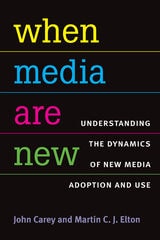
When Media Are New
Understanding the Dynamics of New Media Adoption and UseJohn Carey and Martin C. J. Elton
University of Michigan Press, 2010
"John Carey and Martin Elton are among the most skilled and insightful researchers studying the dynamic changes in technology and the impacts on consumer attitudes and behaviors. Their comprehensive and actionable observations make this a must read for anyone interested in understanding the current (and future) media environment."
---Alan Wurtzel, President, Research and Media Development, NBC Universal
"When Media Are New should be read by every media manager faced with disruptive change brought on by new technology. The book transcends the fashionable topics and themes that are here today and gone tomorrow and instead places emphasis on those areas of research and implementation where fatal mistakes are made. They capture something universal, and therefore highly useful, by stripping away the hype and focusing relentlessly on consumers and the ways they adopt or fail to adopt new media products and technologies into their lives."
---Martin Nisenholtz, Senior Vice President, Digital Operations, The New York Times Company
"The burgeoning development of the Internet has deflected attention from a wider history of new media innovations that has shaped its success. John Carey and Martin Elton demonstrate that earlier initiatives to launch videophones, two-way interactive cable systems, videotext and other media innovations can teach us much about the present state and future course of information and communication technologies. This is a key reference on the new media, and must reading for students of the Internet---the platform for continuing the new media revolution."
---Professor William H. Dutton, Director, Oxford Internet Institute, University of Oxford
The world of communication media has undergone massive changes since the mid-1980s. Along with the extraordinary progress in technological capability, it has experienced stunning decreases in costs; a revolutionary opening up of markets (a phenomenon exemplified by but not limited to the rise of the Internet); the advent of new business models; and a striking acceleration in the rate of change. These technological, regulatory, and economic changes have attracted the attention of a large number of researchers, from industry and academe, and given rise to a substantial body of research and data. Significantly less attention has been paid to the actual and intended users of new media. When Media Are New addresses this research and publishing gap by investigating the human side of the technological changes of the last 50 years and the implications for current and future media. It will find a broad audience ranging from media scholars to policymakers to industry professionals.
John Carey is Professor of Communications and Media Management at Fordham Business School and has extensive experience in conducting research about new media for companies such as AT&T, Cablevision, NBC Universal, and the New York Times (among many others) as well as foundations and government agencies. His extensive publications have focused on user adoption of new media and how consumers actually use new technologies.
Martin C. J. Elton was Director of the Communication Studies Group in the UK, which pioneered in the study of user behavior with new media technologies, and founded the Interactive Telecommunication Program at New York University. He has published widely on user research, forecasting, and public policy and has conducted extensive research for many prominent foundations, companies, and government agencies in the USA and Europe.
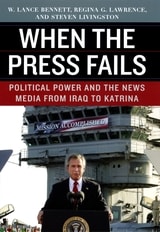
When the Press Fails
Political Power and the News Media from Iraq to KatrinaW. Lance Bennett, Regina G. Lawrence, and Steven Livingston
University of Chicago Press, 2007
“The hand-in-glove relationship of the U.S. media with the White House is mercilessly exposed in this determined and disheartening study that repeatedly reveals how the press has toed the official line at those moments when its independence was most needed.”—George Pendle, Financial Times
“Bennett, Lawrence, and Livingston are indisputably right about the news media’s dereliction in covering the administration’s campaign to take the nation to war against Iraq.”—Don Wycliff, Chicago Tribune
Where Social Identities Converge
Latin American and Latinx Youth on ScreenTraci Roberts-Camps
Vanderbilt University Press, 2024
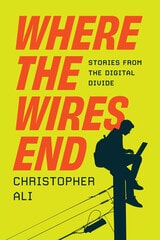
Where the Wires End
Stories from the Digital DivideChristopher Ali
University of Chicago Press, 0
The stories of those without access to broadband services—and an urgent call for their connection.
The average American will spend years of their lives online. For many, the Internet is life, facilitating employment, education, commerce, and connection. But imagine students who only have online access in the early hours of the morning, when the sun is down, and the Internet traffic is low. Imagine living through a pandemic without Internet access because you can’t afford the monthly subscription. Imagine a first responder unable to find a strong enough signal to seek life-saving services. In this eye-opening book, communications scholar Christopher Ali shares such stories—and calls for policymakers, broadband companies, and governments to connect these communities with meaningful, affordable broadband.
It may seem unthinkable that tens of millions of people across the country are unable to access the Internet because of a lack of infrastructure; a computer; affordable broadband subscription options; or training, support, and skills. These people, some who are still using dial-up connections, are part of what is often called “the digital divide.” Where the Wires End brings them into the broadband policy conversation, incorporating interviews, surveys, focus groups, and field visits with individuals, communities, and organizations across the country, from inner-city Pittsburgh to the Hoopa Valley Indian Reservation in California. Ali focuses on the stories of those without access to broadband and those who work to get them attention and connection. He then links these stories to ongoing policy issues, demonstrating how we all benefit from a more empathetic approach to broadband policy that is digitally equitable, inclusive, and ultimately, more successful.
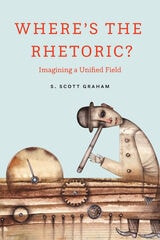
Where's the Rhetoric?
Imagining a Unified FieldS. Scott Graham
The Ohio State University Press, 2020
Building on this foundation, Graham then argues for a more unified approach to contemporary rhetorical inquiry—one that eschews disciplinary demarcations between rhetoric’s various subareas. Specifically, Graham uses his unified field theory to explore 1) the rise of the “tweetorial” as a parascientific genre, 2) inventional practices in new media design, 3) statistical approaches to understanding biomedical discourse, and 4) American electioneering rhetorics. The book overall demonstrates how seemingly disparate intellectual approaches within rhetoric can be made to speak productively to one another in the pursuit of shared scholarly goals around questions of genre, media, and political discourse—thereby providing a foundation for imagining a more unified field.
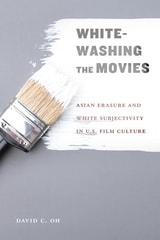
Whitewashing the Movies
Asian Erasure and White Subjectivity in U.S. Film CultureDavid C Oh
Rutgers University Press, 2022
Who's Who in Research
Media StudiesIntellect Books
Intellect Books, 2013
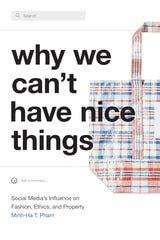
Why We Can't Have Nice Things
Social Media’s Influence on Fashion, Ethics, and PropertyMinh-Ha T. Pham
Duke University Press, 2022
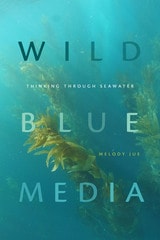
Wild Blue Media
Thinking through SeawaterMelody Jue
Duke University Press, 2020

Wild Tides
Media Infrastructure and Financial Crisis in IrelandPatrick Brodie
Duke University Press, 2026

Wired into Nature
The Telegraph and the North American FrontierJames Schwoch
University of Illinois Press, 2018
Merging new research with bold interpretation, James Schwoch details the unexplored dimensions of the frontier telegraph and its impact. The westward spread of telegraphy entailed encounters with environments that challenged Americans to acquire knowledge of natural history, climate, and a host of other fields. Telegraph codes and ciphers, meanwhile, became important political, military, and economic secrets. Schwoch shows how the government's use of commercial networks drove a relationship between the two sectors that served increasingly expansionist aims. He also reveals the telegraph's role in securing high ground and encouraging surveillance. Both became vital aspects of the American effort to contain, and conquer, the West's indigenous peoples—and part of a historical arc of concerns about privacy, data gathering, and surveillance that remains pertinent today.
Entertaining and enlightening, Wired into Nature explores an unknown history of the West.
Women and New Hollywood
Gender, Creative Labor, and 1970s American CinemaAaron Hunter
Rutgers University Press, 2023
Women and New Hollywood revises our understanding of this important era in American film by examining the contributions that women made not only as directors, but also as screenwriters, editors, actors, producers, and critics. Including essays on film history, film texts, and the decade’s film theory and criticism, this collection showcases the rich and varied cinematic products of women’s creative labor, as well as the considerable barriers they faced. It considers both women working within and beyond the Hollywood film industry, reconceptualizing New Hollywood by bringing it into dialogue with other American cinemas of the 1970s. By valuing the many forms of creative labor involved in film production, this collection offers exciting alternatives to the auteurist model and new ways of appreciating the themes and aesthetics of 1970s American film.
Women and the Press
The Struggle for EqualityPatricia Bradley
Northwestern University Press, 2005
Women for President
Media Bias in Eight CampaignsErika Falk
University of Illinois Press, 2007
When Hillary Clinton announced her 2008 bid for president she was the Democratic front-runner. Despite this, she received less coverage than Barack Obama, who trailed her in the polls. Such a disparity is indicative of the gender bias the media has demonstrated in covering women candidates since the first woman ran for America’s highest office in 1872. Tracing the campaigns of eight women who ran for president through 2004--Victoria Woodhull, Belva Lockwood, Margaret Chase Smith, Shirley Chisholm, Patricia Schroeder, Lenora Fulani, Elizabeth Dole, and Carol Moseley Braun--Erika Falk finds little progress in the fair treatment of women candidates. A thorough comparison of the women’s campaigns to those of their male opponents reveals a worrisome trend of sexism in press coverage--a trend that still persists today.
While women have been elected to the highest offices in countries such as England, Germany, and India, the idea that a woman could be president of the United States provokes scoffs and ridicule. The press portrays female candidates as unviable, unnatural, and incompetent, and often ignores or belittles women instead of reporting their ideas and intent. Since voters learn most details about presidential candidates through media outlets, Falk asserts that this prevailing bias calls into question the modern democratic assumption that men and women have comparable access to positions of power.
Women's Voices in Digital Media
The Sonic Screen from Film to MemesJennifer O'Meara
University of Texas Press, 2022
2023 Publication Award Honorable Mention, British Association for Film, Television and Screen Studies
An examination of the sound and silence of women in digital media.
In today’s digital era, women’s voices are heard everywhere—from smart home devices to social media platforms, virtual reality, podcasts, and even memes—but these new forms of communication are often accompanied by dated gender politics. In Women’s Voices in Digital Media, Jennifer O’Meara dives into new and well-established media formats to show how contemporary screen media and cultural practices police and fetishize women’s voices, but also provide exciting new ways to amplify and empower them.
As she travels through the digital world, O’Meara discovers newly acknowledged—or newly erased—female voice actors from classic films on YouTube, meets the AI and digital avatars in Her and The Congress, and hears women’s voices being disembodied in new ways via podcasts and VR voice-overs. She engages with dialogue that is spreading with only the memory of a voice, looking at how popular media like Clueless and The Simpsons have been mined for feminist memes, and encounters vocal ventriloquism on RuPaul’s Drag Race that queers and valorizes the female voice. Through these detailed case studies, O’Meara argues that the digital proliferation of screens alters the reception of sounds as much as that of images, with substantial implications for women’s voices.
Word Toys
Poetry and TechnicsBrian Kim Stefans
University of Alabama Press, 2017
With the ascent of digital culture, new forms of literature and literary production are thriving that include multimedia, networked, conceptual, and other as-yet-unnamed genres while traditional genres and media—the lyric, the novel, the book—have been transformed. Word Toys: Poetry and Technics is an engaging and thought-provoking volume that speculates on a range of poetic, novelistic, and programmed works that lie beyond the language of the literary and which views them instead as technical objects.
Brian Kim Stefans considers the problems that arise when discussing these progressive texts in relation to more traditional print-based poetic texts. He questions the influence of game theory and digital humanities rhetoric on poetic production, and how non-digital works, such as contemporary works of lyric poetry, are influenced by the recent ubiquity of social media, the power of search engines, and the public perceptions of language in a time of nearly universal surveillance.
Word Toys offers new readings of canonical avant-garde writers such as Ezra Pound and Charles Olson, major successors such as Charles Bernstein, Alice Notley, and Wanda Coleman, mixed-genre artists including Caroline Bergvall, Tan Lin, and William Poundstone, and lyric poets such as Harryette Mullen and Ben Lerner. Writers that trouble the poetry/science divide such as Christian Bök, and novelists who have embraced digital technology such as Mark Z. Danielewski and the elusive Toadex Hobogrammathon, anchor reflections on the nature of creativity in a world where authors collaborate, even if unwittingly, with machines and networks. In addition, Stefans names provocative new genres—among them the nearly formless “undigest” and the transpacific “miscegenated script”—arguing by example that interdisciplinary discourse is crucial to the development of scholarship about experimental work.
Working Musicians
Labor and Creativity in Film and Television ProductionTimothy D. Taylor
Duke University Press, 2023
World War and World Peace in the Age of Digital Capitalism
By Christian Fuchs
University of Westminster Press, 2025
In World War and World Peace in the Age of Digital Capitalism, Christian Fuchs asks: how do violence and war manifest themselves in global digital capitalism? How do digital capitalism and digital technologies manifest themselves in violence and warfare? What are the prospects for world peace today?
To prevent world war and advance world peace we need a better understanding of war and violence and their contexts and causes. We need to ask what war is, what violence is, what war and peace look like today and how they have changed in the 21st century. This book addresses these urgent questions and provides possible answers.
World-Wide-Walks
Peter d'Agostino: Crossing Natural-Cultural-Virtual FrontiersEdited by Peter d'Agostino and David Tafler
Intellect Books, 2018
Writing History in the Digital Age
Jack Dougherty and Kristen Nawrotzki, editors
University of Michigan Press, 2013
Writing History in the Digital Age began as a “what-if” experiment by posing a question: How have Internet technologies influenced how historians think, teach, author, and publish? To illustrate their answer, the contributors agreed to share the stages of their book-in-progress as it was constructed on the public web.
To facilitate this innovative volume, editors Jack Dougherty and Kristen Nawrotzki designed a born-digital, open-access, and open peer review process to capture commentary from appointed experts and general readers. A customized WordPress plug-in allowed audiences to add page- and paragraph-level comments to the manuscript, transforming it into a socially networked text. The initial six-week proposal phase generated over 250 comments, and the subsequent eight-week public review of full drafts drew 942 additional comments from readers across different parts of the globe.
The finished product now presents 20 essays from a wide array of notable scholars, each examining (and then breaking apart and reexamining) if and how digital and emergent technologies have changed the historical profession.
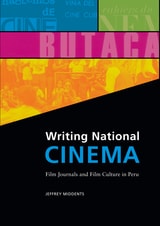
Writing National Cinema
Film Journals and Film Culture in PeruJeffrey Middents
Dartmouth College Press, 2009
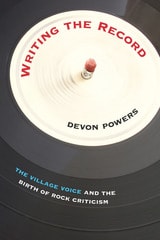
Writing the Record
The Village Voice and the Birth of Rock CriticismDevon Powers
University of Massachusetts Press, 2013
During the mid-1960s, a small group of young journalists made it their mission to write about popular music, especially rock, as something worthy of serious intellectual scrutiny. Their efforts not only transformed the perspective on the era's music but revolutionized how Americans have come to think, talk, and write about popular music ever since.
In Writing the Record, Devon Powers explores this shift by focusing on The Village Voice, a key publication in the rise of rock criticism. Revisiting the work of early pop critics such as Richard Goldstein and Robert Christgau, Powers shows how they stood at the front lines of the mass culture debates, challenging old assumptions and hierarchies and offering pioneering political and social critiques of the music. Part of a college-educated generation of journalists, Voice critics explored connections between rock and contemporary intellectual trends such as postmodernism, identity politics, and critical theory. In so doing, they became important forerunners of the academic study of popular culture that would emerge during the 1970s.
Drawing on archival materials, interviews, and insights from media and cultural studies, Powers not only narrates a story that has been long overlooked but also argues that pop music criticism has been an important channel for the expression of public intellectualism. This is a history that is particularly relevant today, given the challenges faced by criticism of all stripes in our current media environment. Powers makes the case for the value of well-informed cultural criticism in an age when it is often suggested that “everyone is a critic.”
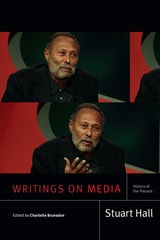
Writings on Media
History of the PresentStuart Hall
Duke University Press, 2021
Wuthering Heights on Film and Television
A Journey Across Time and CulturesValérie V. Hazette
Intellect Books, 2015