Results by title
65 books match the query 'Melville, Herman' and 4 start with w

Whale
K.L. Evans
University of Minnesota Press, 2003
An entirely fresh approach to Moby Dick, by way of Ludwig Wittgenstein
The aim of this thoroughly unconventional work is to demonstrate that Herman Melville’s Moby Dick and Ludwig Wittgenstein’s Philosophical Investigations share the same projects and are, in effect, one and the same book. Confounding and improbable as such an enterprise might seem, Whale! not only successfully reveals the vital intersections between Melville and Wittgenstein but also, more important, makes a compelling argument for why such intersections are essential to understanding common political projects in literature and philosophy.
Written with grace, passion, and wit, Whale! manages to produce a startling and remarkably original reading of one of the most written-about and interpreted books in the American canon. K. L. Evans explores Melville’s vast work as a tale not of vengeance but of affection, and Ahab’s near-pathological agitation as indicative of his refusal to accept the world as unknowable. Between Ahab and the whale, Evans traces a longing for connection and meaning and finds a forceful response to the skeptical view that language is bankrupt and knowledge is uncertain. In Ahab’s hunt for Moby Dick, Whale! discovers a way to reconnect matter with meaning, object with knowledge.
White Jacket, or The World in a Man-of-War
Volume Five, Scholarly EditionHerman Melville
Northwestern University Press, 1970
Already that same summer Melville had written Redburn, and he regarded the books as "two jobs, which I have done for money--being forced to it, as other men are to sawing wood." The reviewers were not as hard on White-Jacket as Melville himself was. The English liked its praise of British seamen. The Americans were more interested in Melville's attack on naval abuses, particularly flogging, and his advocacy of humanitarian causes. Soon Melville was acclaimed the best sea writer of the day.
Part autobiography, part epic fiction, White-Jacket remains a brilliantly imaginative social novel by one of the great writers of the sea. This text of the novel is an Approved Text of the Center for Editions of American Authors (Modern Language Association of America).
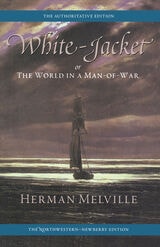
White-Jacket; or, The World in a Man-of-War
Volume FiveHerman Melville
Northwestern University Press, 2000
Already that same summer Melville had written Redburn, and he regarded the books as "two jobs, which I have done for money--being forced to it, as other men are to sawing wood." The reviewers were not as hard on White-Jacket as Melville himself was. The English liked its praise of British seamen. The Americans were more interested in Melville's attack on naval abuses, particularly flogging, and his advocacy of humanitarian causes. Soon Melville was acclaimed the best sea writer of the day.
Part autobiography, part epic fiction, White-Jacket remains a brilliantly imaginative social novel by one of the great writers of the sea. This text of the novel is an Approved Text of the Center for Editions of American Authors (Modern Language Association of America).

Writing for the Street, Writing in the Garret
Melville, Dickinson, and Private PublicationMichael Kearns
The Ohio State University Press, 2010
Although Herman Melville and Emily Dickinson differed dramatically in terms of their lives and writing careers, they shared not only a distaste for writing “for the street” (mass readership) but a preference for the intimate writer–reader relationship created by private publication, especially in the form of manuscripts. In Writing for the Street, Writing in the Garret: Melville, Dickinson, and Private Publication, Michael Kearns shows that this distaste and preference were influenced by American copyright law, by a growing tendency in America to treat not only publications but their authors as commodities, and by the romantic stereotype of the artist (usually suffering in a garret) living only for her or his own work.