Results by title
273 books match the query 'Memoir' and 15 start with w
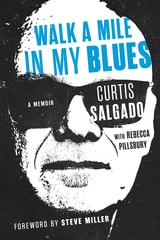
Walk a Mile in My Blues
A MemoirCurtis Salgado with Rebecca Pillsbury; Foreword by Steve Miller
University of Illinois Press, 2027
In this memoir, Salgado shares stories of his career against the backdrop of encounters with music legends, the Oregon scene’s cultural heyday, and his journey to overcome addiction and life-threatening health challenges. His poignant and at times humorous stories of touring and playing with artists like Robert Cray, Muddy Waters, Cab Calloway, and Stevie Ray Vaughan fuse with an invitation to embrace the blues and soul music that shaped his life and help define America.
Walk a Mile in My Blues shares the hidden and heartfelt story of a musical legend, living and loving the blues.
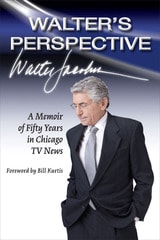
Walter's Perspective
A Memoir of Fifty Years in Chicago TV NewsWalter Jacobson, Foreword by Bill Kurtis
Southern Illinois University Press, 2012
This highly readable book provides a unique glimpse into the rough-and-tumble Chicago news business as seen through the eyes of one of its legendary players. From his first news job working as a legman for Daily News columnist Jack Mabley in the 1950s to his later role as a news anchor and political commentator at CBS-owned WBBM, Walter Jacobson battled along the front lines of an industry undergoing dramatic changes. While it is ultimately Jacobson’s story, a memoir of a long and distinguished (and sometimes highly controversial) career, it is also an insider’s account of the inner workings of Chicago television news, including the ratings games, the process of defining news and choosing stories, the media’s power and its failures, and the meddling by corporate and network executives.
As a reporter, Jacobson was regularly contentious and confrontational. He was fired on a number of occasions and was convicted of libeling tobacco company Brown and Williamson, resulting in a multimillion-dollar federal court judgment against him and CBS. Yet it was this gutsy attitude that put him at the top of the news game. With an engaging writing style, Jacobson recollects his interactions with Chicago mayors Richard J. and Richard M. Daley, Jane Byrne, Harold Washington, and Rahm Emanuel; recounts his coverage of such fascinating news stories as the violent 1968 Democratic National Convention and the execution of convicted mass murderer John Wayne Gacy; and recalls his reporting on and interviews with Louis Farrakhan, governors George Ryan and Rod Blagojevich, and Barack Obama. More than a memoir, Walter’s Perspective is the extraordinary journey of one reporter whose distinctive career followed the changing face of Chicago’s local news.
Water Thicker Than Blood
A Memoir of a Post-Internment ChildhoodGeorge Uba
Temple University Press, 2022
“I thought my life began in Chicago. I was mistaken. That is where my body first made its appearance, but the contours of my life…had their start much sooner.”
In Water Thicker Than Blood, poet and professor George Uba traces his life as a Japanese American born in the late 1940s, a period of insidious anti-Japanese racism. His beautiful, impressionist memoir chronicles how he, like many Sansei (and Nisei) across the United States, grappled with dislocation and trauma while seeking acceptance and belonging.
Uba’s personal account of his efforts to achieve normality and assuage guilt unfolds as racial demographics in America are shifting. He struggled with inherently violent midcentury educational and childrearing practices and a family health crisis, along with bullying. Uba describes boy scouts and yogore (community rebels and castoffs) with vivid detail, using these vignettes to show how margins were blurred and how both sets of youth experienced injury through the same ideological pressures.
Water Thicker Than Blood is not a conventional story about recovery or family reconciliation. But itoffers an intimate look at the lasting—in some ways irreversible—damage caused by post-internment ideologies of “being accepted” and “fitting in inconspicuously.” It speaks volumes for the greater Sansei post-internment experience.
We Take Our Cities with Us
A MemoirSorayya Khan
The Ohio State University Press, 2022
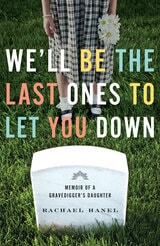
We'll Be the Last Ones to Let You Down
Memoir of a Gravedigger’s DaughterRachael Hanel
University of Minnesota Press, 2013
Rachael Hanel’s name was inscribed on a gravestone when she was eleven years old. Yet this wasn’t at all unusual in her world: her father was a gravedigger in the small Minnesota town of Waseca, and death was her family’s business. Her parents were forty-two years old and in good health when they erected their gravestone—Rachael’s name was simply a branch on the sprawling family tree etched on the back of the stone. As she puts it: I grew up in cemeteries.
And you don’t grow up in cemeteries—surrounded by headstones and stories, questions, curiosity—without becoming an adept and sensitive observer of death and loss as experienced by the people in this small town. For Rachael Hanel, wandering among tombstones, reading the names, and wondering about the townsfolk and their lives, death was, in many ways, beautiful and mysterious. Death and mourning: these she understood. But when Rachael’s father—Digger O’Dell—passes away suddenly when she is fifteen, she and her family are abruptly and harshly transformed from bystanders to participants. And for the first time, Rachael realizes that death and grief are very different.
At times heartbreaking and at others gently humorous and uplifting, We’ll Be the Last Ones to Let You Down presents the unique, moving perspective of a gravedigger’s daughter and her lifelong relationship with death and grief. But it is also a masterful meditation on the living elements of our cemeteries: our neighbors, friends, and families—the very histories of our towns and cities—and how these things come together in the eyes of a young girl whose childhood is suffused with both death and the wonder of the living.
Welcome to Wherever We Are
A Memoir of Family, Caregiving, and RedemptionDeborah J. Cohan
Rutgers University Press, 2020
ESS Public Sociology Award
Recommended Book in Domestic Violence by DomesticShelters.org
How do you go about caregiving for an ill and elderly parent with a lifelong history of abuse and control, intertwined with expressions of intense love and adoration? How do you reconcile the resulting ambivalence, fear, and anger?
Welcome to Wherever We Are is a meditation on what we hold onto, what we let go of, how we remember others and ultimately how we’re remembered. Deborah Cohan shares her story of caring for her father, a man who was simultaneously loud, gentle, loving and cruel and whose brilliant career as an advertising executive included creating slogans like “Hey, how ‘bout a nice Hawaiian punch?” Wrestling with emotional extremes that characterize abusive relationships, Cohan shows how she navigated life with a man who was at once generous and affectionate, creating magical coat pockets filled with chocolate kisses when she was a little girl, yet who was also prone to searing, vicious remarks like “You’d make my life easier if you’d commit suicide.”
In this gripping memoir, Cohan tells her unique personal story while also weaving in her expertise as a sociologist and domestic abuse counselor to address broader questions related to marriage, violence, divorce, only children, intimacy and loss. A story most of us can relate to as we reckon with past and future choices against the backdrop of complicated family dynamics, Welcome to Wherever We Are is about how we might come to live our own lives better amidst unpredictable changes through grief and healing.
Questions for Discussion (https://d3tto5i5w9ogdd.cloudfront.net/wp-content/uploads/2020/05/11140346/Cohan_Discussion.docx)

What Doesn't Kill Me Makes Me Weirder and Harder to Relate To
A MemoirMary Lucia
University of Minnesota Press, 2025
An iconic rock DJ of the Twin Cities tells her harrowing story of being stalked while living her very public life
What’s it like to be in the public spotlight when it just might get you killed? For Mary Lucia, becoming a wildly popular rock DJ meant connecting with a multitude of fans through a shared love of music and deep cuts. But for one listener, that connection became a dangerous obsession, catapulting Lucia into the terrifying three-year nightmare that she chronicles in this raw, wry, and profoundly courageous memoir. With electrifying wit and anger, Lucia shares her experience of navigating constant terror while life absurdly goes on: interview rock stars, curate a radio show song list, judge high school battles of the band, kick a drug addiction cold turkey . . . all while fearing what might be waiting in her mailbox or who might be waiting on her front step or at her back door.
Lucia was no stranger to inappropriate or weird contact from fans, but things turned sinister when ten pounds of raw meat were delivered to her at work, followed by a steady stream of ominous letters, cards, packages, and messages. When the letters included threats to her dogs’ safety, she tried to get help, but without a name and return address on these communications there was nothing she could do. As the stalker’s actions escalated, Lucia felt more and more isolated. Police responding to her 911 calls were insensitive and dismissive, and even her friends implied that being stalked was just a hazard of her high-profile job and her high-energy personality. No one seemed to take seriously the danger she faced.
Inseparable from this ordeal is the story of how Mary Lucia became the notorious radio malcontent known by so many avid listeners. From the good, bad, and weird of growing up in her eccentric family to drugs, death, and dogs, Lucia finally shares her life on her own terms in What Doesn’t Kill Me Makes Me Weirder and Harder to Relate To. Applying her signature dark humor to her own traumatic experiences, Lucia’s memoir is idiosyncratic, bold, and—ironically—relatable.
Retail e-book files for this title are screen-reader friendly with images accompanied by short alt text and/or extended descriptions.
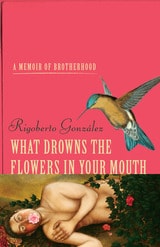
What Drowns the Flowers in Your Mouth
A Memoir of BrotherhoodRigoberto González
University of Wisconsin Press, 2018
Descending into a dark emotional space that compromises their mental and physical health, the brothers eventually find hope in aiding each other. This is an honest and revealing window into the complexities of Latino masculinity, the private lives of men, and the ways they build strength under the weight of grief, loss, and despair.
What's That Pig Outdoors?
A Memoir of DeafnessHenry Kisor
University of Illinois Press, 2010
White Boy
A MemoirMark D. Naison
Temple University Press, 2002
Why I Left the Amish
A MemoirSaloma Miller Furlong
Michigan State University Press, 2011
There are two ways to leave the Amish—one is through life and the other through death. When Saloma Miller Furlong’s father dies during her first semester at Smith College, she returns to the Amish community she had left twenty four years earlier to attend his funeral. Her journey home prompts a flood of memories. Now a mother with grown children of her own, Furlong recalls her painful childhood in a family defined by her father’s mental illness, her brother’s brutality, her mother’s frustration, and the austere traditions of the Amish—traditions Furlong struggled to accept for years before making the difficult decision to leave the community. In this personal and moving memoir, Furlong traces the genesis of her desire for freedom and education and chronicles her conflicted quest for independence. Eloquently told, Why I Left the Amish is a revealing portrait of life within—and without—this frequently misunderstood community.
With the Possum and the Eagle
The Memoir of a Navigator's War over Germany and JapanRalph Nutter
University of North Texas Press, 2005
Women Surrounded by Water
A MemoirPatricia Coral
The Ohio State University Press, 2024
Wonderful Words, Silent Truth
Essays on Poetry and a MemoirCharles Simic
University of Michigan Press, 1990
Worthy
A MemoirDenice Turner
University of Nevada Press, 2015
The story unfolds as Turner confronts a history that includes a Greek grandfather whose up-from-the-bootstraps legacy refuses to die, the ghosts of two suicidal uncles, and a Mormon shrink who claims to see her dead relatives. In the end, this is a memoir not just about loss, but about all of the fragile human bonds that are broken in pursuit of perfection.
Wry and extraordinarily candid, Worthy will appeal to readers interested in the dynamics of family heritage, Mormon doctrine, and the subtle corrosive costs of shame.