Results by title
479 books match the query 'Methodology' and 11 start with w
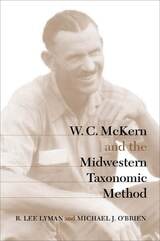
W. C. McKern and the Midwestern Taxonomic Method
Written by R. Lee Lyman and Michael J. O'Brien
University of Alabama Press, 2002
Explores W. C. McKern's use of Linnaean taxonomy as the model for development of a pottery classification system
By the early 20th century, North American archaeologists had found evidence of a plethora of prehistoric cultures displaying disparate geographic and chronological distributions. But there were no standards or algorithms for specifying when a culture was distinct or identical to another in a nearby or distant region.
Will Carleton McKern of the Milwaukee Public Museum addressed this fundamental problem of cultural classification beginning in 1929. He modeled his solution—known as the Midwestern Taxonomic Method—on the Linnaean biological taxonomy because he wanted the ability to draw historical and cultural "relationships" among cultures. McKern was assisted during development of the method by Carl E. Guthe, Thorne Deuel, James B. Griffin, and William Ritchie.
This book studies the 1930s correspondence between McKern and his contemporaries as they hashed out the method's nuances. It compares the several different versions of the method and examines the Linnaean biological taxonomy as it was understood and used at the time McKern adapted it to archaeological problems. Finally, this volume reveals how and why the method failed to provide the analytical solution envisioned by McKern and his colleagues and how it influenced the later development of Americanist archaeology.
What About Mozart? What About Murder?
Reasoning From CasesHoward S. Becker
University of Chicago Press, 2014
Becker draws on a lifetime of sociological research and wisdom to show, in helpful detail, how to use a variety of kinds of cases to build sociological knowledge. With his trademark conversational flair and informal, personal perspective Becker provides a guide that researchers can use to produce general sociological knowledge through case studies. He champions research that has enough data to go beyond guesswork and urges researchers to avoid what he calls “skeleton cases,” which use fictional stories that pose as scientific evidence. Using his long career as a backdrop, Becker delivers a winning book that will surely change the way scholars in many fields approach their research.

What Is Research?
Edited by Peter Miller
Bard Graduate Center, 2021
What is Research? includes conversations with theater director Annie Dorsen, biomedical researcher Elodie Ghedin, sculptor Tom Joyce, physicist Hideo Mabuchi, poet Campbell McGrath, photographer and filmmaker An-My Lê, neuroscientist Sheila Nirenberg, geochemist Terry Plank, and historian Marina Rustow, all of whom grapple with questions about the nature of research from their varied perspectives.
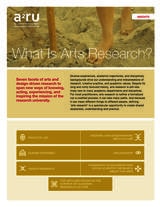
What is Arts Research?
Gabriel Harp
A2RU Intervals, 2018
Diverse experiences, academic trajectories, and disciplinary backgrounds drive our understanding and interpretations of research, creative practice, and academic values. Despite its long and richly textured history, arts research is still relatively new to many academic departments and disciplines. For most practitioners, arts research is neither a formalized nor a codified process; it can take many paths. And because it can mean different things to different people, defining ‘arts research’ is a spectacular opportunity to create shared awareness, understanding and practice.
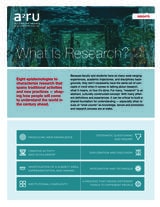
What is Research?
Gabriel Harp
A2RU Intervals, 2018
Because faculty and students have so many wide-ranging experiences, academic trajectories, and disciplinary backgrounds, they don’t necessarily have the same set of concepts in mind when it comes to talking about research, what it means, or how it’s done. For many, “research” is an abstract, culturally constructed concept. With many different definitions and experiences, it can be critical to build a shared foundation for understanding — especially when issues of “what counts” as knowledge, tenure and promotion, and research process are at stake.
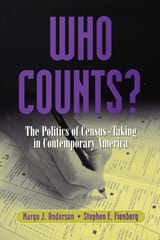
Who Counts?
The Politics of Census-Taking in Contemporary AmericaMargo Anderson
Russell Sage Foundation, 2001
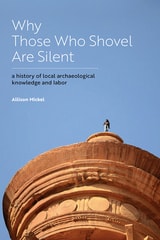
Why Those Who Shovel Are Silent
A History of Local Archaeological Knowledge and LaborAllison Mickel
University Press of Colorado, 2020
Why Those Who Shovel Are Silent is based on six years of in-depth ethnographic work with current and former site workers at two major Middle Eastern archaeological sites—Petra, Jordan, and Çatalhöyük, Turkey—combined with thorough archival research. Author Allison Mickel describes the nature of the knowledge that locally hired archaeological laborers exclusively possess about artifacts, excavation methods, and archaeological interpretation, showing that archaeological workers are experts about a wide range of topics in archaeology. At the same time, Mickel reveals a financial incentive for site workers to pretend to be less knowledgeable than they actually are, as they risk losing their jobs or demotion if they reveal their expertise.
Despite a recent proliferation of critical research examining the history and politics of archaeology, the topic of archaeological labor has not yet been substantially examined. Why Those Who Shovel Are Silent employs a range of advanced qualitative, quantitative, and visual approaches and offers recommendations for archaeologists to include more diverse expert perspectives and produce more nuanced knowledge about the past. It will appeal to archaeologists, science studies scholars, and anyone interested in challenging the concept of “unskilled” labor.
Working in the Archives
Practical Research Methods for Rhetoric and CompositionEdited by Alexis E. Ramsey, Wendy B. Sharer, Barbara L'Eplattenier, Lisa S. Mastrangelo
Southern Illinois University Press, 2010
Archival research of any magnitude can be daunting. With this in mind, Alexis E. Ramsey, Wendy B. Sharer, Barbara L’Eplattenier, and Lisa Mastrangelo have developed an indispensable volume for the first-time researcher as well as the seasoned scholar. Working in the Archives is a guide to the world of rhetoric and composition archives, from locating an archival source and its materials to establishing one’s own collection of archival materials. This practical volume provides insightful information on a variety of helpful topics, such as basic archival theory, processes, and principles; the use of hidden or digital archives; the intricacies of searching for and using letters and photographs; strategies for addressing the dilemmas of archival organization without damaging the provenance of materials; the benefits of seeking sources outside academia; and the difficult (yet often rewarding) aspects of research on the Internet.
Working in the Archives moves beyond the basics to discuss the more personal and emotional aspects of archival work through the inclusion of interviews with experienced researchers such as Lynée Lewis Gaillet, Peter Mortensen, Kathryn Fitzgerald, Kenneth Lindblom, and David Gold. Each shares his or her personal stories of the joys and challenges that face today’s researchers.
Packed with useful recommendations, this volume draws on the knowledge and experiences of experts to present a well-rounded guidebook to the often winding paths of academic archival investigation. These in-depth yet user-friendly essays provide crucial answers to the myriad questions facing both fledgling and practiced researchers, making Working in the Archives an essential resource.
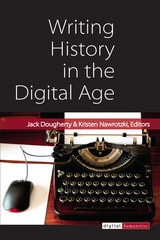
Writing History in the Digital Age
Jack Dougherty and Kristen Nawrotzki, editors
University of Michigan Press, 2013
Writing History in the Digital Age began as a “what-if” experiment by posing a question: How have Internet technologies influenced how historians think, teach, author, and publish? To illustrate their answer, the contributors agreed to share the stages of their book-in-progress as it was constructed on the public web.
To facilitate this innovative volume, editors Jack Dougherty and Kristen Nawrotzki designed a born-digital, open-access, and open peer review process to capture commentary from appointed experts and general readers. A customized WordPress plug-in allowed audiences to add page- and paragraph-level comments to the manuscript, transforming it into a socially networked text. The initial six-week proposal phase generated over 250 comments, and the subsequent eight-week public review of full drafts drew 942 additional comments from readers across different parts of the globe.
The finished product now presents 20 essays from a wide array of notable scholars, each examining (and then breaking apart and reexamining) if and how digital and emergent technologies have changed the historical profession.
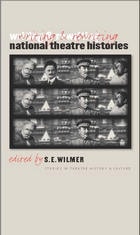
Writing and Rewriting National Theatre Histories
S.E. Wilmer
University of Iowa Press, 2004
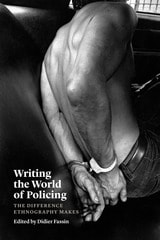
Writing the World of Policing
The Difference Ethnography MakesEdited by Didier Fassin
University of Chicago Press, 2017