Results by title
179 books match the query 'Middle West' and 12 start with w
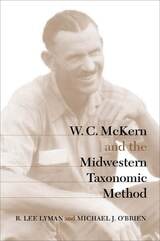
W. C. McKern and the Midwestern Taxonomic Method
Written by R. Lee Lyman and Michael J. O'Brien
University of Alabama Press, 2002
Explores W. C. McKern's use of Linnaean taxonomy as the model for development of a pottery classification system
By the early 20th century, North American archaeologists had found evidence of a plethora of prehistoric cultures displaying disparate geographic and chronological distributions. But there were no standards or algorithms for specifying when a culture was distinct or identical to another in a nearby or distant region.
Will Carleton McKern of the Milwaukee Public Museum addressed this fundamental problem of cultural classification beginning in 1929. He modeled his solution—known as the Midwestern Taxonomic Method—on the Linnaean biological taxonomy because he wanted the ability to draw historical and cultural "relationships" among cultures. McKern was assisted during development of the method by Carl E. Guthe, Thorne Deuel, James B. Griffin, and William Ritchie.
This book studies the 1930s correspondence between McKern and his contemporaries as they hashed out the method's nuances. It compares the several different versions of the method and examines the Linnaean biological taxonomy as it was understood and used at the time McKern adapted it to archaeological problems. Finally, this volume reveals how and why the method failed to provide the analytical solution envisioned by McKern and his colleagues and how it influenced the later development of Americanist archaeology.

We Were Still Ladies
Gender and Industrial Unionism in the Midwest after World War IICoreen Derifield
University of Iowa Press, 2025
How did this transition into industrial work affect a woman’s sense of self? How did this new workforce change the dynamic of families and communities? While women choosing to work outside of the home may seem to have been a mundane decision, it caused tremendous change within families and with household roles. These alterations in daily life rippled throughout midwestern culture and society, even changing the landscape of small towns into decentralized industrial centers.
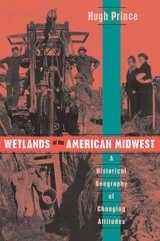
Wetlands of the American Midwest
A Historical Geography of Changing AttitudesHugh Prince
University of Chicago Press, 1997
As attitudes changed, so did scientific research agendas, government policies, and farmers' strategies for managing their land. Originally viewed as bountiful sources of wildlife by indigenous peoples, wet areas called "wet prairies," "swamps," or "bogs" in the late nineteenth and early twentieth centuries were considered productive only when drained for agricultural use. Beginning in the 1950s, many came to see these renamed "wetlands" as valuable for wildlife and soil conservation.
Prince's book will appeal to a wide readership, ranging from geographers and environmental historians to the many government and private agencies and individuals concerned with wetland research, management, and preservation.

When
StoriesKatherine Zlabek
The Ohio State University Press, 2019
The atmospheric stories in When illuminate the customs of rural America, a part of this country that’s been asked to risk the best of itself in order to survive, revealing with humor and weight fears about wealth, worth, and the dignity of home.
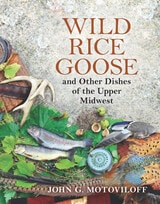
Wild Rice Goose and Other Dishes of the Upper Midwest
John G. Motoviloff
University of Wisconsin Press, 2014
Wild Rice Goose also revives overlooked dishes popular in times past. If you have carp, redhorse, smelt, or turtle, dandelion greens or mulberries, you can turn these humble finds into tasty treats with tips from experienced fishermen and foragers. Cooks will appreciate the clear, kitchen-tested recipes, and fans of sporting literature will enjoy the lyrical writing.
You’ll find here:
• more than 100 recipes for wildfoods from asparagus to venison
• sidebars on regional foods, specialty preparations, and folk history
• tips on finding and cleaning game, fish, and wild edibles
• advice on freezing and drying
• a list of Upper Midwest wildfoods vendors.
Best Regional Special Interest Books, selected by the American Association of School Librarians
Best Regional General Interest Books, selected by the Public Library Reviewers
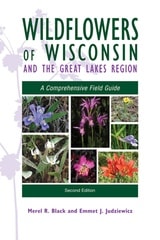
Wildflowers of Wisconsin and the Great Lakes Region
A Comprehensive Field GuideMerel R. Black and Emmet J. Judziewicz
University of Wisconsin Press, 2009
• more than 1,100 species from 459 genera in 100 families
• many rare and previously overlooked species
• 2,100 color photographs and 300 drawings
• Wisconsin distribution maps for almost all plants
• brief descriptions including distinguishing characteristics of the species
• Wisconsin status levels for each species of wildflower (native, invasive, endangered, etc.)
• derivation of Latin names.
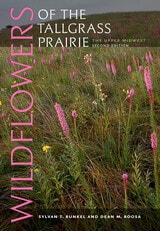
Wildflowers of the Tallgrass Prairie
The Upper MidwestSylvan T. Runkel
University of Iowa Press, 2009
This classic of midwestern natural history is back in print with a new format and new photographs. Originally published in 1989, Wildflowers of the Tallgrass Prairie introduced many naturalists to the beauty and diversity of the native plants of the huge grasslands that once stretched from Manitoba to Texas. Now redesigned with updated names and all-new photographs, this reliable field companion will introduce tallgrass prairie wildflowers to a new generation of outdoor enthusiasts in the Upper Midwest.
Each species account is accompanied by a brilliant full-page color photograph by botanist Thomas Rosburg. In clear, straightforward, and accessible prose, authors Sylvan Runkel and Dean Roosa provide common, scientific, and family names; the Latin or Greek meaning of the scientific names; habitat and blooming times; and a complete description of plant, flower, and fruit. Particularly interesting is the information on the many ways in which Native Americans and early pioneers used these plants for everything from pain relief to dyes to hairbrushes.
Runkel and Roosa say that prairies can be among the most peaceful places on earth; certainly they are among the most beleaguered. Wildflowers of the Tallgrass Prairie will inspire both amateurs and professionals with the desire to learn more about the wonders of the prairie landscape.
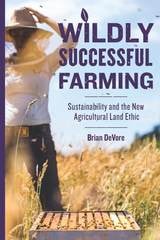
Wildly Successful Farming
Sustainability and the New Agricultural Land EthicBrian DeVore
University of Wisconsin Press, 2020
Written by agricultural journalist Brian DeVore, the book is based on interviews he has conducted at farms, wildlife refuges, laboratories, test plots, and gardens over the past twenty-five years. He documents innovations in cover cropping, managed rotational grazing, perennial polyculture, and integrated pest management. His accounts provide insight into the impacts regenerative farming methods can have on wildlife, water, landscape, soils, and rural communities and suggest ways all of us can support wildly successful farmers.

With Shaking Hands
Aging with Parkinson's Disease in America's HeartlandSolimeo, Samantha
Rutgers University Press, 2009
At the heart of With Shaking Hands is the account of elder Americans in rural Iowa who have been diagnosed with PD. With a focus on the impact of chronic illness on an aging population, Samantha Solimeo combines clear and accessible prose with qualitative and quantitative research to demonstrate how PD accelerates, mediates, and obscures patterns of aging. She explores how ideas of what to expect in older age influence and direct interpretations of one's body.
This sensitive and groundbreaking work unites theories of disease with modern conceptions of the body in biological and social terms. PD, like other chronic disorders, presents a special case of embodiment which challenge our thinking about how such diseases should be researched and how they are experienced.

Woman Suffrage and Citizenship in the Midwest, 1870-1920
Sara Egge
University of Iowa Press, 2018
Winner of the 2019 Gita Chaudhuri Prize
Winner of the 2019 Benjamin F. Shambaugh Award
Historian Sara Egge offers critical insights into the woman suffrage movement by exploring how it emerged in small Midwestern communities—in Clay County, Iowa; Lyon County, Minnesota; and Yankton County, South Dakota. Examining this grassroots activism offers a new approach that uncovers the sophisticated ways Midwestern suffragists understood citizenship as obligation.
These suffragists, mostly Yankees who migrated from the Northeast after the Civil War, participated enthusiastically in settling the region and developing communal institutions such as libraries, schools, churches, and parks. Meanwhile, as Egge’s detailed local study also shows, the efforts of the National American Women’s Suffrage Association did not always succeed in promoting the movement’s goals. Instead, it gained support among Midwesterners only when local rural women claimed the right to vote on the basis of their well-established civic roles and public service.
By investigating civic responsibility, Egge reorients scholarship on woman suffrage and brings attention to the Midwest, a region overlooked by most historians of the movement. In doing so, she sheds new light onto the ways suffragists rejuvenated the cause in the twentieth century.
Women's Culture
American Philanthropy and Art, 1830-1930Kathleen D. McCarthy
University of Chicago Press, 1991
Women, Work, and Worship in Lincoln's Country
The Dumville Family LettersEdited by Anne M. Heinz and John P. Heinz
University of Illinois Press, 2016