Results by title
105 books match the query 'Mind' and 6 start with w
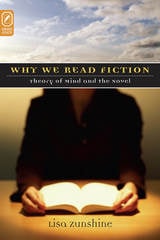
WHY WE READ FICTION
Theory of Mind and the NovelLisa Zunshine
The Ohio State University Press, 2006
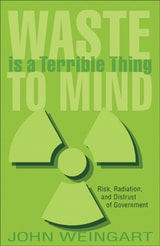
Waste is a Terrible Thing to Mind
Risk, Radiation, and Distrust of GovernmentWeingart, John
Rutgers University Press, 2007
It is an unenviable task, but one that all state governments face: finding a final “resting place” for low-level nuclear waste from power plants, hospitals, university laboratories, and other industries. John Weingart was the official in New Jersey who for many years led this onerous charge. This book is the story of how he and a commission appointed by the governor, instead of imposing a top-down solution, designed an approach that would confront public fears by seeking a community that would volunteer to host a disposal facility. Initially, this novel approach was surprisingly successful, as leaders in a dozen municipalities stepped forward to say they might be interested. Once their interest became known, however, the process in each town derailed. Residents demanded assurances of zero-percent risk and expressed profound distrust of government assertions and promises.
Waste Is a Terrible Thing to Mind is a compelling, suspenseful, and amusing insider’s account of New Jersey policy and politics, but it is also a larger saga of the challenges facing society in the post–9/11 era when the public’s distrust of government is increasing at the same time that its sensitivity to health and safety threats is heightened.
For more information, see: http://wasteisaterriblethingtomind.com/
"Written with a wry sense of humor, it is a pleasure to read and could provide the blueprint for future efforts to find locations for controversial land uses."
- Marie Curtis, Executive Director, New Jersey Environmental Lobby
"A penetrating look at one state's struggle with radioactive waste ... offering some tantalizing reflections on the public understanding of science and how we, in a democratic society, deal with complexity and uncertainty."
- Jay Kaufman, State Senator, Massachusetts State Legislature
"A provocative story, laced with humor, demonstrates how public distrust of government can make it impotent. It should be read by anyone working on public policy issues, especially planning, growth, and the environment."
- Harriet Keyserling, Former Energy Committee Chair, South Carolina State Legislature
"Readers interested in environmental policy, land use and how governments make decisions will learn much from this fine reflective insider's account. It's also a primer on how to survive and thrive in state government."
- David N. Kinsey, Visiting Professor, Woodrow Wilson School Princeton University
"... a fascinating case study of how a government agency creatively tried to solve an intractable public issue. Although the agency failed in its quest to recruit a town to host a low-level radioactive waste site, Weingart's detailed and often humorous narrative of the agency's efforts is a clear winner."
- Jack Sabatino, Judge, New Jersey Superior Court
"... a very engaging and sometimes discouraging case study about the pitfalls and perils of trying to site a controversial facility the right way."
- Gregg Larson, Administrator, Center for Biometric Research, University of Minnesota
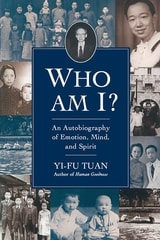
Who Am I?
An Autobiography of Emotion, Mind, and SpiritYi-Fu Tuan
University of Wisconsin Press, 1999
Who Am I? is the bittersweet memoir of a Chinese American who came to this country as a twenty-year-old graduate student and stayed to become one of America’s most innovative intellectuals, whose work has explored the aesthetic and moral dimensions of human relations with landscape, nature, and environment. This unusually introspective autobiography mixes Yi-Fu Tuan’s reflections on a life filled with recognition, accolades, and affection with what he deems moral failings, his lack of courage—including the courage to be open about his homosexuality.
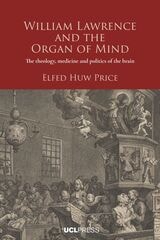
William Lawrence and the Organ of Mind
The Theology, Medicine and Politics of the BrainElfed Huw Price
University College London, 2025
Elfed Huw Price studies the radical history behind the idea that thought and consciousness are rooted in the brain, tracing its emergence in early nineteenth-century Britain. Centered on the controversy surrounding Lawrence’s Lectures on Physiology, Zoology, and the Natural History of Man, this book reveals how his arguments on the sentient brain challenged both medical tradition and religious orthodoxy, provoking backlash from the establishment.
Drawing on archival sources including unpublished material from Bethlem Hospital, Price situates Lawrence’s work within the rise of Christian mortalist thought and the broader shift toward Victorian naturalism. Despite Lawrence’s silencing, his ideas endured, shaping a transformation that redefined human exceptionality through biology rather than theology.
Bridging science, medicine, philosophy, and religion, William Lawrence and the Organ of Mind illuminates a pivotal yet overlooked moment in the history of mind and brain studies, offering fresh insights into the intellectual struggles that helped reshape modern thought.
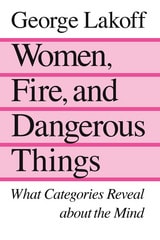
Women, Fire, and Dangerous Things
What Categories Reveal about the MindGeorge Lakoff
University of Chicago Press, 1987
In Women, Fire, and Dangerous Things, George M. Lakoff takes on the classical theory of categorization, which argues that the classes into which our minds and language group things and people are clearly defined and have strict boundaries. Lakoff argues instead that the mind and language build categories around protoypical examples, and that categories then radiate out from those central types. The book argues for embodied cognition and makes a powerful case that meaning cannot be reduced to abstract symbols or removed from the physical experiences of human perception.
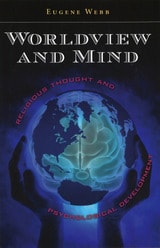
Worldview and Mind
Religious Thought and Psychological DevelopmentEugene Webb
University of Missouri Press, 2009