Results by title
159 books match the query 'Minnesota' and 10 start with w

Wage Justice
Comparable Worth and the Paradox of Technocratic ReformSara M. Evans and Barbara N. Nelson
University of Chicago Press, 1991
"A perceptive and judicious analysis of comparable worth."—Wendy Kaminer, New York Times Book Review
"Very well-crafted. . . . Wage Justice has admirably launched the scholarly evaluation of pay equity, revealing the unforeseen complexities of this key feminist public policy innovation."—Maurine Weiner Greenwald, Journal of American History
"An insightful glimpse of the policy process."—Marian Lief Palley, American Political Science Review
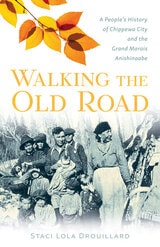
Walking the Old Road
A People's History of Chippewa City and the Grand Marais AnishinaabeStaci Lola Drouillard
University of Minnesota Press, 2019
The story of a once vibrant, now vanished off-reservation Ojibwe village—and a vital chapter of the history of the North Shore
“We do this because telling where you are from is just as important as your name. It helps tie us together and gives us a strong and solid place to speak from. It is my hope that the stories of Chippewa City will be heard, shared, and remembered, and that the story of Chippewa City and the Grand Marais Chippewa will continue to grow. By being a part of the living narrative, Bimaadizi Aadizookaan, together we can create a new story about what was, what is, and, ultimately, what will be.” —from the Prologue
At the turn of the nineteenth century, one mile east of Grand Marais, Minnesota, you would have found Chippewa City, a village that as many as 200 Anishinaabe families called home. Today you will find only Highway 61, private lakeshore property, and the one remaining village building: St. Francis Xavier Church. In Walking the Old Road, Staci Lola Drouillard guides readers through the story of that lost community, reclaiming for history the Ojibwe voices that have for so long, and so unceremoniously, been silenced.
Blending memoir, oral history, and narrative, Walking the Old Road reaches back to a time when Chippewa City, then called Nishkwakwansing (at the edge of the forest), was home to generations of Ojibwe ancestors. Drouillard, whose own family once lived in Chippewa City, draws on memories, family history, historical analysis, and testimony passed from one generation to the next to conduct us through the ages of early European contact, government land allotment, family relocation, and assimilation.
Documenting a story too often told by non-Natives, whether historians or travelers, archaeologists or settlers, Walking the Old Road gives an authentic voice to the Native American history of the North Shore. This history, infused with a powerful sense of place, connects the Ojibwe of today with the traditions of their ancestors and their descendants, recreating the narrative of Chippewa City as it was—and is and forever will be—lived.
We Are Meant to Rise
Voices for Justice from Minneapolis to the WorldCarolyn Holbrook
University of Minnesota Press, 2021
A brilliant and rich gathering of voices on the American experience of this past year and beyond, from Indigenous writers and writers of color from Minnesota
In this significant collection, Indigenous writers and writers of color bear witness to one of the most unsettling years in the history of the United States. Essays and poems vividly reflect and comment on the traumas we endured in 2020, beginning with the arrival of the COVID-19 pandemic crisis, deepened by the blatant murder of George Floyd by Minneapolis police officers and the uprisings that immersed our city into the epicenter of passionate, worldwide demands for justice. In inspired and incisive writing these contributors speak unvarnished truths not only to the original and pernicious racism threaded through the American experience but also to the deeply personal, in essays about family, loss, food culture, economic security, and mental health. Their call and response is united here to rise and be heard.
We Are Meant to Rise lifts up the astonishing variety of BIPOC writers in Minnesota. From authors with international reputations to newly emerging voices, it features people from many cultures, including Indigenous Dakota and Anishinaabe, African American, Hmong, Somali, Afghani, Lebanese, Korean, Vietnamese, Japanese, Puerto Rican, Colombian, Mexican, transracial adoptees, mixed race, and LGBTQ+ perspectives. Most of the contributors have participated in More Than a Single Story, a popular and insightful conversation series in Minneapolis that features Indigenous and people of color speaking on what most concerns their communities.
We Are Meant to Rise meets the events of the day, the year, the centuries before, again and again, with powerful testament to the intrinsic and unique value of the human voice.
Contributors: Suleiman Adan, Mary Moore Easter, Louise Erdrich, Anika Fajardo, Safy-Hallan Farah, Said Farah, Sherrie Fernandez-Williams, Pamela R. Fletcher Bush, Shannon Gibney, Kathryn Haddad, Tish Jones, Ezekiel Joubert III, Douglas Kearney, Ed Bok Lee, Ricardo Levins Morales, Arleta Little, Resmaa Menakem, Tess Montgomery, Ahmad Qais Munhazim, Melissa Olson, Alexs Pate, Bao Phi, Mona Susan Power, Samantha Sencer-Mura, Said Shaiye, Erin Sharkey, Sun Yung Shin, Michael Torres, Diane Wilson, Kao Kalia Yang, and Kevin Yang.
We Are What We Drink
The Temperance Battle in MinnesotaSabine N. Meyer
University of Illinois Press, 2015
Meyer examines the ever-shifting ways that ethnicity, gender, class, religion, and place interacted with each other during the long temperance battle in Minnesota. Her deconstruction of Irish and German ethnic positioning with respect to temperance activism provides a rare interethnic history of the movement. At the same time, she shows how women engaged in temperance work as a way to form public identities and reforges the largely neglected, yet vital link between female temperance and suffrage activism. Relatedly, Meyer reflects on the continuities and changes between how the movement functioned to construct identity in the heartland versus the movement's more often studied roles in the East. She also gives a nuanced portrait of the culture clash between a comparatively reform-minded Minneapolis and dynamic anti-temperance forces in whiskey-soaked St. Paul--forces supported by government, community, and business institutions heavily invested in keeping the city wet.

We Are What We Drink
The Temperance Battle in MinnesotaSabine N Meyer
University of Illinois Press, 2018

We'll Be the Last Ones to Let You Down
Memoir of a Gravedigger’s DaughterRachael Hanel
University of Minnesota Press, 2013
Rachael Hanel’s name was inscribed on a gravestone when she was eleven years old. Yet this wasn’t at all unusual in her world: her father was a gravedigger in the small Minnesota town of Waseca, and death was her family’s business. Her parents were forty-two years old and in good health when they erected their gravestone—Rachael’s name was simply a branch on the sprawling family tree etched on the back of the stone. As she puts it: I grew up in cemeteries.
And you don’t grow up in cemeteries—surrounded by headstones and stories, questions, curiosity—without becoming an adept and sensitive observer of death and loss as experienced by the people in this small town. For Rachael Hanel, wandering among tombstones, reading the names, and wondering about the townsfolk and their lives, death was, in many ways, beautiful and mysterious. Death and mourning: these she understood. But when Rachael’s father—Digger O’Dell—passes away suddenly when she is fifteen, she and her family are abruptly and harshly transformed from bystanders to participants. And for the first time, Rachael realizes that death and grief are very different.
At times heartbreaking and at others gently humorous and uplifting, We’ll Be the Last Ones to Let You Down presents the unique, moving perspective of a gravedigger’s daughter and her lifelong relationship with death and grief. But it is also a masterful meditation on the living elements of our cemeteries: our neighbors, friends, and families—the very histories of our towns and cities—and how these things come together in the eyes of a young girl whose childhood is suffused with both death and the wonder of the living.
Wiijiwaaganag
More Than BrothersPeter Razor
Michigan State University Press, 2022
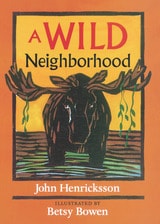
Wild Neighborhood
John Henricksson
University of Minnesota Press, 1997
An entertaining portrait of the creatures that share our place in the woods.
John Henricksson’s neighbors stop by to chat or to have a bite to eat or just to sit and watch. But in his Wild Neighborhood the visitors are the black bear, gray jay, timber wolf, owl, white-tailed deer, raven, and the moose.
A Wild Neighborhood is a collection of elegantly written essays about these creatures. From kitchen-table gossip about the black bear’s recent attempts to raid the bird feeder, to the retelling of Native American myths about the mischievous raven, Henricksson shows a love and understanding of the residents with whom he shares the narrow wedge of the Superior National Forest in northeastern Minnesota.Henricksson writes of the personal relationships that develop while living in the woods. He tells of the joy of helping a deer survive a tough winter and the mystery of animals he calls “ghosts”—species that are extinct or near extinct but still have a fleeting presence in the area. Award-winning artist Betsy Bowen, author of Antler, Bear, Canoe: A Northwoods Alphabet Year, beautifully depicts the denizens of the forest. Her twenty-four woodcuts reflect, often humorously, Henricksson’s respect for and love of northwoods creatures.This personal account of a vibrant community in the woods will appeal to readers of all ages and make a beautiful gift for everyone who has admired the creatures of his or her own wild neighborhood.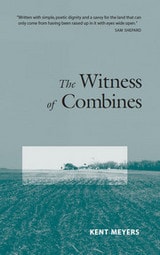
Witness Of Combines
Kent Meyers
University of Minnesota Press, 1998

Woman Of The Boundary Waters
Canoeing, Guiding, Mushing, and SurvivingJustine Kerfoot
University of Minnesota Press, 1994