Results by title
193 books match the query 'Modernism (Literature)' and 8 start with w
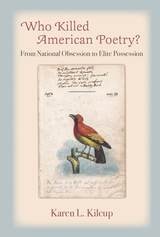
Who Killed American Poetry?
From National Obsession to Elite PossessionKaren L. Kilcup
University of Michigan Press, 2019
Conceptually and methodologically unique among studies of 19th-century American poetry, Who Killed American Poetry? not only charts changing attitudes toward American poetry, but also applies these ideas to the work of representative individual poets. Closely analyzing hundreds of reviews and critical essays, Karen L. Kilcup tracks the century’s developing aesthetic standards and highlights the different criteria reviewers used to assess poetry based on poets’ class, gender, ethnicity, and location. She shows that, as early as the 1820s, critics began to marginalize some kinds of emotional American poetry, a shift many scholars have attributed primarily to the late-century emergence of affectively restrained modernist ideals. Mapping this literary critical history enables us to more readily apprehend poetry’s status in American culture—both in the past and present—and encourages us to scrutinize the standards of academic criticism that underwrite contemporary aesthetics and continue to constrain poetry’s appeal.
Who American Killed Poetry? enlarges our understanding of American culture over the past two hundred years and will interest scholars in literary studies, historical poetics, American studies, gender studies, canon criticism, genre studies, the history of criticism, and affect studies. It will also appeal to poetry readers and those who enjoy reading about American cultural history.
Who Paid for Modernism?
Art, Money, and the Fiction of Conrad, Joyce and LawrenceJoyce Piell Wexler
University of Arkansas Press, 1997
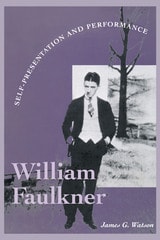
William Faulkner
Self-Presentation and PerformanceBy James G. Watson
University of Texas Press, 2000
In his life and writings, William Faulkner continually created and "performed" selves. Even in letters, he often played a part—gentleman dandy, soldier, farmer—while in his fictions these and other personae are counterpoised against one another to create a world of controlled chaos, made in Faulkner's own protean image and reflective of his own multiple sense of self.
In this groundbreaking book, James Watson draws on the entire Faulkner canon, including letters and photographs, to decipher the complicated ways in which Faulkner put himself forth as the artist he felt himself to be through written performances and displays based on the life he actually lived and the ones he imagined living. The topics Watson treats include the overtly performative aspects of The Sound and the Fury, self-presentation and performance in private records of Faulkner's life, the ways in which his complicated marriage and his relationships to male mentors underlie his fictions' recurring motifs of marriages and fatherhood, Faulkner's readings of Melville, Hawthorne, and Thoreau and the problematics of authorial sovereignty, his artist-as-God creation of a fictional cosmos, and the epistolary relationships with women that lie in the correspondence behind Requiem for a Nun.
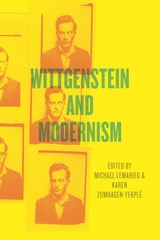
Wittgenstein and Modernism
Edited by Michael LeMahieu and Karen Zumhagen-Yekplé
University of Chicago Press, 2016
Michael LeMahieu Karen Zumhagen-Yekplé bring together scholars in both twentieth-century philosophy and modern literary studies to put Wittgenstein into dialogue with some of modernism’s most iconic figures, including Samuel Beckett, Saul Bellow, Walter Benjamin, Henry James, James Joyce, Franz Kafka, Adolf Loos, Robert Musil, Wallace Stevens, and Virginia Woolf. The contributors touch on two important aspects of Wittgenstein’s work and modernism itself: form and medium. They discuss issues ranging from Wittgenstein and poetics to his use of numbered propositions in the Tractatus as a virtuoso performance of modernist form; from Wittgenstein’s persistence metaphoric use of religion, music, and photography to an exploration of how he and Henry James both negotiated the relationship between the aesthetic and the ethical.
Covering many other fascinating intersections of the philosopher and the arts, this book offers an important bridge across the disciplinary divides that have kept us from a fuller picture of both Wittgenstein and the larger intellectual and cultural movement of which he was a part.
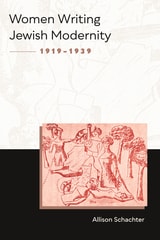
Women Writing Jewish Modernity, 1919–1939
Allison Schachter
Northwestern University Press, 2022
In Women Writing Jewish Modernity, 1919–1939, Allison Schachter rewrites Jewish literary modernity from the point of view of women. Focusing on works by interwar Hebrew and Yiddish writers, Schachter illuminates how women writers embraced the transgressive potential of prose fiction to challenge the patriarchal norms of Jewish textual authority and reconceptualize Jewish cultural belonging.
Born in the former Russian and Austro‑Hungarian Empires and writing from their homes in New York, Poland, and Mandatory Palestine, the authors central to this book—Fradl Shtok, Dvora Baron, Elisheva Bikhovsky, Leah Goldberg, and Debora Vogel—seized on the freedoms of social revolution to reimagine Jewish culture beyond the traditionally male world of Jewish letters. The societies they lived in devalued women’s labor and denied them support for their work. In response, their writing challenged the social hierarchies that excluded them as women and as Jews. As she reads these women, Schachter upends the idea that literary modernity was a conversation among men about women, with a few women writers listening in. Women writers revolutionized the very terms of Jewish fiction at a pivotal moment in Jewish history, transcending the boundaries of Jewish minority identities. Schachter tells their story and in so doing calls for a new way of thinking about Jewish cultural modernity.
Women, Compulsion, Modernity
The Moment of American NaturalismJennifer L. Fleissner
University of Chicago Press, 2004
Fleissner shows that this era's expanding opportunities for women were inseparable from the same modern developments—industrialization, consumerism—typically believed to constrain human freedom. With Women, Compulsion, and Modernity, Fleissner creates a new language for the strange way the writings of the time both broaden and question individual agency.
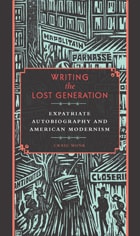
Writing the Lost Generation
Expatriate Autobiography and American ModernismCraig Monk
University of Iowa Press, 2008
Much of what we know about these iconic literary figures comes from their own published letters and essays, revealing how adroitly they developed their own reputations by controlling the reception of their work. Surprisingly the literary world has paid less attention to their autobiographies.
In Writing the Lost Generation, Craig Monk unlocks a series of neglected texts while reinvigorating our reading of more familiar ones. Well-known autobiographies by Malcolm Cowley, Ernest Hemingway, and Gertrude Stein are joined here by works from a variety of lesser-known—but still important—expatriate American writers, including Sylvia Beach, Alfred Kreymborg, Samuel Putnam, and Harold Stearns. By bringing together the self-reflective works of the Lost Generation and probing the ways the writers portrayed themselves, Monk provides an exciting and comprehensive overview of modernist expatriates from the United States.
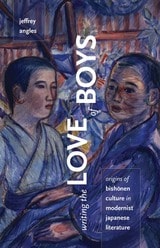
Writing the Love of Boys
Origins of Bishonen Culture in Modernist Japanese LiteratureJeffrey Angles
University of Minnesota Press, 2010
Jeffrey Angles focuses on key writers, examining how they experimented with new language, genres, and ideas to find fresh ways to represent love and desire between men. He traces the personal and literary relationships between contemporaries such as the poet Murayama Kaita, the mystery writers Edogawa Ranpo and Hamao Shiro, the anthropologist Iwata Jun’ichi, and the avant-garde innovator Inagaki Taruho.
Writing the Love of Boys shows how these authors interjected the subject of male–male desire into discussions of modern art, aesthetics, and perversity. It also explores the impact of their efforts on contemporary Japanese culture, including the development of the tropes of male homoeroticism that recur so often in Japanese girls’ manga about bishonen love.