Results by title
99 books match the query 'Motion picture producers and directors' and 4 start with w

Weimar Under the Palms
Pacific Palisades, German Exiles, and the Invention of HollywoodThomas Blubacher
Brandeis University Press, 2025
In the early twentieth century, Pacific Palisades was home to America’s most modern film studio of the time as well as the proposed site of the world’s largest Christian center. But by the end of the 1920s, the Los Angeles neighborhood had become the refuge of the rich and beautiful as German and Austrian filmmakers, among them Salka and Berthold Viertel, settled there. They were soon followed by cultural and intellectual giants of the Weimar Republic who were fleeing Europe, such as Max Reinhardt, Hanns Eisler, or Max Horkheimer. These great minds turned Pacific Palisades into a “Weimar under the palm trees.” Though many were successful in exile—including Vicki Baum, Thomas Mann, and Lion Feuchtwanger—others felt as if they were in a “sun prison” far from home.
Recounting a story of glamor and great minds, Thomas Blubacher tells of the history of German-speaking exiles that is still alive there today, going on a foray through the film industry, taking us on a journey to this special place that was so recently devastated by fire. Many of the homes in this book have now gone, but Marta Feuchtwanger’s Villa Aurora and the Thomas Mann house still stand as a testament to luck, resilience, and history.
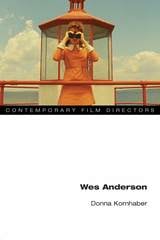
Wes Anderson
Donna Kornhaber
University of Illinois Press, 2017
Donna Kornhaber approaches Anderson's style as the necessary product of the narrative and thematic concerns that define his body of work. Using Anderson's focus on collecting, Kornhaber situates the director as the curator of his filmic worlds, a prime mover who artfully and conscientiously arranges diverse components into cohesive collections and taxonomies. Anderson peoples each mise-en-scéne in his ongoing ""Wesworld"" with characters orphaned, lost, and out of place amidst a riot of handmade clutter and relics. Within, they seek a wholeness and collective identity they manifestly lack, with their pain expressed via an ordered emotional palette that, despite being muted, cries out for attention. As Kornhaber shows, Anderson's films offer nothing less than a fascinating study in the sensation of belonging--told by characters who possess it the least.
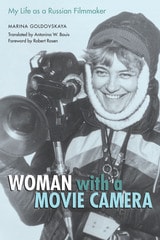
Woman with a Movie Camera
My Life as a Russian FilmmakerBy Marina Goldovskaya
University of Texas Press, 2006
Marina Goldovskaya is one of Russia's best-known documentary filmmakers. The first woman in Russia (and possibly the world) to combine being a director, writer, cinematographer, and producer, Goldovskaya has made over thirty documentary films and more than one hundred programs for Russian, European, Japanese, and American television. Her work, which includes the award-winning films The House on Arbat Street, The Shattered Mirror, and Solovky Power, has garnered international acclaim and won virtually every prize given for documentary filmmaking.
In Woman with a Movie Camera, Goldovskaya turns her lens on her own life and work, telling an adventurous, occasionally harrowing story of growing up in the Stalinist era and subsequently documenting Russian society from the 1960s, through the Thaw and Perestroika, to post-Soviet Russia. She recalls her childhood in a Moscow apartment building that housed famous filmmakers, being one of only three women students at the State Film School, and working as an assistant cameraperson on the first film of Andrei Tarkovsky, Russia's most celebrated director. Reviewing her professional filmmaking career, which began in the 1960s, Goldovskaya reveals her passion for creating films that presented a truthful picture of Soviet life, as well as the challenges of working within (and sometimes subverting) the bureaucracies that controlled Russian film and television production and distribution. Along the way, she describes a host of notable figures in Russian film, theater, art, and politics, as well as the technological evolution of filmmaking from film to video to digital media.
A compelling portrait of a woman who broke gender and political barriers, as well as the eventful four decades of Russian history she has documented, Woman with a Movie Camera will be fascinating reading for a wide audience.
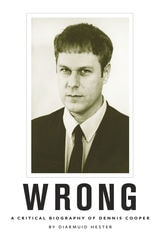
Wrong
A Critical Biography of Dennis CooperDiarmuid Hester
University of Iowa Press, 2020
Dennis Cooper is one of the most inventive and prolific artists of our time. Working in a variety of forms and media since he first exploded onto the scene in the early 1970s, he has been a punk poet, a queercore novelist, a transgressive blogger, an indie filmmaker—each successive incarnation more ingenious and surprising than the last. Cooper’s unflinching determination to probe the obscure, often violent recesses of the human psyche have seen him compared with literary outlaws like Rimbaud, Genet, and the Marquis de Sade.
In this, the first book-length study of Cooper’s life and work, Diarmuid Hester shows that such comparisons hardly scratch the surface. A lively retrospective appraisal of Cooper’s fifty-year career, Wrong tracks the emergence of Cooper’s singular style alongside his participation in a number of American subcultural movements like New York School poetry, punk rock, and radical queercore music and zines. Using extensive archival research, close readings of texts, and new interviews with Cooper and his contemporaries, Hester weaves a complex and often thrilling biographical narrative that attests to Cooper’s status as a leading figure of the American post–War avant-garde.