Results by title
121 books match the query 'Neoliberalism' and 2 start with w

We Make Our Own History
Marxism and Social Movements in the Twilight of NeoliberalismLaurence Cox and Alf Gunvald Nilsen
Pluto Press, 2014
We live in the twilight of neoliberalism: the ruling classes can no longer rule as before, and ordinary people are no longer willing to be ruled in the old way. Pursued by global elites since the 1970s, neoliberalism is defined by dispossession and ever-increasing inequality. The refusal to continue to be ruled like this - "ya basta!" - appears in an arc of resistance stretching from rural India to the cities of the global North.
From this network of movements, new visions are emerging of a future beyond neoliberalism. We make our own History responds to these visions by reclaiming Marxism as a theory born from activist experience and practice.
This book marks a break both with established social movement theory, and with those forms of Marxism which treat the practice of social movement organising as an unproblematic process. It shows how movements can develop from local conflicts to global struggles; how neoliberalism operates as a social movement from above, and how popular struggles can create new worlds from below.
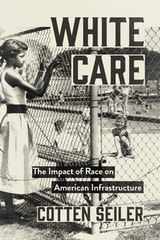
White Care
The Impact of Race on American InfrastructureCotten Seiler
University of Chicago Press, 2026
Infrastructure delivers to its users a range of benefits, from health, safety, and sanitation to mobility, energy, and education. It is, as Cotten Seiler argues, how modern states show care for their populations. White Care recounts the rise and fall of public infrastructure in the United States, unearthing its origins as an investment in those Americans deemed most highly evolved, showing the political stakes of its desegregation, and accounting for its current state of dilapidation.
From the late nineteenth century through much of the twentieth, government investments in physical (“hard”) and social (“soft”) infrastructure constituted a regime of care that Seiler calls “custodial liberalism.” This regime achieved legitimacy with the New Deal, which conferred upon white citizens a bounty of life-enhancing public works. But custodial liberalism began to unravel in the postwar decades, as Americans of color gained access to public schools, housing, swimming pools, parks, and other sites from which they had long been excluded. As the infrastructural commons were desegregated, white Americans withdrew from the social compact that had empowered them and turned toward neoliberalism, with its program of austerity and privatization. This racialized renunciation has deprived everyone—including themselves—of a cleaner, greener, healthier, safer, more affordable, and more functional environment.