Results by title
152 books match the query 'New York (N.Y.)' and 6 start with w
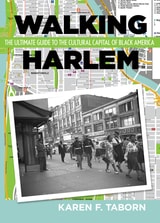
Walking Harlem
The Ultimate Guide to the Cultural Capital of Black AmericaTaborn, Karen
Rutgers University Press, 2018
This illustrated guide takes readers on five separate walking tours of Harlem, covering ninety-one different historical sites. Alongside major tourist destinations like the Apollo Theater and the Abyssinian Baptist Church, longtime Harlem resident Karen Taborn includes little-known local secrets like Jazz Age speakeasies, literati, political and arts community locales. Drawing from rare historical archives, she also provides plenty of interesting background information on each location.
This guide was designed with the needs of walkers in mind. Each tour consists of eight to twenty-nine nearby sites, and at the start of each section, readers will find detailed maps of the tour sites, as well as an estimated time for each walk. In case individuals would like to take a more leisurely tour, it provides recommendations for restaurants and cafes where they can stop along the way.
Walking Harlem gives readers all the tools they need to thoroughly explore over a century’s worth of this vital neighborhood’s cultural, political, religious, and artistic heritage. With its informative text and nearly seventy stunning photographs, this is the most comprehensive, engaging, and educational walking tour guidebook on one of New York’s historic neighborhoods.
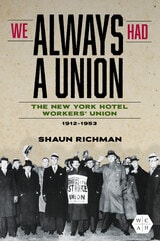
We Always Had a Union
The New York Hotel Workers' Union, 1912-1953Shaun Richman
University of Illinois Press, 2025
From the start, New York’s organized hotel workers experimented with and adapted how they organized and governed members and related to other labor unions. Richman follows union fortunes from early IWW activity through the Communist-led affiliates of the American Federation of Labor in the 1920s and 1930s, the shaping of breakthrough negotiating strategies, and the postwar era. As Richman shows, workers adopted a radicalism and militancy seldom associated with an AFL organization while openly negotiating the Communist Party’s power and influence within the union, until the Party’s eclipse in the 1950s.
An inspiring story of action and perseverance, We Always Had a Union profiles a foundational American labor union and offers lessons for today’s workers and organizers.
White Boy
A MemoirMark D. Naison
Temple University Press, 2002

Whose Art Is It?
Jane Kramer
Duke University Press, 1994
This compelling narrative raises questions about community and public art policies, about stereotypes and multiculturalism. With wit, drama, sympathy, and circumspection, Kramer draws the reader into the multicultural debate, challenging our assumptions about art, image, and their relation to community. Her portrait of the South Bronx takes the argument to its grass roots—provocative, surprising in its contradictions and complexities and not at all easy to resolve.
Accompanied by an introduction by Catharine R. Stimpson exploring the issues of artistic freedom, "political correctness," and multiculturalism, Whose Art Is It? is a lively and accessible introduction to the ongoing debate on representation and private expression in the public sphere.
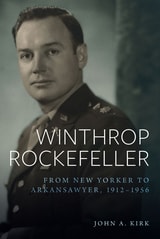
Winthrop Rockefeller
From New Yorker to Arkansawyer, 1912-1956John A. Kirk
University of Arkansas Press, 2022
Winner, 2024 J. G. Ragsdale Book Award, Arkansas Historical Association
Winner, 2024 Booker Worthen Literary Prize
Why did Winthrop Rockefeller, scion of one of the most powerful families in American history, leave New York for an Arkansas mountaintop in the 1950s? In this richly detailed biography of the former Arkansas governor, John A. Kirk delves into the historical record to fully unravel that mystery for the first time. Kirk pursues clues threaded throughout Rockefeller’s life, tracing his family background, childhood, and education; his rise in the oil industry from roustabout to junior executive; his military service in the Pacific during World War II, including his involvement in the battles of Guam, Leyte, and Okinawa; his postwar work in race relations, health, education, and philanthropy; his marriage to and divorce from Barbara “Bobo” Sears; and the birth of his only child, future Arkansas lieutenant governor Win Paul Rockefeller. This careful examination of Winthrop Rockefeller’s first forty-four years casts a powerful new light on his relationship with his adopted state, where his legacy continues to be felt more than half a century after his governorship.
Wounded City
The Social Impact of 9/11 on New York CityNancy Foner
Russell Sage Foundation, 2005