Results by title
78 books match the query 'North' and 6 start with w
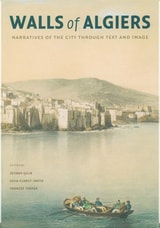
Walls of Algiers
Narratives of the city through text and imageZeynep Çelik
J. Paul Getty Trust, The, 2023
The contributors' wide-ranging but intersecting essays span the disciplines of art history, social and cultural history, urban studies, and film history. Walls of Algiers presents a multifaceted look at the social use of urban space in a North African city. Its contributors' innovative methodologies allow important insights into often overlooked aspects of life in a city whose name even today conjures up enchantment as well as incomprehensible violence.

Wax and Gold
Tradition and Innovation in Ethiopian CultureDonald N. Levine
University of Chicago Press, 1965

Wild Moments
Adventures with Animals of the NorthEdited by Michael Engelhard
University of Alaska Press, 2009
It is nearly impossible to live in Alaska without being influenced by its natural environment. Residents have no choice but to coexist with the Alaska wilderness and its animal inhabitants, and this extraordinary experience—along with the stunning landscape—is what often draws people to Alaska. Wild Moments offers a fascinating range of creative nonfiction essays that describe the chance meetings that bring Alaska residents face to face with their animal neighbors. These imaginative accounts speak to the ability of nature to transform the human experience, and the authors urge us through their works to protect these often threatened creatures who share our planet.
The contributors to this collection include some of Alaska’s most prestigious nature writers, such as Peggy Shumaker, Ned Rozell, Nick Jans, Debbie S. Miller, Craig Childs, Richard Nelson, and Drew Pogge. Wild Moments presents some of the best and most innovative nonfiction writing in an environmental context, and it will be of interest to all readers with a passion and concern for the natural world.
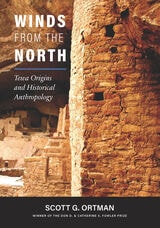
Winds from the North
Tewa Origins and Historical AnthropologyScott G. Ortman
University of Utah Press, 2012
Winner of the Don D. and Catherine S. Fowler Prize
The “abandonment” of Mesa Verde and the formation of the Rio Grande Pueblos represent two classic events in North American prehistory. Yet, despite a century of research, no consensus has been reached on precisely how, or even if, these two events were related. In this landmark study, Scott Ortman proposes a novel and compelling solution to this problem through an investigation of the genetic, linguistic, and cultural heritage of the Tewa Pueblo people of New Mexico.
Integrating data and methods from human biology, linguistics, archaeology, and cultural anthropology, Ortman shows that a striking social transformation took place as Mesa Verde people moved to the Rio Grande, such that the resulting ancestral Tewa culture was a unique hybrid of ideas and practices from various sources. While addressing several long-standing questions in American archaeology, Winds from the North also serves as a methodological guidebook, including new approaches to integrating archaeology and language based on cognitive science research. As such, it will be of interest to researchers throughout the social and human sciences.
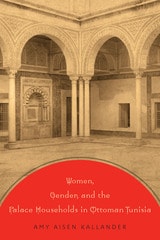
Women, Gender, and the Palace Households in Ottoman Tunisia
By Amy Aisen Kallander
University of Texas Press, 2013
In this first in-depth study of the ruling family of Tunisia in the eighteenth and nineteenth centuries, Kallander investigates the palace as a site of familial and political significance. Through extensive archival research, she elucidates the domestic economy of the palace as well as the changing relationship between the ruling family of Tunis and the government, thus revealing how the private space of the palace mirrored the public political space.
“Instead of viewing the period as merely a precursor to colonial occupation and the nation-state as emphasized in precolonial or nationalist histories, this narrative moves away from images of stagnation and dependency to insist upon dynamism,” Kallander explains. She delves deep into palace dynamics, comparing them to those of monarchies outside of the Ottoman Empire to find persuasive evidence of a global modernity. She demonstrates how upper-class Muslim women were active political players, exerting their power through displays of wealth such as consumerism and philanthropy. Ultimately, she creates a rich view of the Husaynid dynastic culture that will surprise many, and stimulate debate and further research among scholars of Ottoman Tunisia.
Workers from the North
Plantations, Bolivian Labor, and the City in Northwest ArgentinaBy Scott Whiteford
University of Texas Press, 1981
International migration between countries in Latin America became increasingly important during the twentieth century, but for a long time it was the subject of only limited research. Scott Whiteford sets the Argentina-Bolivia experience in historical perspective by examining the macrolevel factors that influenced social change in both countries and brought streams of migration into Argentina. Seasonal labor, the expansion of capitalist agriculture, international migration, and urbanization are central topics in this in-depth study of Bolivian migrants in Northwest Argentina.
Whiteford’s vivid portrayal of the lives and working conditions of the migrants is based on two years of research during which he lived with the workers on a sugar plantation and, after the harvest, accompanied them to other farms and to the city of Salta in their search for more work. He traces the development of plantation agriculture in Northwest Argentina and the processes by which the plantation gained access to cheap labor and maintained control over it.
As Bolivians migrated to Argentina in ever greater numbers, many recruited for the harvest remained. Whiteford’s analysis of the diverse strategies employed by workers and their families to support themselves during the post-harvest season is a major contribution to migration literature. The four distinct but related patterns of migration that he describes created a labor reserve that transcends rural/urban designations, one that is utilized by employers in both the countryside and the city.